
Do You Pay the VA Funding Fee If You Have a Disability Rating?

By Jimmy Everetts, Mortgage Loan Originator, NMLS #1719458 · Published November 24, 2026
Usually not. If you receive VA compensation for a service-connected disability, VA says you don't pay the funding fee on your VA home loan, and the same goes for veterans who are eligible for that compensation but receive retirement or active-duty pay instead.
The exemption is simple once you know what VA is looking for. Here's how it works, how it shows up on your paperwork, and what happens if your rating comes through after you close.
It's a one-time fee you pay when you close a VA-backed or VA direct home loan. VA says you can pay it all at once at closing or include it in your loan and pay it off over time. The amount depends on your loan, and VA's charts show different rates for first use and later use. We don't list the rates here because they can change. VA's funding fee page has the current chart.
As of November 2026, VA says you don't pay the fee if at least one of these is true:
This isn't a discretionary break. The exemption is written into federal law at 38 U.S.C. 3729(c).
A 10 percent rating is enough. VA's exemption language is built around compensation, not a higher percentage, and VA's compensation rates start at 10 percent. If you're receiving VA compensation at 10 percent or above, you fit the first group above and you're exempt.
The one to watch is a 0 percent rating. VA calls that a non-compensable disability, which means the condition is service-connected but doesn't come with compensation payments. If that's your situation, don't assume either way. Have your lender check your Certificate of Eligibility (COE) before you count on the savings, and let us know if your rating has changed recently.
Your COE does most of the work. VA's Buyer's Guide says the COE process confirms whether you're exempt from the funding fee because of a VA rating for a service-connected disability.
If the exemption isn't noted on your COE, the Buyer's Guide lists a VA award letter as the document that can verify it. So keep your award letter handy, and look at your COE early, while there's plenty of time to sort out anything that looks off. Finding this out the week of closing is no fun for anyone. If you're moving to Colorado on orders, our post on buying in Colorado Springs before you PCS covers how the COE fits into your timeline.
Tell your lender as soon as you know you have a claim in process. What happens next depends on the timing.
If you're a service member with a pre-discharge claim, the date on your rating is what counts. VA says a proposed or memorandum rating issued before your closing date qualifies. VA also says that if you get that rating after your closing date, you still pay the funding fee, and you won't be eligible for a refund based on that rating. If you're close to retirement or separation and a claim is in progress, this is worth planning around before you pick a closing date.
Sometimes, yes. VA says you may be eligible for a refund if you're later awarded VA compensation for a service-connected disability, as long as the effective date of that compensation is retroactive to before your loan closing date.
The effective date is the detail that decides it, so look for it on your award letter. To ask about a refund, VA says to contact your mortgage holder or a VA Regional Loan Center at 877-827-3702. VA's loan fee page says refunds issued on or after July 1, 2019, are paid directly to the veteran.
If you paid the fee on an older VA loan and your compensation was awarded later, it's worth a look. Check the effective date and make the call.
It can, but Colorado uses a different test. As of November 2026, the state's Division of Property Taxation says a veteran who was honorably discharged and has a service-connected disability rated 100 percent permanent, or who has been granted individual unemployability status, can qualify. For those who do, 50 percent of the first $200,000 of the home's actual value is exempt from property tax. Certain Gold Star spouses can qualify too.
Timing matters here as well. The state says you must have owned and lived in the home as your primary residence since January 1 of the year you apply, and the application goes to your county assessor by July 1. If you buy in November, the first January 1 after you close is the date that starts the clock. The exemption generally stays in place until something disqualifies it, such as a change in ownership or occupancy.
Yes. If you're receiving VA compensation on a 10 percent rating, you're exempt from the funding fee. Your COE is where to confirm it.
Don't panic. VA's Buyer's Guide says a VA award letter can verify the exemption when it isn't noted on the COE. Get it to your lender early.
Not if they're receiving Dependency and Indemnity Compensation as the surviving spouse of a veteran. VA lists that group among those who don't pay.
VA's Buyer's Guide says any party can pay the funding fee if you aren't already exempt, including the seller or the lender. Keep in mind that it's part of the negotiation like anything else.
The state says the exemption remains in effect until a disqualifying event occurs, so it doesn't describe a yearly application. You do need to tell the assessor about ownership or occupancy changes.
This usually takes one short conversation. Jimmy Everetts is a Navy Submarine Veteran who has used his own VA benefit more than once, and he and the Everetts Lending Team can look at your COE, your claim timing and your plans before you write an offer. Call 720-979-8742 or book a time with Jimmy. Prefer to read first? Our free VA Loan Guide covers the full picture, and our post on VA funding fees explains how the fee works for everyone else.
All sources checked November 3, 2026.
Jimmy Everetts, Mortgage Loan Originator, NMLS #1719458. Edge Home Finance, LLC, NMLS #891464. Lakewood, Colorado. 720-979-8742
This article is general information for Colorado consumers. It is not a commitment to lend or a guarantee of approval. Program requirements change; check with a licensed loan officer. Equal Housing Opportunity.

You have options. Here's how the VA appraisal, the Tidewater process, a Reconsideration of Value and VA's escape clause protect you when the value comes in under the price.


Often, yes. Here's how remaining entitlement, county loan limits and the three ways to restore entitlement work when you keep your first VA home.

Yes, in most cases. Here's how VA occupancy, your COE and your timeline fit together when you're buying ahead of a move to Fort Carson, Peterson, Schriever or the Air Force Academy.

A divorce decree doesn't take your name off a mortgage. Here's what does: a refinance, a sale, or a release after an assumption, plus how a buyout refinance works in Colorado.

Page two looks like a phone bill, so most people file it unread. It's the only page where lenders actually differ — and three rules decide which numbers can move.

A rental gets financed under a different rulebook than the house you live in. Four things change, and the ones that surprise people are worth knowing before you start looking.

You sent everything. Two weeks later they want the same bank statement again. There's a rule underneath almost every re-ask — including one clock that runs to a date nobody tells you about.

The score your lender pulls isn't the one in your banking app. Here's what actually moves in 90 days, what quietly works against you, and the one date on your credit card statement that decides what gets reported.

Family help only counts if it's documented the way your loan program requires. Who can give it, what the gift letter needs, and why the order matters.

Business owners get told they don't make enough all the time — usually because the lender is reading a different number than they are. Here's which one.

Everything you need to know about buying a condo right now and what to look out for.

Buying a home from a family member? A gift of equity may allow an eligible seller to use some of the equity already in the home to help with your down payment and certain closing costs. Learn how it works and why planning ahead matters.

Thinking about buying a home after divorce? Learn what to expect, how divorce may affect your mortgage, and why understanding your options early can help you move forward with confidence.

If you're eligible for a VA loan, should you always use it? Learn why some veterans compare conventional financing, when it may make sense, and why the best mortgage depends on your financial goals—not just your eligibility.

Learn how mortgage contingencies and financing deadlines work, how they may affect earnest money, and what Colorado buyers should consider before limiting an important contract protection.

Should you pay upfront to lower your mortgage interest rate? Learn how mortgage discount points work, how to calculate your break-even point, and when buying points may—or may not—be the right financial decision.

A successful home purchase is about more than finding the right property. Learn why having a thoughtful strategy—and a team that helps you understand your options—can make a meaningful difference throughout the buying process.

Wondering if your mortgage pre-approval expires? Learn how long a pre-approval typically lasts, when updates are needed, and what changes could affect your eligibility.

Many Veterans know the basics of the VA loan program, but few realize just how flexible the benefit can be. Here are some of the most common surprises Veterans discover when they take a closer look at their home loan options.

Most buyers focus on the house itself during a showing, but the factors that determine long-term happiness often have little to do with countertops, paint colors, or staging. Learn how experienced buyers evaluate a home beyond first impressions and what really matters after move-in day.

What is the VA funding fee, why does it exist, and who has to pay it? Learn how VA funding fees work and why they help support one of the strongest loan programs available.

What is a 2-1 buydown, and is it actually worth it? Learn how temporary buydowns work, their pros and cons, and what buyers should consider before using one.

What do homeowners regret most after buying a home? From stretching budgets too far to overlooking long-term lifestyle needs, here are the lessons many buyers wish they knew earlier.

Two buyers can purchase the same home and end up with very different monthly payments. Here’s why—and what it means for your buying strategy.

FHA loans offer flexibility for first-time buyers—but they’re not one-size-fits-all. Learn how they work, their benefits, and what to consider before choosing this option.

First-time homebuyer programs aren’t just about getting into a home—they’re about doing it strategically. Learn how these programs work, who they’re for, and how they can help you buy with confidence.

You’ve built equity in your home—but what does that actually mean for you? Learn the smartest ways to use (or not use) your equity and how to decide what makes sense for your situation.

Thinking about using your 401(k) for a down payment? It’s possible—but it comes with trade-offs. Here’s what homebuyers should understand before tapping into retirement savings.

Your tax refund could be more useful than you think when preparing to buy a home. From boosting your down payment to paying off debt and improving your debt-to-income ratio, here are smart ways buyers use their tax refunds to strengthen their mortgage approval.

Many homebuyers assume student loans automatically prevent them from qualifying for a mortgage. In reality, lenders evaluate several factors beyond just the loan balance. Here’s what actually matters when applying for a home loan with student debt.

If you’ve served our country, you’ve earned more than a handshake. A VA home loan can be one of the most powerful benefits available to eligible veterans, active-duty service members, and surviving spouses. Here’s how it works — and what to know before you use it.

HOA fees are common in the Denver metro area — especially with condos and townhomes. Here’s what buyers should know about costs, rules, financial health, and how HOAs can impact your mortgage approval.

Thinking about upgrading but don’t want to give up your low interest rate? Here’s what happens to your mortgage if you move and keep your current home as a rental — including occupancy rules, qualifying for your next loan, and how rental income can offset your current payment.

Property taxes can feel confusing and stressful, especially when they change. Here’s a clear, no-panic breakdown of how property taxes really work and what homeowners should expect.

From accepted offer to closing table, here’s what really happens during the home-buying timeline — and how the right lender can help you close faster without cutting corners.
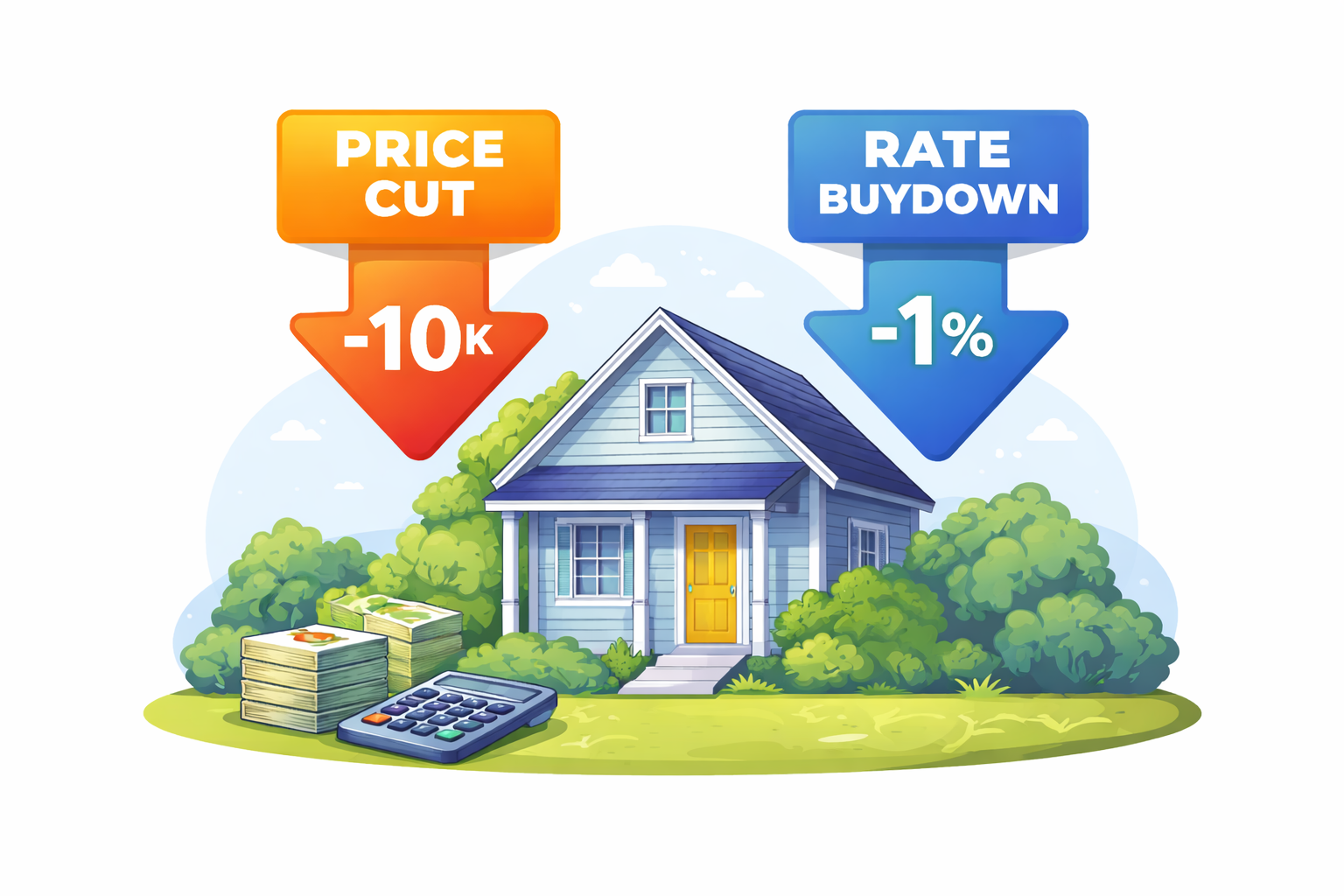
Seller concessions can do more than lower your cash-to-close. When used for a temporary or permanent rate buydown, the same $10K can often reduce your monthly payment more than a $10K price cut.

If you’re shopping homes based on price alone, you’re doing it the hard way. Here’s how to reverse-engineer your home search from a monthly payment you can actually live with.
First-time buyers aren’t buying at 28 anymore. The typical first-time buyer is now 40—and it’s a direct reflection of today’s affordability math, not a personal failure.

Old-school homebuying advice can keep you stuck or push you into a payment that doesn’t fit. Here are the most common “rules” we still hear—and the real-world guidance that works in today’s market.

A clear guide to earnest money: what it is, typical deposit amounts, who holds it, when it’s refundable, and how to protect your funds so your offer stays strong.

Has your mortgage payment jumped—or stepped up? Learn why payments change, from escrow shifts (insurance/taxes) to mortgage insurance removal to temporary buydowns ending, and what to do next.

Avoid the pitfalls most first-time buyers don’t even see coming until it’s too late. Here’s the real advice your future self will thank you for.

Owning a home comes with more than just pride and a mortgage payment. It can also open the door to meaningful tax benefits—from deductions to credits to exclusions. Here’s what to know, without the jargon.

A clear breakdown of what a home equity loan is, how it works, when it makes sense, and the key pros and cons to weigh before borrowing against your home.

Your credit score doesn’t have to be a mystery — or a roadblock. In this post, we break down exactly how credit works, what impacts your score the most, and what steps you can take today to boost it. Whether you’re getting ready to buy a home or just want more financial freedom, this guide gives you the clarity and confidence to take control.

Choosing between a 15-year or 30-year mortgage? This post breaks down the pros and cons of each option—payment differences, interest savings, equity timelines—and helps buyers decide which term fits their goals, lifestyle, and budget.

VA loans are one of the most powerful benefits available to veterans and service members—but most people don’t realize just how much they offer. In this post, we break down the top advantages of VA loans, from zero down payment to flexible credit guidelines, and how to put them to work for your next home purchase or refinance.

Moving before the school year starts? This guide breaks down what families need to know when buying a home on a tight timeline—including how to research school zones, plan backward from your move-in date, and avoid common missteps during the transition.

Learn the real costs of buying a home beyond the down payment. From closing costs to move-in expenses — here's how to budget like a pro.

With high home prices and rising rates, more buyers are teaming up to afford homeownership—especially in pricey markets like Colorado. This blog breaks down the pros, pitfalls, and property types perfect for co-buying with friends or family. From duplexes to ADUs, we’ll walk you through how to do it right—and what to avoid.

Confused by escrow? You’re not alone. This blog breaks down what escrow is, how it works during the homebuying process, and why it’s a key safeguard for your money and peace of mind—before and after closing.

Still think you need 20% down or perfect credit to buy a home? Think again. This post busts the most common myths that keep smart buyers on the sidelines—and shares what’s actually possible in today’s market. If you’re closer to buying than you think, this is the clarity you’ve been waiting for.

Sick of rising rent, slow repairs, or living on someone else’s terms? This post breaks down what renters won’t miss when they finally make the move to homeownership—and the freedom, stability, and financial benefits that come with it. If you’re wondering whether it’s time to buy, start here.

If you’re a veteran, active-duty service member, or surviving spouse, you may qualify for one of the best loan options available: the VA loan. This post breaks down the benefits, busts common myths, and explains how to make the most of your military-earned buying power.

Before you fall in love with a house, get your financing in order. In this article, we explain why pre-approval should always be your first move as a buyer—and how it gives you clarity, credibility, and serious leverage in today’s market.

Wondering what really goes into your mortgage payment? From principal and interest to insurance, taxes, and beyond, this detailed breakdown explains every component so you can plan, budget, and buy smarter—no surprises.

Buying your first home is exciting—but also overwhelming if you don’t know what to expect. This guide breaks down the real deal behind the process, from pre-approval to closing, with honest advice and practical tips to help first-time buyers avoid common pitfalls and feel confident every step of the way.


Straight answers on home loans across Colorado, from Navy Submarine Veteran Jimmy Everetts and the Everetts Lending Team.


