
What Happens If a VA Appraisal Comes In Low?

By Jimmy Everetts, Mortgage Loan Originator, NMLS #1719458 · Published November 17, 2026
You have options, and VA builds in protection for you. Every VA purchase contract has to include VA's escape clause, so if the appraisal comes in below the price, you can ask for a Reconsideration of Value, renegotiate with the seller, pay the difference in cash, or walk away and get your earnest money back.
A low appraisal feels like bad news when it lands. It doesn't have to be the end of the deal. Here's how the VA appraisal works and what each of your options looks like.
It answers two questions: what the home is worth, and whether it meets VA's minimum property requirements. VA's Buyer's Guide explains that "your lender (not you) will request a VA-approved appraiser to provide an opinion of value of the home."
When the appraisal is done, you get a Notice of Value (NOV). VA says the NOV documents the estimated value of the home and a list of comparable sales in the area, along with any items that need repair to meet VA's minimum property requirements.
One thing VA is direct about: "An appraisal is not a home inspection." VA's Buyer's Guide says "a home inspection is highly recommended for every borrower," and we agree.
Tidewater is a heads-up step that happens before the appraisal is final. VA describes it as a process "which allows appraisers to request additional sale information" before completing the report. VA says it "has been in existence since 2003" and that it gives interested parties "the opportunity to provide additional sales data."
VA's 2017 circular on Tidewater describes it kicking in "when it appears that the appraised value will be lower than the sales price," at which point the appraiser contacts the point of contact listed on the appraisal request. (That circular has since been rescinded, but the step is still built into the process.) VA's appraisal request in its WebLGY system includes a field for that Tidewater point of contact (name, phone and email) on purchase appraisals.
The best thing you can do here happens before the appraisal: ask your lender who is listed as the Tidewater contact, and make sure that person, often your real estate agent, is ready with recent, nearby sales that support the price. A Tidewater notice is a chance to make your case while the report is still open.
If the appraisal is final and you believe the value is too low, you can ask for a Reconsideration of Value (ROV). VA's Buyer's Guide lists it as one of your options: "Request a Reconsideration of Value (ROV)" if you feel the appraised value is less than it should be.
Talk with your lender about it right away. A request works best with specifics: comparable sales the appraiser didn't use, or factual errors in the report. "We think it's worth more" on its own doesn't get far. Solid data sometimes does.
Then you have three paths, and VA spells out each of them.
Renegotiate. VA notes that "the seller may be willing to consider a reduced sale price that is equal to or lesser than the appraised value."
Pay the difference in cash. VA says "you may have the option to pay the difference in cash at closing." This is a real option if you have the savings, and the appraisal doesn't stop you from paying more than appraised value. It's worth asking whether the gap is a smart use of that cash before you commit.
Walk away. This is where the escape clause matters. VA requires it in every VA purchase contract and says that if it isn't there, "VA may not guaranty the loan." Under that clause, a buyer "shall not incur any penalty by forfeiture of earnest money" if the value comes in below the price. VA is also clear about the limit: "You can get your earnest money back, but not any out-of-pocket home inspection or appraisal costs."
If the value still comes in low after a Reconsideration of Value and the seller won't lower the price, VA's Buyer's Guide says plainly that bringing cash to closing is the only way to keep that deal.
A few habits help a lot:
For a broader look at the protections in your contract, our post on whether to waive your mortgage contingency is a good next read.
Yes. VA says you may be able to pay the difference between the appraised value and the sales price in cash at closing. VA's no-down-payment feature applies when the price isn't higher than the appraised value.
No, as long as the VA escape clause is in your contract, and VA requires it in every VA purchase contract. You can get your earnest money back, but not money you've already spent on the inspection or appraisal.
Your lender does. VA's Buyer's Guide says your lender, not you, requests a VA-approved appraiser.
It's the document you get when the VA appraisal is finished. It shows the estimated value, comparable sales, and any repairs needed to meet VA's minimum property requirements.
No. Tidewater happens before the appraisal is final, when the appraiser asks for more sales information. A Reconsideration of Value is a request to review the value after the appraisal is complete.
A low appraisal is a lot less stressful when you know your options before the report comes back. Jimmy Everetts is a Navy Submarine Veteran who has used his own VA benefit more than once, and he and the Everetts Lending Team help veterans and military families buy across Colorado. Call 720-979-8742 or book a time with Jimmy. If you're still learning how VA loans work, start with our free VA Loan Guide or our post VA Home Loans Explained.
All sources checked October 27, 2026.
Jimmy Everetts, Mortgage Loan Originator, NMLS #1719458. Edge Home Finance, LLC, NMLS #891464. Lakewood, Colorado. 720-979-8742
This article is general information for Colorado consumers. It is not a commitment to lend or a guarantee of approval. Program requirements change; check with a licensed loan officer. Equal Housing Opportunity.

Often, yes. Here's how remaining entitlement, county loan limits and the three ways to restore entitlement work when you keep your first VA home.


Yes, in most cases. Here's how VA occupancy, your COE and your timeline fit together when you're buying ahead of a move to Fort Carson, Peterson, Schriever or the Air Force Academy.

A divorce decree doesn't take your name off a mortgage. Here's what does: a refinance, a sale, or a release after an assumption, plus how a buyout refinance works in Colorado.

Page two looks like a phone bill, so most people file it unread. It's the only page where lenders actually differ — and three rules decide which numbers can move.

A rental gets financed under a different rulebook than the house you live in. Four things change, and the ones that surprise people are worth knowing before you start looking.

You sent everything. Two weeks later they want the same bank statement again. There's a rule underneath almost every re-ask — including one clock that runs to a date nobody tells you about.

The score your lender pulls isn't the one in your banking app. Here's what actually moves in 90 days, what quietly works against you, and the one date on your credit card statement that decides what gets reported.

Family help only counts if it's documented the way your loan program requires. Who can give it, what the gift letter needs, and why the order matters.

Business owners get told they don't make enough all the time — usually because the lender is reading a different number than they are. Here's which one.

Everything you need to know about buying a condo right now and what to look out for.

Buying a home from a family member? A gift of equity may allow an eligible seller to use some of the equity already in the home to help with your down payment and certain closing costs. Learn how it works and why planning ahead matters.

Thinking about buying a home after divorce? Learn what to expect, how divorce may affect your mortgage, and why understanding your options early can help you move forward with confidence.

If you're eligible for a VA loan, should you always use it? Learn why some veterans compare conventional financing, when it may make sense, and why the best mortgage depends on your financial goals—not just your eligibility.

Learn how mortgage contingencies and financing deadlines work, how they may affect earnest money, and what Colorado buyers should consider before limiting an important contract protection.

Should you pay upfront to lower your mortgage interest rate? Learn how mortgage discount points work, how to calculate your break-even point, and when buying points may—or may not—be the right financial decision.

A successful home purchase is about more than finding the right property. Learn why having a thoughtful strategy—and a team that helps you understand your options—can make a meaningful difference throughout the buying process.

Wondering if your mortgage pre-approval expires? Learn how long a pre-approval typically lasts, when updates are needed, and what changes could affect your eligibility.

Many Veterans know the basics of the VA loan program, but few realize just how flexible the benefit can be. Here are some of the most common surprises Veterans discover when they take a closer look at their home loan options.

Most buyers focus on the house itself during a showing, but the factors that determine long-term happiness often have little to do with countertops, paint colors, or staging. Learn how experienced buyers evaluate a home beyond first impressions and what really matters after move-in day.

What is the VA funding fee, why does it exist, and who has to pay it? Learn how VA funding fees work and why they help support one of the strongest loan programs available.

What is a 2-1 buydown, and is it actually worth it? Learn how temporary buydowns work, their pros and cons, and what buyers should consider before using one.

What do homeowners regret most after buying a home? From stretching budgets too far to overlooking long-term lifestyle needs, here are the lessons many buyers wish they knew earlier.

Two buyers can purchase the same home and end up with very different monthly payments. Here’s why—and what it means for your buying strategy.

FHA loans offer flexibility for first-time buyers—but they’re not one-size-fits-all. Learn how they work, their benefits, and what to consider before choosing this option.

First-time homebuyer programs aren’t just about getting into a home—they’re about doing it strategically. Learn how these programs work, who they’re for, and how they can help you buy with confidence.

You’ve built equity in your home—but what does that actually mean for you? Learn the smartest ways to use (or not use) your equity and how to decide what makes sense for your situation.

Thinking about using your 401(k) for a down payment? It’s possible—but it comes with trade-offs. Here’s what homebuyers should understand before tapping into retirement savings.

Your tax refund could be more useful than you think when preparing to buy a home. From boosting your down payment to paying off debt and improving your debt-to-income ratio, here are smart ways buyers use their tax refunds to strengthen their mortgage approval.

Many homebuyers assume student loans automatically prevent them from qualifying for a mortgage. In reality, lenders evaluate several factors beyond just the loan balance. Here’s what actually matters when applying for a home loan with student debt.

If you’ve served our country, you’ve earned more than a handshake. A VA home loan can be one of the most powerful benefits available to eligible veterans, active-duty service members, and surviving spouses. Here’s how it works — and what to know before you use it.

HOA fees are common in the Denver metro area — especially with condos and townhomes. Here’s what buyers should know about costs, rules, financial health, and how HOAs can impact your mortgage approval.

Thinking about upgrading but don’t want to give up your low interest rate? Here’s what happens to your mortgage if you move and keep your current home as a rental — including occupancy rules, qualifying for your next loan, and how rental income can offset your current payment.

Property taxes can feel confusing and stressful, especially when they change. Here’s a clear, no-panic breakdown of how property taxes really work and what homeowners should expect.

From accepted offer to closing table, here’s what really happens during the home-buying timeline — and how the right lender can help you close faster without cutting corners.
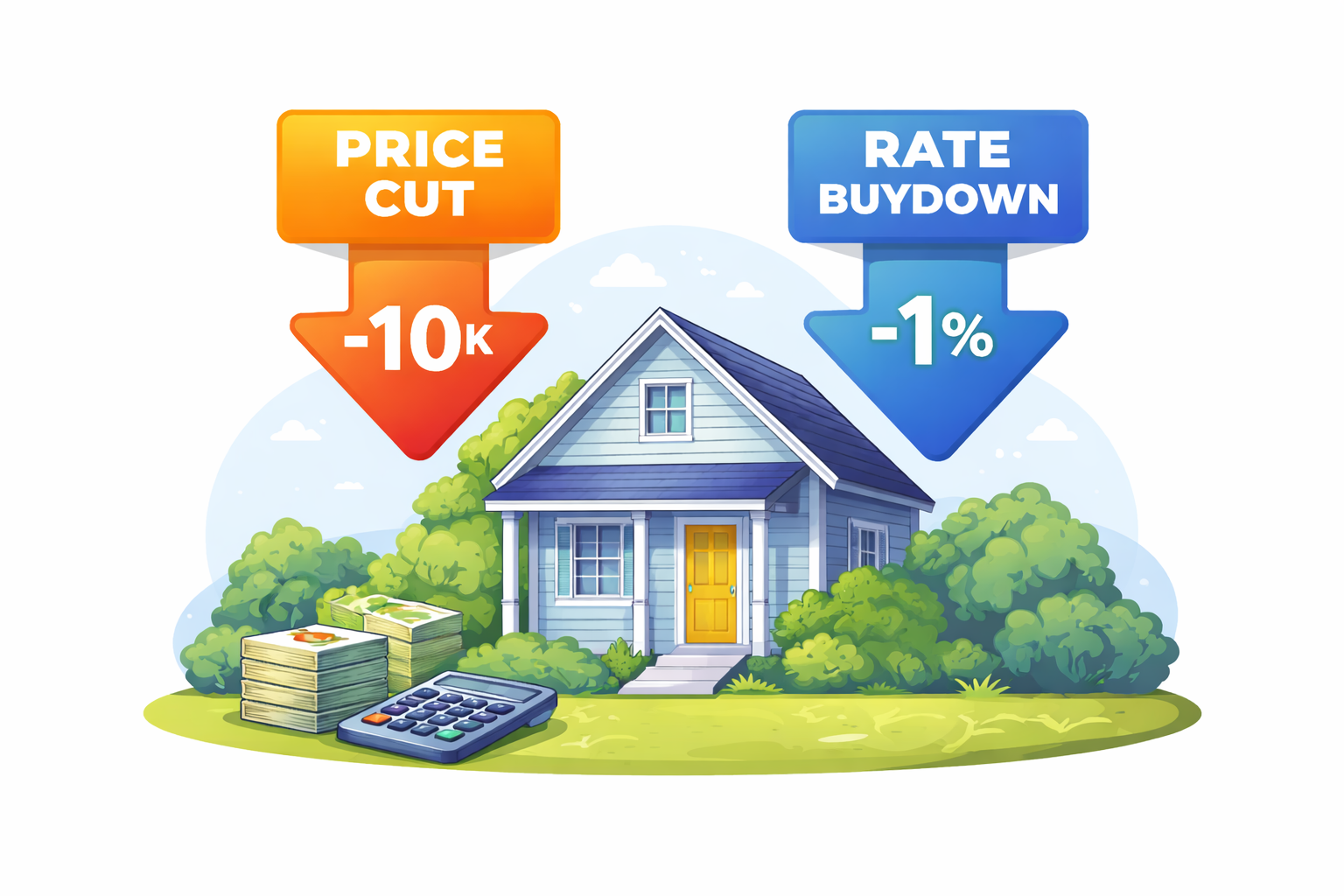
Seller concessions can do more than lower your cash-to-close. When used for a temporary or permanent rate buydown, the same $10K can often reduce your monthly payment more than a $10K price cut.

If you’re shopping homes based on price alone, you’re doing it the hard way. Here’s how to reverse-engineer your home search from a monthly payment you can actually live with.
First-time buyers aren’t buying at 28 anymore. The typical first-time buyer is now 40—and it’s a direct reflection of today’s affordability math, not a personal failure.

Old-school homebuying advice can keep you stuck or push you into a payment that doesn’t fit. Here are the most common “rules” we still hear—and the real-world guidance that works in today’s market.

A clear guide to earnest money: what it is, typical deposit amounts, who holds it, when it’s refundable, and how to protect your funds so your offer stays strong.

Has your mortgage payment jumped—or stepped up? Learn why payments change, from escrow shifts (insurance/taxes) to mortgage insurance removal to temporary buydowns ending, and what to do next.

Avoid the pitfalls most first-time buyers don’t even see coming until it’s too late. Here’s the real advice your future self will thank you for.

Owning a home comes with more than just pride and a mortgage payment. It can also open the door to meaningful tax benefits—from deductions to credits to exclusions. Here’s what to know, without the jargon.

A clear breakdown of what a home equity loan is, how it works, when it makes sense, and the key pros and cons to weigh before borrowing against your home.

Your credit score doesn’t have to be a mystery — or a roadblock. In this post, we break down exactly how credit works, what impacts your score the most, and what steps you can take today to boost it. Whether you’re getting ready to buy a home or just want more financial freedom, this guide gives you the clarity and confidence to take control.

Choosing between a 15-year or 30-year mortgage? This post breaks down the pros and cons of each option—payment differences, interest savings, equity timelines—and helps buyers decide which term fits their goals, lifestyle, and budget.

VA loans are one of the most powerful benefits available to veterans and service members—but most people don’t realize just how much they offer. In this post, we break down the top advantages of VA loans, from zero down payment to flexible credit guidelines, and how to put them to work for your next home purchase or refinance.

Moving before the school year starts? This guide breaks down what families need to know when buying a home on a tight timeline—including how to research school zones, plan backward from your move-in date, and avoid common missteps during the transition.

Learn the real costs of buying a home beyond the down payment. From closing costs to move-in expenses — here's how to budget like a pro.

With high home prices and rising rates, more buyers are teaming up to afford homeownership—especially in pricey markets like Colorado. This blog breaks down the pros, pitfalls, and property types perfect for co-buying with friends or family. From duplexes to ADUs, we’ll walk you through how to do it right—and what to avoid.

Confused by escrow? You’re not alone. This blog breaks down what escrow is, how it works during the homebuying process, and why it’s a key safeguard for your money and peace of mind—before and after closing.

Still think you need 20% down or perfect credit to buy a home? Think again. This post busts the most common myths that keep smart buyers on the sidelines—and shares what’s actually possible in today’s market. If you’re closer to buying than you think, this is the clarity you’ve been waiting for.

Sick of rising rent, slow repairs, or living on someone else’s terms? This post breaks down what renters won’t miss when they finally make the move to homeownership—and the freedom, stability, and financial benefits that come with it. If you’re wondering whether it’s time to buy, start here.

If you’re a veteran, active-duty service member, or surviving spouse, you may qualify for one of the best loan options available: the VA loan. This post breaks down the benefits, busts common myths, and explains how to make the most of your military-earned buying power.

Before you fall in love with a house, get your financing in order. In this article, we explain why pre-approval should always be your first move as a buyer—and how it gives you clarity, credibility, and serious leverage in today’s market.

Wondering what really goes into your mortgage payment? From principal and interest to insurance, taxes, and beyond, this detailed breakdown explains every component so you can plan, budget, and buy smarter—no surprises.

Buying your first home is exciting—but also overwhelming if you don’t know what to expect. This guide breaks down the real deal behind the process, from pre-approval to closing, with honest advice and practical tips to help first-time buyers avoid common pitfalls and feel confident every step of the way.


Straight answers on home loans across Colorado, from Navy Submarine Veteran Jimmy Everetts and the Everetts Lending Team.


