
A Fresh Start: What to Expect When Buying a Home After Divorce

Few life events bring as much change as a divorce. Along with the emotional transition, there are often significant financial decisions involving income, debt, savings, housing and the division of property. You may be adjusting to managing a household on one income, deciding whether to keep or sell the marital home, or trying to understand what homeownership could look like in this next chapter.
It is completely reasonable to wonder whether you can qualify for a mortgage on your own, how much home may fit your new budget, or whether you should wait until the divorce is finalized before speaking with a lender.
Buying a home after divorce may be possible, but the process often requires a closer review of your current finances and the terms of your divorce or separation agreement. Understanding what lenders evaluate can help you prepare thoughtfully and avoid unnecessary surprises.
After a divorce, the income, assets and obligations used to qualify for a mortgage may look very different than they did during your marriage. Rather than evaluating the finances you previously shared, the lender will review your individual income, debts, assets, credit and ongoing obligations.
Child support, spousal maintenance or separate-maintenance income may sometimes be used for qualification, but it is not automatically counted simply because it appears in a divorce decree. Requirements vary by loan program and may include proof of a legally binding obligation, a history of consistent receipt and evidence that the income is expected to continue for a required period. Freddie Mac, for example, generally requires documented receipt and evidence that qualifying support income will continue for at least three years.
If you are required to make support payments, those obligations generally must also be considered during qualification. The exact calculation and documentation depend on the loan program, so an early review with your lender can provide a clearer picture than relying on a general online estimate.
Divorce itself does not appear as a negative item on a credit report and does not directly reduce a credit score. However, the financial disruption surrounding a divorce can affect credit when joint accounts remain open, balances increase or payments are missed.
A divorce decree may state that your former spouse is responsible for a particular joint debt, but that order does not necessarily remove your contractual responsibility to the creditor. Unless the creditor releases you, the account is refinanced or the obligation is otherwise paid and closed, the creditor may still consider you legally responsible for the debt.
Mortgage underwriting treatment can be different from legal liability. For example, Fannie Mae does not require a court-assigned debt to be counted as a recurring monthly obligation when it was assigned to another party by court order, even if the creditor has not formally released the borrower. Other programs may apply different standards or require additional documentation.
That distinction is important. A debt may still exist on your credit report and remain legally connected to you while being treated differently for mortgage qualification. Your lender should review the actual decree, credit report and applicable program guidelines before determining how it affects your approval.
Another common source of confusion is the difference between the mortgage and the title to the home.
The mortgage or deed of trust relates to the loan and the borrowers who are responsible for repayment. The title or deed identifies who legally owns the property. A divorce decree may award the home to one spouse, but that order does not automatically remove the other spouse from the existing mortgage obligation.
Depending on the loan and servicer, removing a former spouse from liability may involve refinancing, paying off the loan, an approved assumption or another formal release process. A separate deed may also be needed to change ownership. Because these are distinct legal and lending matters, borrowers should coordinate with their attorney, lender, loan servicer and title professional rather than assuming the divorce decree completed every required step.
Some people hope to remain in the marital home, while others prefer to sell it and begin again somewhere new. Neither choice is automatically better.
Keeping the home may involve qualifying for a refinance or another approved transfer of responsibility, determining whether an equity buyout is required and confirming that the new payment is sustainable on one income. Fannie Mae permits certain limited cash-out refinances involving a court-ordered transfer of ownership, but the spouse retaining the home must still qualify under the applicable underwriting requirements.
Buying a different home may provide a payment, location or maintenance level that better fits your new circumstances. The right decision depends not only on whether you can qualify, but also on your available equity, reserves, monthly budget, family needs and long-term plans.
A useful question is not simply, “Can I keep the house?” It is, “Which housing decision gives me the most stable and sustainable path forward?”
Many people assume that qualifying alone will be impossible after moving from two household incomes to one. That concern is understandable, but it is still an assumption until the numbers are reviewed.
Some borrowers discover that their income, assets and debt structure support a purchase sooner than expected. Others learn that they need time to rebuild savings, improve credit or allow newly established income and support arrangements to meet the applicable documentation requirements.
A preapproval conversation does not obligate you to purchase immediately. It can simply provide a realistic assessment of where you stand, which issues still need to be resolved and what steps may strengthen your position.
You do not necessarily need to wait until every legal detail is complete before asking a lender for general planning guidance. An earlier conversation may help you understand what documents will eventually be needed and how different possible outcomes could affect qualification.
However, a lender may not be able to issue a reliable final approval until important financial terms have been finalized and documented. If support obligations, responsibility for debts, ownership of the marital home or the division of assets are still being negotiated, those unresolved issues may materially change the mortgage analysis.
The lender may request documents such as a final divorce decree, legally binding separation agreement, proof of support payments received or paid, account statements showing divided assets and documentation related to debts or property awarded to either spouse. The exact requirements depend on the loan program and the facts of the file.
Speaking early can help with planning, but it should not be confused with receiving a guaranteed approval before the financial terms of the divorce are settled.
Your attorney should advise you on the legal terms of the divorce, ownership rights, debt responsibility and the wording of settlement documents. Your lender can explain how finalized income, debt and asset arrangements may be evaluated under mortgage guidelines. Your real estate agent can help you assess the housing market and identify properties that support your new priorities.
When appropriate, a financial advisor, tax professional or title professional may also be involved. Keeping those roles clear is important because a mortgage lender can explain underwriting requirements but cannot give legal advice or determine whether a divorce settlement protects your legal interests.
Divorce can change your finances and your housing needs, but it does not automatically make future homeownership impossible. The path may involve additional documentation and more careful planning, particularly when support income, joint debts, divided assets or an existing jointly held home are involved.
The best place to begin is not with a home search or an assumption about what you can afford. It is with a clear review of your current financial picture and an honest discussion about what still needs to be finalized.
For some people, purchasing again may be possible relatively soon. For others, the strongest decision may be to spend several months rebuilding savings or resolving outstanding obligations. Either outcome can be part of a thoughtful plan.
Buying a home after divorce is not about recreating the life you had before. It is about choosing a home and financing structure that support the life you are building now.
This article is for general educational purposes and is not legal, tax or financial advice. Divorce agreements and mortgage requirements vary by borrower, loan program and transaction. Consult the appropriate licensed professionals regarding your specific circumstances.

A rental gets financed under a different rulebook than the house you live in. Four things change, and the ones that surprise people are worth knowing before you start looking.


The score your lender pulls isn't the one in your banking app. Here's what actually moves in 90 days, what quietly works against you, and the one date on your credit card statement that decides what gets reported.

Family help only counts if it's documented the way your loan program requires. Who can give it, what the gift letter needs, and why the order matters.

Business owners get told they don't make enough all the time — usually because the lender is reading a different number than they are. Here's which one.

Everything you need to know about buying a condo right now and what to look out for.

Buying a home from a family member? A gift of equity may allow an eligible seller to use some of the equity already in the home to help with your down payment and certain closing costs. Learn how it works and why planning ahead matters.

If you're eligible for a VA loan, should you always use it? Learn why some veterans compare conventional financing, when it may make sense, and why the best mortgage depends on your financial goals—not just your eligibility.

Learn how mortgage contingencies and financing deadlines work, how they may affect earnest money, and what Colorado buyers should consider before limiting an important contract protection.

Should you pay upfront to lower your mortgage interest rate? Learn how mortgage discount points work, how to calculate your break-even point, and when buying points may—or may not—be the right financial decision.

A successful home purchase is about more than finding the right property. Learn why having a thoughtful strategy—and a team that helps you understand your options—can make a meaningful difference throughout the buying process.

Wondering if your mortgage pre-approval expires? Learn how long a pre-approval typically lasts, when updates are needed, and what changes could affect your eligibility.

Many Veterans know the basics of the VA loan program, but few realize just how flexible the benefit can be. Here are some of the most common surprises Veterans discover when they take a closer look at their home loan options.

Most buyers focus on the house itself during a showing, but the factors that determine long-term happiness often have little to do with countertops, paint colors, or staging. Learn how experienced buyers evaluate a home beyond first impressions and what really matters after move-in day.

What is the VA funding fee, why does it exist, and who has to pay it? Learn how VA funding fees work and why they help support one of the strongest loan programs available.

What is a 2-1 buydown, and is it actually worth it? Learn how temporary buydowns work, their pros and cons, and what buyers should consider before using one.

What do homeowners regret most after buying a home? From stretching budgets too far to overlooking long-term lifestyle needs, here are the lessons many buyers wish they knew earlier.

Two buyers can purchase the same home and end up with very different monthly payments. Here’s why—and what it means for your buying strategy.

FHA loans offer flexibility for first-time buyers—but they’re not one-size-fits-all. Learn how they work, their benefits, and what to consider before choosing this option.

First-time homebuyer programs aren’t just about getting into a home—they’re about doing it strategically. Learn how these programs work, who they’re for, and how they can help you buy with confidence.

You’ve built equity in your home—but what does that actually mean for you? Learn the smartest ways to use (or not use) your equity and how to decide what makes sense for your situation.

Thinking about using your 401(k) for a down payment? It’s possible—but it comes with trade-offs. Here’s what homebuyers should understand before tapping into retirement savings.

Your tax refund could be more useful than you think when preparing to buy a home. From boosting your down payment to paying off debt and improving your debt-to-income ratio, here are smart ways buyers use their tax refunds to strengthen their mortgage approval.

Many homebuyers assume student loans automatically prevent them from qualifying for a mortgage. In reality, lenders evaluate several factors beyond just the loan balance. Here’s what actually matters when applying for a home loan with student debt.

If you’ve served our country, you’ve earned more than a handshake. A VA home loan can be one of the most powerful benefits available to eligible veterans, active-duty service members, and surviving spouses. Here’s how it works — and what to know before you use it.

HOA fees are common in the Denver metro area — especially with condos and townhomes. Here’s what buyers should know about costs, rules, financial health, and how HOAs can impact your mortgage approval.

Thinking about upgrading but don’t want to give up your low interest rate? Here’s what happens to your mortgage if you move and keep your current home as a rental — including occupancy rules, qualifying for your next loan, and how rental income can offset your current payment.

Property taxes can feel confusing and stressful, especially when they change. Here’s a clear, no-panic breakdown of how property taxes really work and what homeowners should expect.

From accepted offer to closing table, here’s what really happens during the home-buying timeline — and how the right lender can help you close faster without cutting corners.
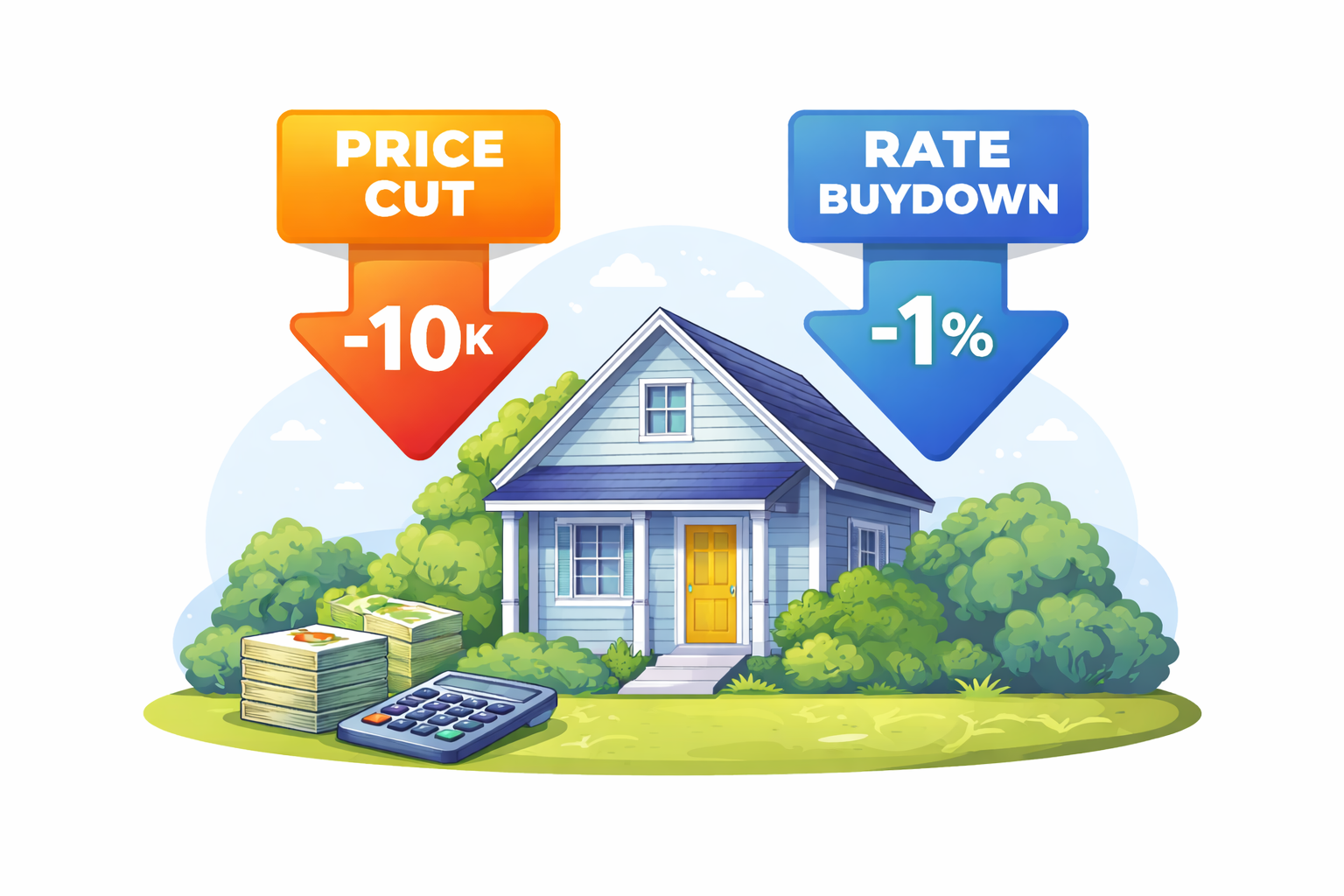
Seller concessions can do more than lower your cash-to-close. When used for a temporary or permanent rate buydown, the same $10K can often reduce your monthly payment more than a $10K price cut.

If you’re shopping homes based on price alone, you’re doing it the hard way. Here’s how to reverse-engineer your home search from a monthly payment you can actually live with.
First-time buyers aren’t buying at 28 anymore. The typical first-time buyer is now 40—and it’s a direct reflection of today’s affordability math, not a personal failure.

Old-school homebuying advice can keep you stuck or push you into a payment that doesn’t fit. Here are the most common “rules” we still hear—and the real-world guidance that works in today’s market.

A clear guide to earnest money: what it is, typical deposit amounts, who holds it, when it’s refundable, and how to protect your funds so your offer stays strong.

Has your mortgage payment jumped—or stepped up? Learn why payments change, from escrow shifts (insurance/taxes) to mortgage insurance removal to temporary buydowns ending, and what to do next.

Avoid the pitfalls most first-time buyers don’t even see coming until it’s too late. Here’s the real advice your future self will thank you for.

Owning a home comes with more than just pride and a mortgage payment. It can also open the door to meaningful tax benefits—from deductions to credits to exclusions. Here’s what to know, without the jargon.

A clear breakdown of what a home equity loan is, how it works, when it makes sense, and the key pros and cons to weigh before borrowing against your home.

Your credit score doesn’t have to be a mystery — or a roadblock. In this post, we break down exactly how credit works, what impacts your score the most, and what steps you can take today to boost it. Whether you’re getting ready to buy a home or just want more financial freedom, this guide gives you the clarity and confidence to take control.

Choosing between a 15-year or 30-year mortgage? This post breaks down the pros and cons of each option—payment differences, interest savings, equity timelines—and helps buyers decide which term fits their goals, lifestyle, and budget.

VA loans are one of the most powerful benefits available to veterans and service members—but most people don’t realize just how much they offer. In this post, we break down the top advantages of VA loans, from zero down payment to flexible credit guidelines, and how to put them to work for your next home purchase or refinance.

Moving before the school year starts? This guide breaks down what families need to know when buying a home on a tight timeline—including how to research school zones, plan backward from your move-in date, and avoid common missteps during the transition.

Learn the real costs of buying a home beyond the down payment. From closing costs to move-in expenses — here's how to budget like a pro.

With high home prices and rising rates, more buyers are teaming up to afford homeownership—especially in pricey markets like Colorado. This blog breaks down the pros, pitfalls, and property types perfect for co-buying with friends or family. From duplexes to ADUs, we’ll walk you through how to do it right—and what to avoid.

Confused by escrow? You’re not alone. This blog breaks down what escrow is, how it works during the homebuying process, and why it’s a key safeguard for your money and peace of mind—before and after closing.

Still think you need 20% down or perfect credit to buy a home? Think again. This post busts the most common myths that keep smart buyers on the sidelines—and shares what’s actually possible in today’s market. If you’re closer to buying than you think, this is the clarity you’ve been waiting for.

Sick of rising rent, slow repairs, or living on someone else’s terms? This post breaks down what renters won’t miss when they finally make the move to homeownership—and the freedom, stability, and financial benefits that come with it. If you’re wondering whether it’s time to buy, start here.
.png)
If you’re a veteran, active-duty service member, or surviving spouse, you may qualify for one of the best loan options available: the VA loan. This post breaks down the benefits, busts common myths, and explains how to make the most of your military-earned buying power.

Before you fall in love with a house, get your financing in order. In this article, we explain why pre-approval should always be your first move as a buyer—and how it gives you clarity, credibility, and serious leverage in today’s market.

Wondering what really goes into your mortgage payment? From principal and interest to insurance, taxes, and beyond, this detailed breakdown explains every component so you can plan, budget, and buy smarter—no surprises.

Buying your first home is exciting—but also overwhelming if you don’t know what to expect. This guide breaks down the real deal behind the process, from pre-approval to closing, with honest advice and practical tips to help first-time buyers avoid common pitfalls and feel confident every step of the way.


