


Retiring to Colorado

The short answer
The Front Range, from Fort Collins through Denver to Colorado Springs, suits retirees who want four real seasons, a lot of sun, major hospital systems within a short drive and, for many, children and grandchildren already living here. It suits people less well if altitude is a problem for their heart or lungs, if they want to avoid winter driving altogether, or if they're counting on Colorado's senior property-tax break right away: newcomers have to own and live in the same Colorado home for ten years before they qualify.
Watch: Jimmy's video on this area
Is the Front Range a good place to retire?
Maybe your kids moved here, and now there are grandkids you see twice a year. The question underneath is simple: can you be close to the people you love and still have a retirement that holds up?
You shouldn't have to choose. But a move at this stage is expensive to get wrong, and the common mistakes are predictable: budgeting on a senior property-tax break newcomers won't see for ten years, buying for someone else's commute, and signing before you've lived through a Front Range winter.
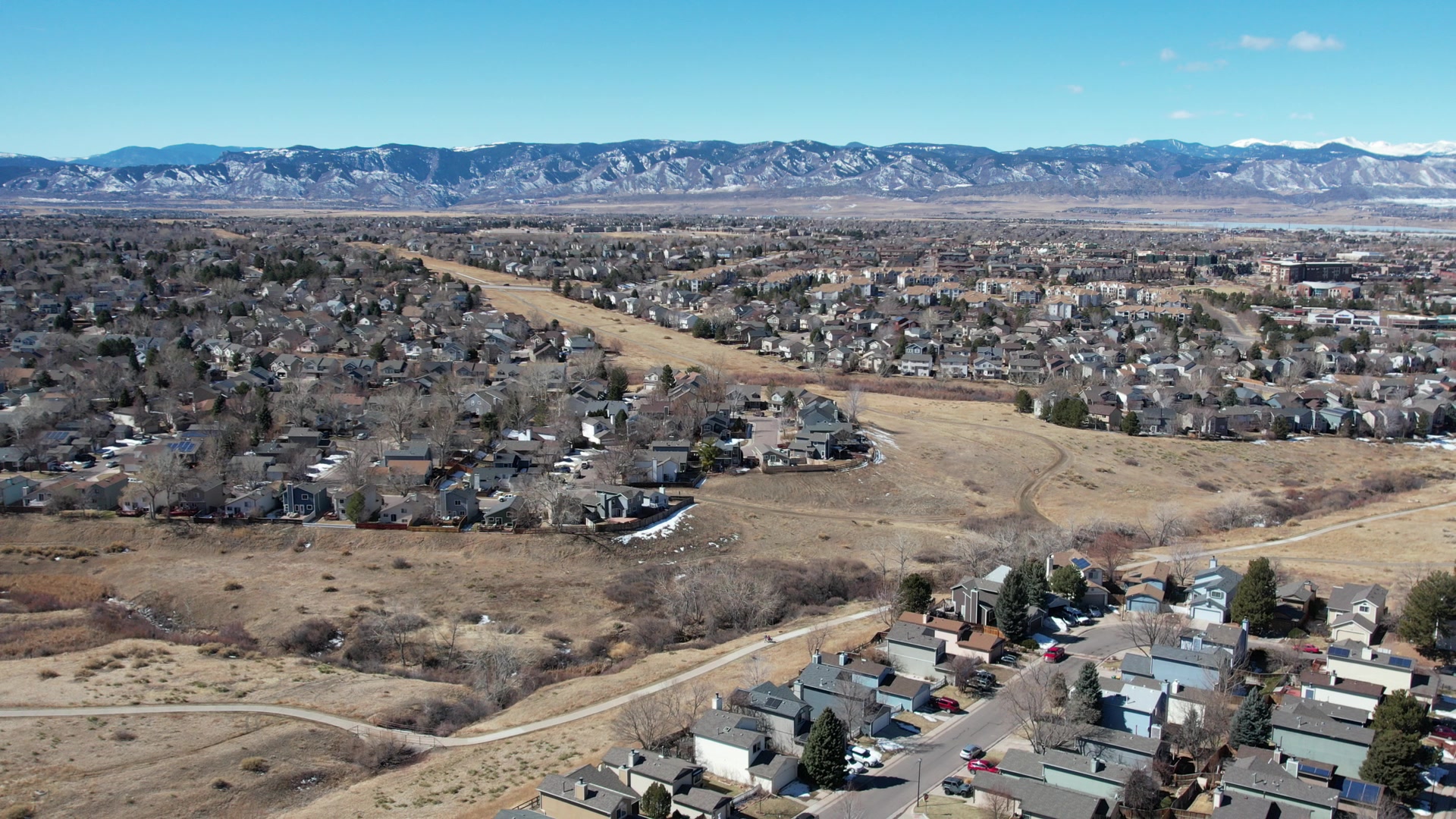
It's a different retirement than Arizona or Florida. Denver sits exactly one mile above sea level, the climate is semi-arid with low humidity, and the city gets roughly 3,100 hours of sunshine a year. Winter is real, and the mountains are a day trip, not a plane ride.
A simple three-step plan
- Pick the area that fits your life, not your kids' commute. Hospitals, a downtown you'll use, one-level living, then the drive to their house.
- Test a winter before you commit. Rent for a season, or at least visit between January and April.
- Run the numbers before you list your house back home. Full property tax, HOA or metro district costs, insurance and how you'll qualify.
Get those right and you're far more likely to get what you came for: close enough for Sunday dinners and emergencies, in a home and town that fit your next twenty years.
Why retirees choose the Front Range
- Sunshine, low humidity and four seasons
- Several major hospital systems, a VA medical center in Aurora and a Level I trauma hospital in Denver
- Denver International Airport, one of the busiest in the country, for trips to see family elsewhere
- Trails, open space and the mountains close by
- Grandkids: many people move here because their children already did
What gives people pause
- Altitude, which matters more if you have a heart or lung condition
- Dry air, hail and, in the foothills, wildfire risk and insurance costs
- Winter driving, especially in the mountains
- No senior property-tax exemption for the first ten years after you buy
- Metro districts and HOA dues on many newer homes
Which Front Range towns fit, and why?
This is step one. There's no single best town; it depends on what your next twenty years look like. Here's how the towns group by the things retirees ask about. Every town named has a full guide; read two or three before you visit.
A walkable downtown
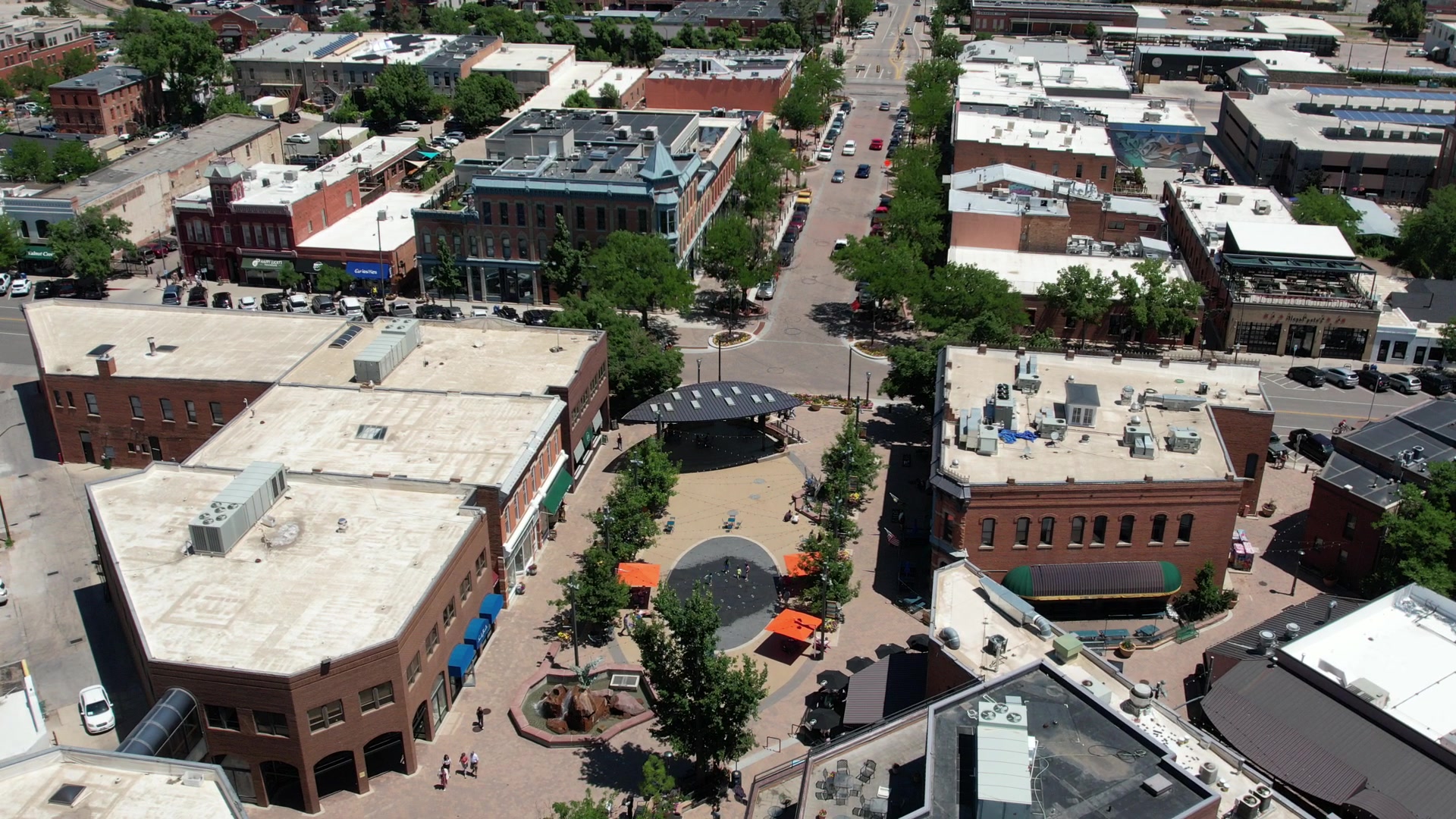
If you want to walk to coffee, dinner and a farmers market, look at towns with a historic main street: Littleton, Golden, Louisville, Superior and Lafayette, Longmont, Loveland, Fort Collins and Castle Rock. The trade-off: homes near those downtowns are often older, and the newest, lowest-maintenance homes are often on the edges of town.
Hospitals and specialists close by
Most of the larger towns have a hospital inside town limits. Aurora has the University of Colorado Hospital and the Rocky Mountain Regional VA Medical Center. Fort Collins, Greeley, Longmont, Broomfield, Highlands Ranch, Wheat Ridge, Brighton, Loveland and Colorado Springs all have at least one.
A quieter pace
Smaller towns trade shopping and hospitals for space and quiet: Berthoud, Johnstown, Windsor, Frederick and Firestone and Monument. Check the drive to the nearest hospital before you fall in love with a view.
Near the mountains
Golden, Evergreen and Conifer and Monument put you closest to the foothills. Check each address for elevation, snow, the drive to a hospital and, in wooded areas, wildfire risk that affects insurance.
Near family in the metro
If your kids live in the Denver metro, start with the guide for their town and the towns next to it: Denver, Lakewood, Arvada, Westminster, Centennial, Parker, Lone Tree, Erie, Thornton and the rest.
The honest trade-offs
These are worth knowing before you sign, not after.
Altitude and your health
Most of the Front Range sits around a mile high, below the sleeping altitude (about 8,000 feet, and sometimes lower) at which the CDC says unacclimatized travelers are at risk of altitude illness. The mountain towns you'll visit are higher. The CDC advises that people with conditions such as coronary artery disease or chronic lung disease talk with a physician familiar with altitude before traveling high, even if their condition is well controlled. If that's you, have that conversation before you buy, not after. This guide isn't medical advice.
Dry air and sun
Low humidity is part of the appeal and part of the adjustment. In his winter video, Jimmy is blunt about it: "your skin is going to get dry and it's going to crack," and his advice is to "get a humidifier. And don't get one of the cheap ones." The sun is strong at altitude too; the CDC notes higher ultraviolet exposure at elevation, and Jimmy points out that winter sun reflects off snow and ice. Sunscreen is a year-round habit here.
Winter
As Jimmy puts it, "the Colorado Front Range is an incredible place to live, but winter is still winter." On the plains, he says, many winter days run in the 20s and 30s, with a stretch of five or six days near zero most years: "Cold, yes. Completely unbearable, no." Snow often melts in the sun and refreezes at night into black ice. And winter runs long: "March and April tend to be our most wintry months," and a May snowstorm isn't unusual.
For retirees, the practical questions are who clears your driveway and walk, and how you'll get to appointments on a snowy day. Many HOAs handle snow removal; many don't. Ask before you buy.
Hail and wildfire
Colorado ranks second in the nation for hail insurance claims, after Texas, and hail is the state's most expensive insured catastrophe. Read your policy's hail and roof deductible before you buy. In the foothills and wooded areas, wildfire risk can make insurance harder to find. Colorado created an insurer of last resort, the Colorado FAIR Plan, for homeowners turned down by at least three insurers; it began taking applications in April 2025. Get insurance quotes during your inspection period, not after closing.
Distance to care
In the cities, a hospital is usually minutes away. In mountain and rural areas it can be much farther, and winter roads make it slower. If you or your spouse sees specialists regularly, map the drive from each home you consider.
Healthcare: hospitals and Medicare
The major hospital systems
The Front Range is served by several large systems:
- UCHealth: University of Colorado Hospital (the system's academic hospital, on the Anschutz campus in Aurora), plus hospitals in Colorado Springs (Memorial), Fort Collins (Poudre Valley), Greeley, Longmont (Longs Peak), Broomfield and Highlands Ranch, and the Medical Center of the Rockies in Loveland
- Intermountain Health: Saint Joseph Hospital in Denver, Lutheran Hospital in Wheat Ridge, Good Samaritan in Lafayette and Platte Valley in Brighton
- HCA HealthONE: Presbyterian/St. Luke's, Rose, Swedish, Sky Ridge, The Medical Center of Aurora and North Suburban, among others
- Denver Health: a Level I trauma center in central Denver
- Banner Health in Northern Colorado (McKee in Loveland, Banner Fort Collins), CommonSpirit (Penrose in Colorado Springs, Longmont United) and AdventHealth (including Littleton)
- Veterans: the Rocky Mountain Regional VA Medical Center in Aurora
Before you choose a town, check which systems your doctors and your insurance plan work with. That can matter as much as distance.
Medicare when you move
Medicare Advantage and drug plans are tied to a service area. As of October 2026, according to Medicare.gov, if you move out of your plan's service area, you can switch plans starting the month you move and for two full months afterward; tell your plan before you move and the window opens the month before. If you don't pick a new Medicare Advantage plan in that window, you're returned to Original Medicare.
Colorado's State Health Insurance Assistance Program (SHIP), run by the Division of Insurance with local partners around the state, gives free, unbiased Medicare counseling. It's worth a call before you move.
Taxes, in plain words
These rules change, so each one below is dated and linked. Check the official source before you count on any of them.
The senior property-tax exemption
As of October 2026, Colorado's senior property-tax exemption, which reduces the taxable value of a primary home, requires that you:
- Be 65 or older on January 1 of the year you apply
- Have owned the home for at least ten consecutive years before January 1
- Have lived in it as your primary residence for those same ten years
You apply through your county assessor, between January 1 and July 15. A surviving spouse of someone who qualified may also qualify, as long as they haven't remarried.
What this means for newcomers: if you move here and buy at 66, you'd generally qualify at 76. Plan your budget on the full property tax, not the reduced one.
A temporary "portable" version for seniors who had the exemption on a previous Colorado home and moved (Senate Bill 24-111) covered tax years 2025 and 2026. Senate Bill 26-116, signed in June 2026, ends that classification starting with tax year 2027.
Social Security and retirement income
As of the Colorado Department of Revenue's January 2025 guidance, taxpayers 65 and older can subtract all of their taxable Social Security benefits from Colorado income. People 55 to 64 can subtract all of it only if their income is under set limits; otherwise a capped subtraction applies. Pension and annuity income gets its own subtraction, capped by age group, and any Social Security you subtract counts against that cap. Your tax preparer can tell you what applies to you.
55+ and low-maintenance living
What "55+" actually means
A 55+ community is a legal category, not a marketing label. Under federal fair-housing rules, as of October 2026, HUD says at least 80 percent of occupied units must have at least one resident 55 or older, and the community must publish policies showing that intent and verify residents' ages. Communities for 62 and older must be occupied solely by people 62 and up. Ask any community how it meets those rules.
Other low-maintenance options
- Patio homes and paired homes: smaller lots, often with yard care and snow removal included in HOA dues
- Ranch-style homes: everything on one level, which matters more each year
- Condos and townhomes: less to maintain, but read the HOA's budget and reserves
HOAs and metro districts
On many newer Front Range homes, the monthly cost includes more than the mortgage. HOA dues pay for shared upkeep. A metro district is different: it's a local government, often formed by the developer, that borrows to build roads, water lines and parks, and its mill levy appears on your property tax bill. The state's Division of Local Government notes that levies can rise if development falls short, and that sellers of homes in districts formed since 2000 must disclose district debt and tax information. Ask for both before you write an offer.
Moving to be near family
In Jimmy’s words: “Diane was the very first person from YouTube to work with me on buying a home here. She and her husband had lived in Oregon for a long time. They loved visiting Colorado, and their daughter was going to college here, but they weren’t sure what living here would actually feel like, and they knew the cost of living would take some adjusting to. We had several conversations about the area, and I prepared scenarios on the homes she was interested in. I connected her with local experts in real estate, local businesses and other fields, so she had a team she could ask questions of and we could cover as many blind spots as possible. We were patient and made sure she had plenty of resources. They bought in Littleton, close to downtown, walkable, with quick access to the mountains for skiing. Today both of their kids live in Colorado, and they’re still enjoying life here.”
This is one of the most common reasons people retire to the Front Range, and one of the easiest to get wrong. Being near your family should feel like the reward, not a compromise you're stuck with. Here are the questions worth answering before you list your house back home.
How close is close enough?
Living around the corner sounds ideal. Some families love it; others find it's a lot of togetherness. Think about what you actually want: Sunday dinners, school pickups, or being able to get there in an emergency. Twenty minutes away often covers all three while giving everyone a little room.
What if your kids move again?
Young families move for jobs. Ask your children, honestly, how settled they are, and pick a town you'd enjoy even if they relocated in five years. A town with a hospital, a downtown and things you like to do holds up better than a house chosen only for its distance to theirs.
Don't choose for their commute
Your kids may pick a suburb for its schools or their drive to work. You don't need either. You can live one town over in something quieter, closer to care or with a walkable downtown, and still be close.
Buy first, or sell first?
Buying before you sell gives you time to move once; selling first gives you certainty about your budget. Each has costs. Talk with a lender early about whether you can qualify for the new home while you still own the old one.
Rent first, and try a winter
If you're unsure about the town, rent for six months to a year first. Make sure that rental includes a winter. Spending January through April here tells you more about daily life than any summer visit will.
Getting around
Transit for older adults
As of October 2026, RTD offers a senior discount on regular bus and train service for riders 65 and older; a state ID or driver's license showing your birth date is usually all you need. Access-a-Ride, RTD's paratransit service, is separate, and the senior discount doesn't apply to it. Outside the RTD area, Bustang buses connect Fort Collins, Loveland and Colorado Springs to Denver; the town guides have details.
Local help for older adults
As of October 2026, Colorado has 16 Area Agencies on Aging. In the Denver metro, DRCOG's Area Agency on Aging offers information and assistance, Medicare counseling, transportation help, in-home services and caregiver support. Larimer and Weld counties run their own, and the Pikes Peak Area Agency on Aging serves the Colorado Springs region.
Air travel
Denver International Airport was the fourth-busiest U.S. airport in 2025 and, as of October 2026, lists more than 230 nonstop destinations, which helps with visits to family elsewhere.
Driving in winter
From September 1 through May 31, CDOT can activate Colorado's Traction Law on I-70 in the mountains when conditions require, and it requires proper tires or chains; CDOT recommends all-wheel or four-wheel drive in the mountains. In town, Jimmy's advice from his winter video holds: "All-wheel drive and four-wheel drive does not mean all-wheel stop." He suggests practicing in an empty parking lot after the first good snow.
Retiring here as a veteran
Several Colorado benefits are written specifically for veterans.
Using a VA home loan in retirement
A VA-backed loan isn't only for active-duty buyers. Federal VA rules say a lender can't discount income just because it comes from an annuity, pension or other retirement benefit, and that it counts as primary income if it's reasonable to expect it to continue. Your VA entitlement can also be used more than once: according to VA.gov, you may be able to restore entitlement you used before, for example after selling the home and paying the old loan in full, and you may have remaining entitlement even if you can't restore it. The site's VA loan guide covers the basics.
Colorado's property-tax exemption for disabled veterans
This is separate from the senior exemption, and it doesn't carry the ten-year wait. As of October 2026, according to the Colorado Division of Veterans Affairs, it's available to an honorably discharged veteran with a service-connected disability rated 100 percent permanent by the VA, or paid at the 100 percent rate through individual unemployability, and to certain Gold Star spouses. The home must be your primary residence, owned and occupied since January 1 of the year you apply. Applications go to your county assessor between January 1 and July 1.
Colorado income tax on military retirement pay
As of October 2026, the Colorado Department of Revenue says retirees under 55 at the end of the tax year can claim a capped military retirement subtraction, and those 55 and older use the regular pension and annuity subtraction described in the taxes section. A tax preparer can tell you how it applies to you.
VA health care on the Front Range
The Rocky Mountain Regional VA Medical Center in Aurora is the region's main VA hospital. As of October 2026, VA also lists clinics in Colorado Springs (including the PFC Floyd K. Lindstrom clinic), Castle Rock, Englewood and Golden, and, in Northern Colorado, clinics in Fort Collins and Loveland.
Military communities
Fort Carson and the U.S. Air Force Academy, both near Colorado Springs, each have a VA clinic on site. The Colorado Springs and Monument guides cover those areas in detail.
Buying in retirement
You don't need a paycheck to buy a home. Lenders can count Social Security, pension and annuity income, and regular retirement-account distributions that are expected to continue. Under Fannie Mae's employment-related assets guideline, retirement accounts you have unrestricted access to (less any withdrawal penalty) can also be counted as qualifying income. If you're buying before you sell, a lender can look at whether you qualify carrying both homes for a while.
A reverse mortgage to buy a home
A reverse mortgage isn't only for staying put. The Home Equity Conversion Mortgage (HECM), the most common type, is for homeowners 62 and older and is federally insured through HUD (that insurance protects the lender, not you). Since 2009, HUD has allowed a HECM to be used to buy a new principal residence, often called HECM for Purchase. Here's the catch to understand up front. The reverse mortgage only lends up to its limit, and HUD requires you to pay the difference between that limit and the price, plus costs that aren't financed, from your own cash or the sale of your assets. According to the CFPB, the limit depends on the age of the youngest borrower (or eligible non-borrowing spouse), interest rates and the home's value or the FHA lending limit, whichever is lower, so the down payment can be a large part of the price. A HUD-approved counselor can show you the real figure for your age and the home you want. You don't make monthly mortgage payments, but the loan isn't free money. What to know going in:
- Counseling with an independent, HUD-approved counselor is required before you apply
- You must move in within 60 days of closing and keep it as your primary home
- You still pay property taxes, homeowners insurance, HOA dues and upkeep
- Interest and fees are added to the balance, so the loan grows and your equity shrinks over time
- The loan is repaid when you sell, move out or pass away
- A spouse who isn't on the loan may be able to stay in the home if they meet HUD's rules as an eligible non-borrowing spouse, according to the CFPB; ask about this before you sign
It's a fit for some retirees and not for others. The counseling session exists to help you decide.
Your next step
It comes back to the three steps: pick the area that fits your life, test a winter, and run the numbers before you list your house back home. The numbers usually come down to a few questions:
- Buy here first, or sell first? Buying first means a lender checks whether your income and savings can carry both homes for a while.
- A traditional mortgage or a reverse mortgage for purchase? A traditional loan on retirement income and savings tends to fit buyers who are comfortable with a monthly payment and want to keep more equity. A HECM for Purchase tends to fit buyers 62 and older who'd rather not have a monthly mortgage payment and can make a larger down payment. Neither is right for everyone.
- For veterans, a VA loan? If you have entitlement, it may be an option on a retirement home too.
Jimmy Everetts, a Navy Submarine Veteran, leads the Everetts Lending Team at Edge Home Finance, which offers traditional loans for buyers on retirement income, VA loans and reverse mortgages, including HECM for Purchase. If you're weighing a move to be near family, book a 15-minute call with Jimmy to talk through your numbers, or grab the free PDF of this guide below.
In pictures






Watch the videos
Help shape what Jimmy films next
Which town should Jimmy cover next, and what do you still want to know? Tell us, and we'll email you when the guide and video are out.
Thank you — this genuinely helps. We'll let you know when it's ready.
Frequently asked questions
Can I get Colorado's senior property-tax exemption if I just moved here?
Not right away. As of October 2026, you must be 65 or older and have owned and lived in the home as your primary residence for ten consecutive years before January 1 of the year you apply. You apply through your county assessor.
Does Colorado tax Social Security?
As of the Department of Revenue's January 2025 guidance, taxpayers 65 and older can subtract all taxable Social Security benefits from Colorado income. People 55 to 64 can subtract all of it only below set income limits. Pension and annuity subtractions are capped by age.
Is Denver's altitude a problem for older adults?
Denver is about a mile high, below the sleeping altitude (about 8,000 feet, and sometimes lower) at which the CDC says unacclimatized travelers are at risk. If you have heart or lung disease, the CDC recommends talking with a physician familiar with altitude before going higher, and it's wise to have that conversation before you move.
What happens to my Medicare if I move to Colorado?
If you have a Medicare Advantage or drug plan, you can switch to a Colorado plan starting the month you move and for two full months after. If you're in Medicare Advantage and don't choose a new plan, you're returned to Original Medicare. Colorado SHIP offers free Medicare counseling.
Can I use a reverse mortgage to buy a home in Colorado?
Yes. HUD allows a HECM to be used to buy a new principal residence if you're 62 or older. You make a down payment from your own funds, counseling with a HUD-approved counselor is required, and you keep paying taxes, insurance and upkeep.
Do veterans have to wait ten years for a Colorado property-tax break?
No. As of October 2026, the disabled veteran exemption has no ten-year rule. An honorably discharged veteran with a 100 percent permanent service-connected disability rating (or paid at that rate through individual unemployability) who has owned and lived in the home since January 1 can apply to the county assessor between January 1 and July 1; certain Gold Star spouses also qualify. Other requirements apply, so confirm with your county assessor.
Which Front Range towns have a major hospital close by?
Aurora, Denver, Fort Collins, Greeley, Longmont, Loveland, Broomfield, Highlands Ranch, Wheat Ridge, Brighton, Lafayette, Littleton and Colorado Springs all have at least one hospital in town. Check which systems your doctors and insurance plan use.
Take this guide with you
Get the printable PDF version to read offline, share with your family or mark up on your scouting trip. Enter your name and email and it's yours.
Thanks! Your guide is ready.
Download the PDFNo spam. Jimmy may follow up personally to see if you have questions about the move.
Sources
Guide reviewed October 28, 2026, and reviewed again twice a year.
- Denver (elevation of one mile, semi-arid climate, low humidity, about 3,100 hours of sunshine a year)
- CDC Yellow Book: High-Altitude Travel and Altitude Illness (risk at sleeping altitudes of about 8,000 feet and sometimes lower; preexisting heart and lung conditions; ultraviolet exposure)
- Destination Denver Colorado: The Harsh Reality of Colorado Winters That Nobody Tells You! (Nov. 2025; Jimmy's winter quotes)
- Colorado Public Radio: What to know when filing a claim for hail damage (Colorado second in hail claims after Texas; hail the costliest insured catastrophe)
- CBS Colorado: Colorado "insurer of last resort" created for homeowners with no other options (FAIR Plan; at least three insurer rejections; Dec. 2024)
- The Colorado Sun: Colorado FAIR Plan applications launch (began accepting residential applications April 10, 2025; three insurer rejections)
- UCHealth (hospitals in Aurora, Colorado Springs, Fort Collins, Greeley, Longmont, Broomfield, Highlands Ranch)
- University of Colorado Hospital (Anschutz Medical Campus, Aurora)
- Poudre Valley Hospital (UCHealth, Fort Collins)
- UCHealth Medical Center of the Rockies (Loveland)
- Intermountain Health (Colorado hospitals: Saint Joseph, Lutheran, Good Samaritan, Platte Valley)
- HCA HealthONE (hospital list)
- Denver Health Medical Center (Level I trauma center)
- Banner Health: McKee Medical Center (Loveland)
- Banner Health: Banner Fort Collins Medical Center
- Penrose Hospital (Colorado Springs, CommonSpirit)
- Longmont United Hospital (CommonSpirit)
- AdventHealth Littleton
- VA: Rocky Mountain Regional VA Medical Center (Aurora)
- Medicare.gov: Special Enrollment Periods (moving out of your plan's service area)
- Colorado Division of Insurance: Senior Health Care and Medicare (SHIP free Medicare counseling)
- Colorado Division of Property Taxation: Senior Property Tax Exemption (age, ten-year ownership and occupancy, surviving spouse, January 1 to July 15 filing)
- Colorado General Assembly: SB24-111, Senior Primary Residence Property Tax Reduction (tax years 2025 and 2026)
- Colorado General Assembly: SB26-116, Property Tax Modifications (ends the qualified-senior primary residence classification from tax year 2027; signed June 2, 2026)
- Colorado DOLA: 2026 Qualified Senior Primary Residence classification (March 2026 release)
- Colorado Department of Revenue: Social Security, Pensions and Annuities (revised Jan. 2025)
- HUD: Fair Housing Act, Housing for Older Persons (55+ and 62+ rules)
- 24 CFR 100.305: Housing for persons who are 55 years of age or older (80 percent of occupied units)
- Colorado Division of Local Government: Special Districts, A Brief Review for Residents and Prospective Homeowners (metro districts, mill levies, disclosures)
- RTD: Discount Fares (seniors 65+, ID, not valid on Access-a-Ride)
- CDOT Bustang: North Line
- CDOT Bustang: South Line
- Larimer County: What is an Area Agency on Aging? (16 AAAs in Colorado)
- DRCOG: Area Agency on Aging (information and assistance, Medicare counseling, rides, in-home services, caregiver support)
- Weld County: Area Agency on Aging
- Pikes Peak Area Council of Governments: Pikes Peak Area Agency on Aging
- Denver International Airport: About DEN (fourth-busiest U.S. airport in 2025; nonstop destinations)
- CDOT: Traction Law and Passenger Vehicle Chain Law (I-70, Sept. 1 to May 31; AWD/4WD recommended)
- Fannie Mae Selling Guide B3-3.4-03: Annuity, Pension, or Retirement Income
- Fannie Mae Selling Guide B3-3.4-06: Employment-Related Assets as Qualifying Income
- Fannie Mae Selling Guide B3-3.4-15: Social Security Income (may be used as qualifying income)
- CFPB: What is a reverse mortgage? (HECM most common type; 62 and older; balance grows)
- FTC: Reverse Mortgages (federally insured by HUD; counseling required; taxes, insurance, HOA fees, upkeep)
- HUD Mortgagee Letter 2008-33: HECM for Purchase (buying a principal residence; move in within 60 days; down payment from own funds)
- 38 CFR 36.4340(f)(3): VA underwriting standards (no discounting of annuity, pension or retirement income)
- VA.gov: Eligibility for a VA home loan (restoring and reusing entitlement; remaining entitlement)
- Everetts Lending: VA Loan Guide
- Colorado Division of Veterans Affairs: Property Tax Exemption (disabled veterans and Gold Star spouses; no ten-year rule; owned and occupied since January 1; apply to the county assessor January 1 to July 1)
- Colorado Department of Revenue: Retired Servicemembers (military retirement subtraction under 55; pension and annuity subtraction 55 and older)
- VA Eastern Colorado Health Care: Locations (Colorado Springs, Castle Rock, Englewood, Golden, Fort Carson, Air Force Academy)
- VA: PFC Floyd K. Lindstrom VA Clinic (Colorado Springs)
- VA Cheyenne Health Care: Locations (Fort Collins and Loveland clinics)
- CFPB: Reverse mortgage key terms (principal limit based on youngest borrower's or eligible non-borrowing spouse's age, interest rate; eligible non-borrowing spouse)
Photo credits
- UCHealth Highlands Ranch Hospital. Photo: Xnatedawgx / CC BY-SA 4.0, via Wikimedia Commons.
- All other photos: Jimmy Everetts / Destination Denver Colorado.
Thinking about moving here?
Ask Jimmy anything about the area, the neighborhoods or the move itself. No pressure, just straight answers from a local.


