


Greeley
The short answer
Greeley is a city of about 114,000 people and the county seat of Weld County, about 50 miles north-northeast of Denver as the crow flies (about 60 by road), where the Cache la Poudre River meets the South Platte. It was founded as a farming colony in 1870, it is home to the University of Northern Colorado and the headquarters of JBS USA, and agriculture still shapes its economy, its water story and, on the wrong wind, its air. It suits people who want more house for the money than Fort Collins or Loveland, a real college-town downtown and a job in Weld County. It suits people less well if they commute to Denver, Boulder or the Tech Center every day, want rail transit, or don't want to think about feedlots, oil and gas, or the water and metro-district costs built into a new west-side home.
Watch: Jimmy's video on this area
Is Greeley the right fit for you?
Greeley is one of the more affordable communities in all of Colorado to live. I said that when I toured Northern Colorado's towns in 2024, and a June 2025 Denver Gazette report still had Greeley more affordable than Loveland and Fort Collins. Greeley is big on agriculture. It was founded as a farm town and it's still huge into agriculture; you'll see that. The feedback I get a lot is that it's a blue-collar community that takes a lot of pride in that, in putting in the time and working their tails off.
The history explains the place. Nathan Meeker, an agricultural reporter for the New York Tribune, organized the Union Colony in 1869 with the backing of Tribune editor Horace Greeley. The colonists bought about 12,000 acres at the confluence of the Poudre and South Platte and named the town for Greeley; their first irrigation ditch, Ditch No. 3, began operating in June 1870. The colony was founded on temperance, and alcohol sales stayed prohibited in Greeley until a 1969 vote. The town incorporated in 1885 and took the county seat from Evans in the 1870s. Today it covers about 49 square miles, grew from 108,795 people in the 2020 census to an estimated 114,363 in 2024, and city officials expect about 260,000 residents within two to three decades.
Why people choose Greeley
- More affordable than its Larimer County neighbors, with a full-size city's services
- The University of Northern Colorado, with that college-town feel when school is in session, plus Aims Community College
- A diverse job base: JBS, two hospitals, the county, the university, State Farm and food manufacturing
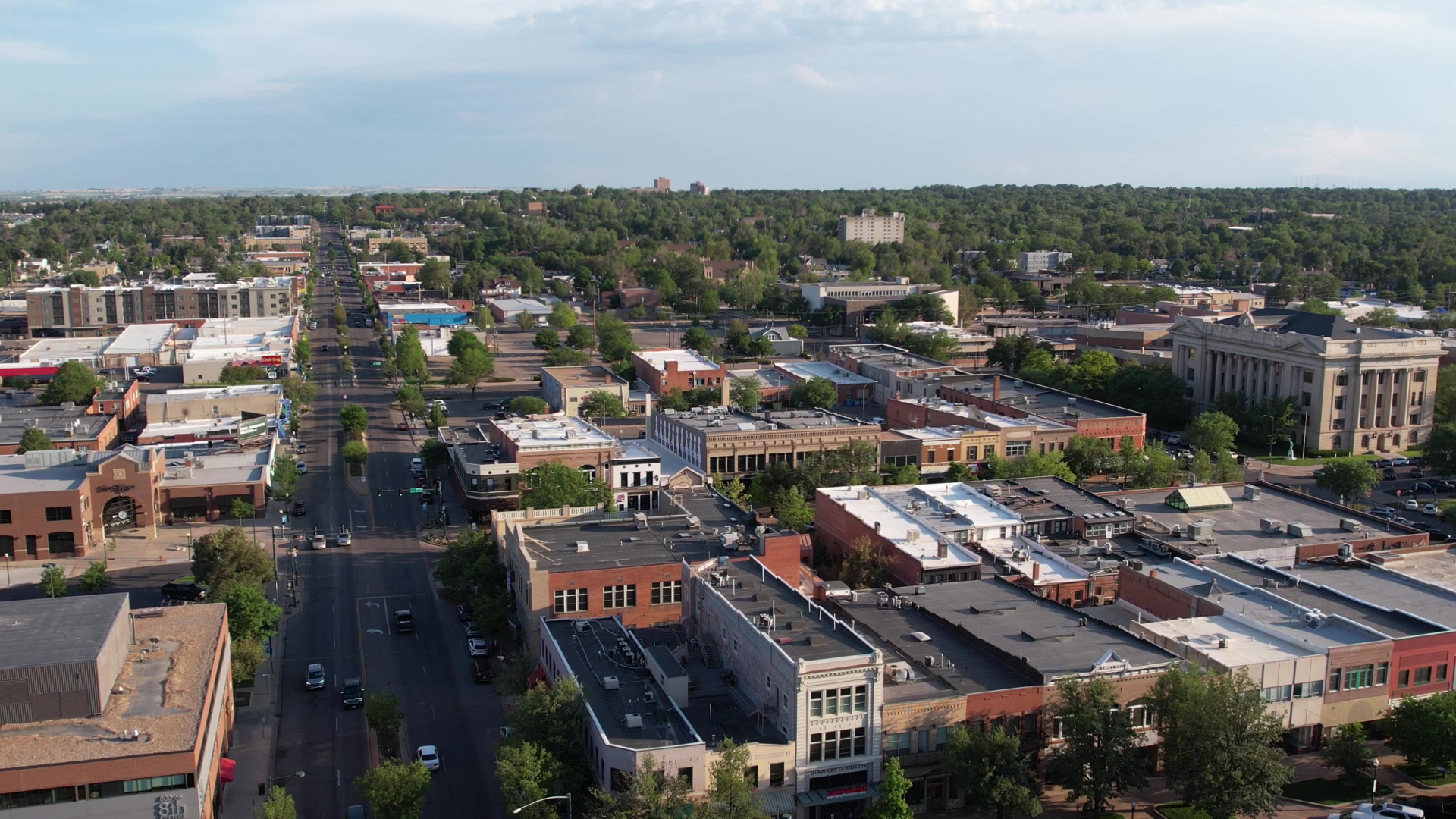
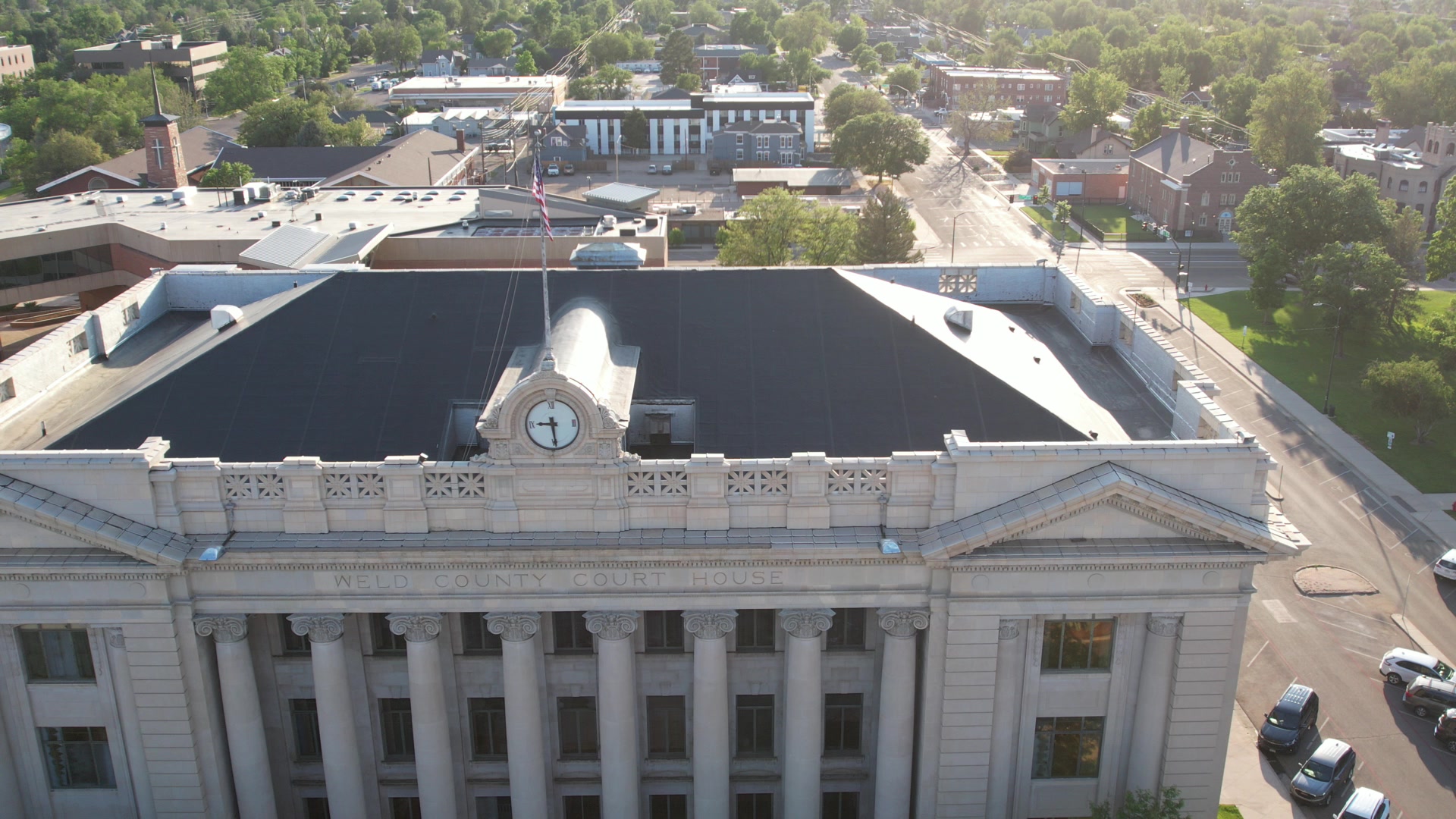
- A walkable downtown with the Weld County buildings and local restaurants
- The Greeley Stampede, the Poudre River Trail and Island Grove Regional Park
- Deep, diversified water rights dating to the colony era, drawn from four river basins on both sides of the Continental Divide
What gives people pause
- The smell. There's what's commonly called the Greeley smell, and I'm not dogging Greeley by saying it: there's a lot of agriculture and feedlots out there, and those odors travel. The odor comes in on northeast winds, the same upslope pattern that often brings snow, which is where the old line "smells like Greeley, it's gonna snow" comes from. The last feedlot inside the city was bought out decades ago, and the city set up an odor hotline in 1995.
- The commute. Downtown Denver is more than an hour away off-peak, and there is no rail.
- New-home costs. West Greeley's newer subdivisions often carry metro districts, and every new home pays for raw water and treatment capacity up front.
- Oil and gas. Weld County sits on the Wattenberg field, and well sites are part of the landscape.
- Hail and the rivers. Greeley sees regular hail, and the 2013 floods submerged whole neighborhoods in Greeley and Evans.
Where is Greeley, and how do you get around?
Greeley sits on the plains about 49 miles north-northeast of the State Capitol, bordered by Evans and Garden City on the south, with the South Platte as the southern edge of the Greeley-Evans area and the Poudre running along the north side. US 34 is the east-west spine, an expressway from Loveland to Greeley with a complex interchange at US 85, which runs north-south through town toward Denver. The drive times below are off-peak estimates from downtown Greeley using OpenStreetMap routing; add time at rush hour.
- Into Denver: About 60 miles. Plan on 65 to 80 minutes off-peak to downtown, via US 85 south or US 34 west to I-25.
- Into Boulder: About 55 miles, roughly 65 to 75 minutes.
- Into the Tech Center: About 75 miles, roughly 85 to 95 minutes off-peak.
- Fort Collins and Loveland: Old Town Fort Collins is about 30 miles and 40 to 45 minutes; downtown Loveland is about 20 miles and 30 to 35 minutes.
- Local transit: The city's bus system, Gallop (formerly Greeley-Evans Transit, or GET), runs Routes 1 through 5 plus UNC's Boomerang shuttle, simplified on August 20, 2026.
- Regional buses: The Poudre Express links Greeley, Windsor and Fort Collins, and Express Arrow intercity buses serve Denver. CDOT's Bustang Outrider branch between Sterling and Greeley was discontinued for low ridership; as of 2026 the Outrider runs Sterling to Denver without a Greeley stop.
- Rail: None. As of fall 2026, the Colorado Connector passenger train (the Front Range Passenger Rail project) is planned to run Denver to Fort Collins by way of Boulder, Longmont and Loveland, with limited service targeted for 2029. Greeley is not on the route and is not one of the cities in the district voting on its sales tax in November 2026.
- The airport: DIA is about 58 miles, roughly 60 to 75 minutes. Greeley-Weld County Airport, about three and a half miles east of downtown, is general aviation only, though as of 2026 local officials are pursuing the certification commercial service would need. Northern Colorado Regional Airport near Loveland is about 30 minutes away; its last airline, Avelo, pulled out in 2022, so check the airport for current service.
- The mountains: US 34 west through Loveland leads into Big Thompson Canyon, Estes Park and Rocky Mountain National Park. Estes Park is about 50 miles, roughly 90 minutes.
What are Greeley's neighborhoods like?
Greeley grew outward from its colony-era core, and the homes get newer, and the special-district paperwork thicker, the farther west you go.
Downtown and the historic core
The original colony grid around Lincoln Park, the Union Colony Civic Center and the Weld County buildings. The Monroe Avenue historic district, along today's 9th Avenue from 11th to 16th Street, holds Queen Anne, Foursquare, Italianate and bungalow homes built between the 1870s and the 1920s for early Greeley's professional class. Major exterior changes there go through the Historic Preservation Commission. The Cranford neighborhood, with historic homes on tree-lined streets, was surveyed for possible designation in 2023.
Around UNC
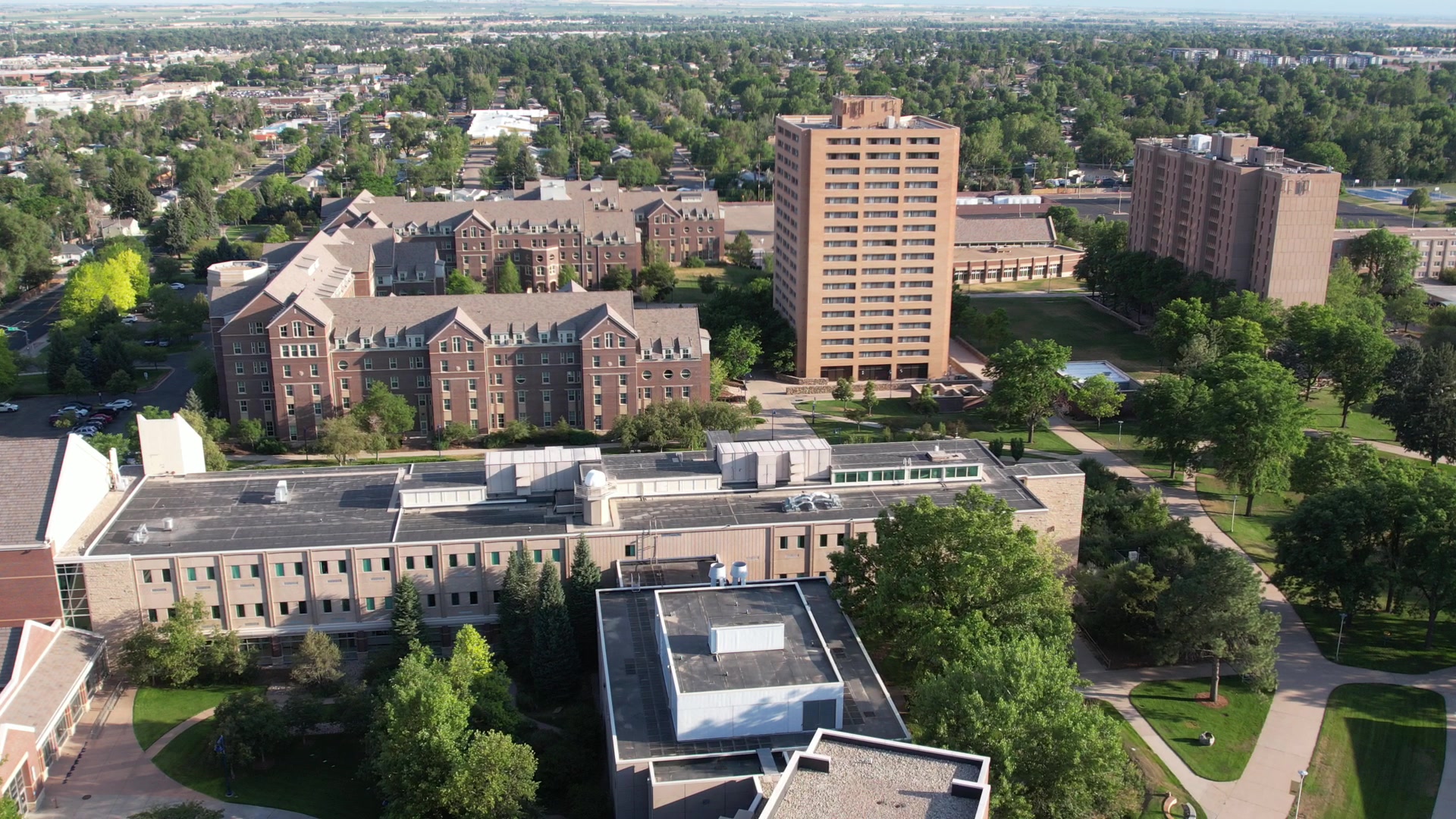
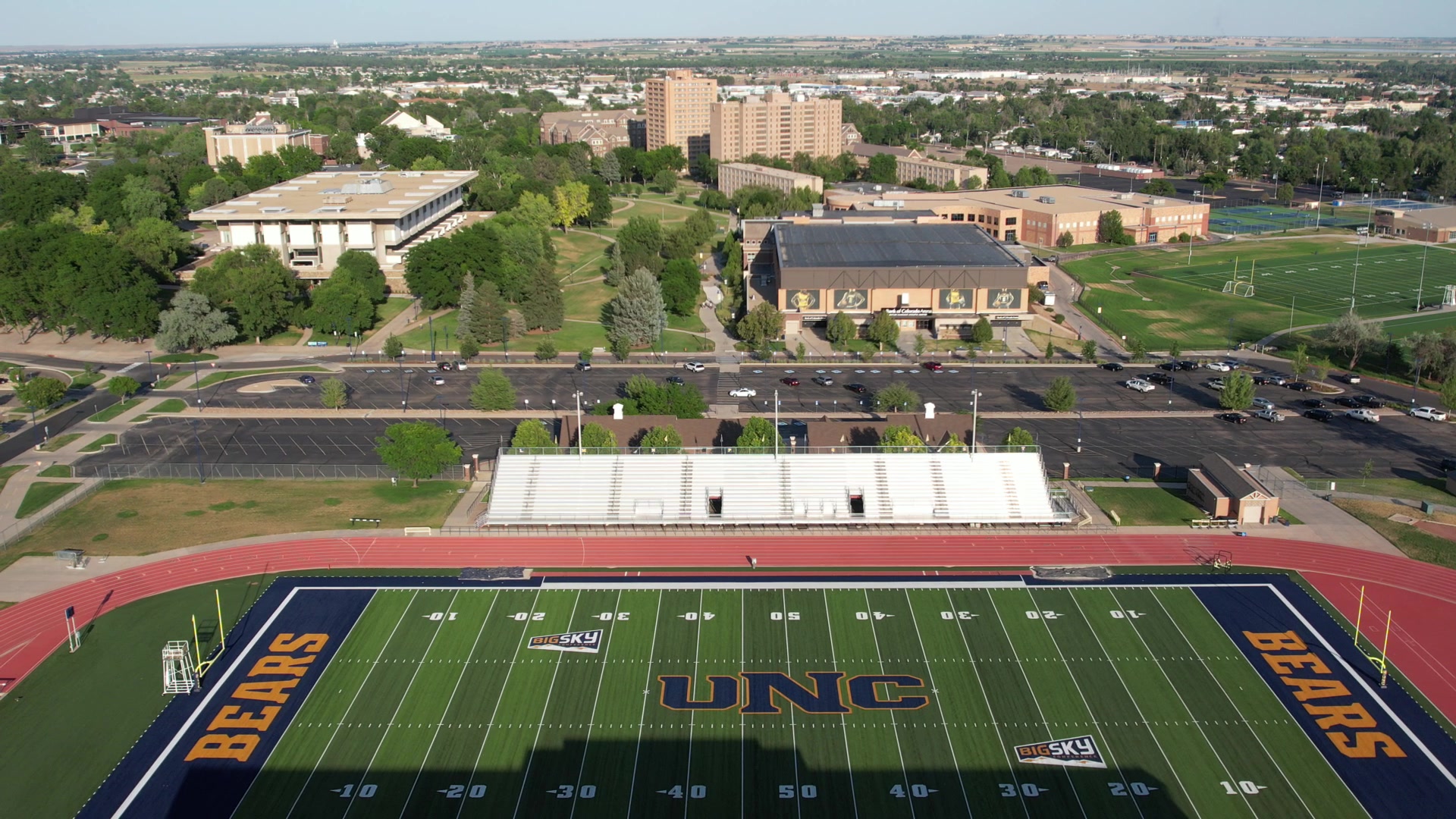
The University of Northern Colorado's 260-acre campus sits south of downtown, with Central Campus north of 20th Street and west of 8th Avenue. Expect older owner-occupied homes mixed with student rentals. UNC's new College of Osteopathic Medicine opened its 20th Street building and seated its first class in fall 2026.
North and east Greeley
The older, working parts of town near the Poudre, Island Grove Regional Park and the JBS beef plant on the northeast side, with the Greeley-Weld County Airport farther east. Homes tend to be older and more modest. The May 28, 2024 hailstorm hit the east side hardest, and the 2013 flooding reached neighborhoods near the rivers. Just north of the city, the historic Spanish Colony neighborhood was surveyed for its history in 2026.
West Greeley
The established subdivisions west of the core, along the 10th Street, 20th Street and US 34 corridors, around Greeley West High School, where the city's bus system added a transfer stop at 35th Avenue in August 2026. Homes here are older than on the far west side, and fewer of them come with the metro-district layer.
Far west Greeley
The growth edge, west toward Windsor and Johnstown, with new subdivisions on former farmland. This is metro-district territory: in 2024 the city approved eight metro districts for the Union Colony West subdivision alone, planned for about 1,200 housing units; districts like Westgate finance streets, sewers, parks and trails, and City Center West issued bonds in 2025. Parts of west Greeley are in Weld RE-4, Windsor's school district, rather than District 6.
Cascadia and the Catalyst site
The planned Cascadia mixed-use community and the city-owned Catalyst entertainment district, about 834 acres together, between Weld County Road 17 and Highway 257 on Greeley's west edge. Catalyst is planned around a Colorado Eagles hockey arena, an indoor water park and a conference hotel. Voters repealed the zoning in February 2026; a judge ruled that vote invalid on September 10, 2026, so Cascadia can proceed, but the city says Catalyst remains paused while it seeks a financial partner, and opponents have weighed an appeal. Treat it as in-progress as of fall 2026.
Evans and Garden City
Separate municipalities on Greeley's south side. Evans, about 22,000 people and twice the county seat in the 1870s, shares Greeley-Evans School District 6 and the transit system. It sits along the South Platte, and the 2013 flood shut down its wastewater plant and put residents on water-use restrictions. Check the city on the deed: same metro area, different city government and taxes.
What does it cost to own a home in Greeley?
Know the whole monthly payment, not just the price. Greeley-specific points:
- Property tax — One county. The Weld County Assessor, at 1400 N. 17th Avenue in Greeley, has the tax district and mill levy for every parcel. Look up the exact address.
- Metro districts — Common in far west Greeley's newer subdivisions, where they finance streets, sewers, parks and trails and then maintain common areas. Get the district's name and levy before you offer.
- HOA and covenants — Newer subdivisions usually have covenants, and some metro districts enforce them directly, including landscaping deadlines after closing. Older central neighborhoods often have none.
- Water and tap fees — Every new development must dedicate raw water to the city: water shares from the Greeley-Loveland system, Colorado-Big Thompson units, credits from the Terry Ranch project, or cash-in-lieu, at a standard of three acre-feet per acre for single-family land. New homes also pay plant investment fees by tap size, which usually change every March 1. Builders typically pass these costs into new-home prices; a resale home usually already has its tap. The current fee schedules are on Greeley Water and Sewer's development pages.
- Insurance — Hail is the big one. The farmland around Greeley sees seven to nine hail days a year, and the May 2024 storm left over a foot of hail in parts of east Greeley. Near the Poudre or South Platte, check the flood zone.
- Sales tax — Greeley taxes groceries, and has since 1990, with a LIFT UP rebate for qualifying low-income residents. Ballot Measure 2F, on the November 3, 2026 ballot, would raise the city sales and use tax (groceries excluded) to fund capital projects, including the Downtown Civic Campus and the West Greeley Catalyst. Check the city's sales tax page for current rates.
- Older-home costs — Homes in the historic core can be over a century old. Budget for roofs, sewer lines, electrical and foundations.
What kinds of homes are in Greeley?
Victorian-era and early-1900s houses in the Monroe Avenue district and around downtown; bungalows and modest older homes across the central and east sides; student rentals and small multifamily near UNC; mid- and late-century ranches, split-levels and two-stories through west Greeley; and new construction on the far west side, much of it in metro districts. Outside the city limits, unincorporated Weld County has acreage and farm properties, some on wells or septic. New means west, with water and infrastructure in the price.
How do schools work in Greeley?
Greeley-Evans School District 6 serves most of Greeley plus Evans, Garden City and nearby unincorporated Weld County: about 22,800 students in 2025-26 across 33 schools, with Greeley Central, Greeley West, Northridge and Jefferson high schools and an Early College Academy. It has five charter schools: Frontier Academy, Union Colony Schools, University Schools, West Ridge Academy and Salida del Sol Academy. In September 2026 it reported its highest state accreditation score since 2016. Parts of west Greeley are in Weld RE-4, the Windsor-Severance district of about 8,800 students as of 2026. 17 school districts serve parts of Weld County, so on the edges of town don't assume.
District 6 runs open enrollment through a lottery: for 2027-28, applications are open November 1 to December 17, 2026. Seats aren't guaranteed and the district doesn't provide transportation for students who choose a school outside their boundary. Charters set their own timelines. Always check the specific school for the specific address.
What is there to do in Greeley?
Parks, trails and open space
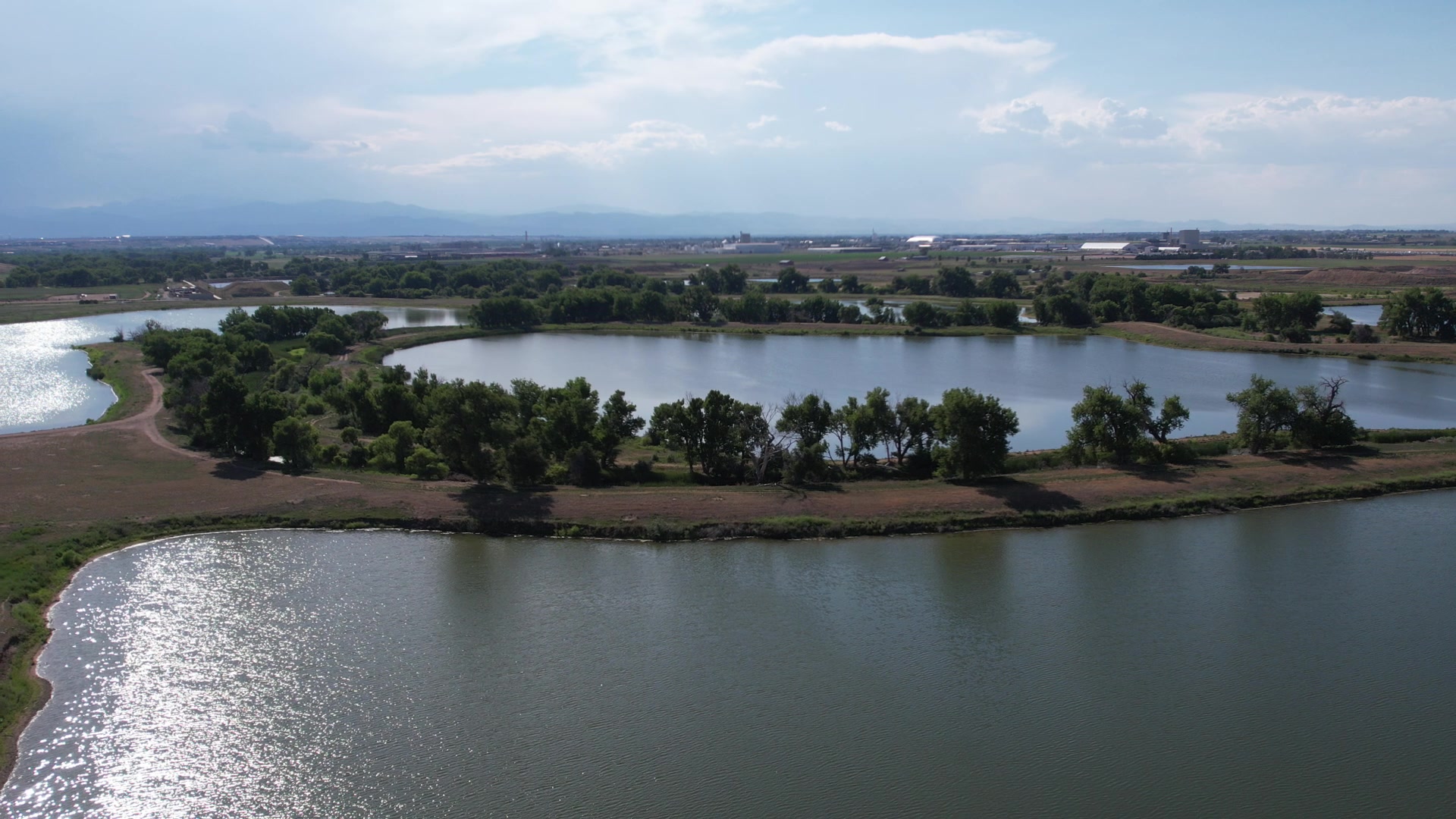
The Poudre River Trail is the centerpiece: about 21 miles of 10-foot-wide paved trail between Greeley and Windsor along the river, run by a nonprofit the city, Windsor and Weld County set up together. Island Grove Regional Park hosts the Stampede and other arena events, shows and exhibitions. Lincoln Park anchors downtown, and the city's Greeley History Museum and Centennial Village Museum cover the colony story. The city runs two golf courses, the Family FunPlex and the Ice Haus.
Events
The Greeley Stampede is the big one: it began in 1922 as the Greeley Spud Rodeo and now runs for nearly two weeks leading up to the Fourth of July at Island Grove, with PRCA rodeo, Xtreme Bulls, concerts, a carnival, a demolition derby and parades. Downtown hosts summer Friday Fests, Oktobrewfest and WinterFest with Light Up Lincoln. The Union Colony Civic Center's 1,686-seat Monfort Concert Hall brings touring Broadway shows, and the Greeley Philharmonic has played since 1911.
Food and beer
Downtown has a cluster of local restaurants and bars, and in 2012 Greeley became the first Colorado city to use the state's common-consumption law, so you can carry a drink between participating spots in the downtown entertainment district.
Three places to start
- Downtown Greeley — Walk from the Weld County buildings to Lincoln Park and the Civic Center, then stay for dinner on a Friday Fest night.
- The Poudre River Trail — Pick it up in Greeley and ride west along the river toward Windsor.
- Island Grove during the Stampede — Go once in late June or early July to see the town's farm-and-ranch roots up close.
Who are the big employers in and near Greeley?
JBS USA, the meatpacking company, is headquartered in Greeley and runs the beef plant on the northeast side; it was the city's largest employer in 2023 with about 5,100 workers. Banner Health's North Colorado Medical Center, a 223-bed teaching hospital that opened in 1952 as Weld County General, was second at about 4,600, and UCHealth Greeley Hospital opened in 2019. The public side is big: Greeley-Evans School District 6, Weld County government, UNC, the City of Greeley and Aims Community College. State Farm has a large Greeley office. Leprino Foods opened a mozzarella and whey plant in Greeley in 2011 that employs about 500 people, and Hensel Phelps Construction and Atmos Energy also have operations here. Oil and gas in the Wattenberg field, more than 2,000 square miles between Denver and Greeley, supports jobs countywide.
How does Greeley compare with nearby areas?
- Greeley vs. Windsor — Windsor, about 44,000 people west along the Poudre in Weld and Larimer counties, is a smaller, more suburban town with Weld RE-4 schools and Windsor Lake at its center. Greeley has the university, the hospitals, the county seat and a bigger job base.
- Greeley vs. Evans — Evans is the smaller city immediately south, sharing District 6 and transit. Similar housing, its own city government, and right on the South Platte.
- Greeley vs. Loveland — Loveland, about 81,000 people in Larimer County, sits at the mouth of Big Thompson Canyon on I-25, so the mountains and the Denver drive are both closer. Greeley costs less and has the bigger job base in Weld County.
- Greeley vs. Fort Collins — Fort Collins is the larger college town, about 171,000 people with Colorado State University and the MAX bus rapid transit line, and it is on the planned Front Range train route. Greeley is smaller, more affordable and more agricultural.
A lender's take on Greeley
One of the things that drives a lot of traffic toward Greeley is its affordability, and that diverse economy behind it: agriculture, education with the University of Northern Colorado, a lot of health care positions, some tech coming in, and a lot of manufacturing. Downtown is a great spot, with the Weld County buildings and a couple of walkable blocks of shops and bars. There's a great park right there downtown, and the Poudre River Trail is just outside downtown, with lots of outdoor activities.
The practical choice in Greeley is often a newer home on the far west side versus an older one in the central neighborhoods. On the west side, get the metro district's name and levy from the Weld County Assessor, and know that raw water dedication and plant investment fees are typically built into a new home's price. In the historic core, the trade-off is age: budget for roofs, sewer lines, electrical and foundations, and expect major exterior changes in the Monroe Avenue district to go through the Historic Preservation Commission. If you'll commute to Denver every day, drive it at rush hour before you commit; it runs 65 to 80 minutes off-peak, and there's no rail today or on the Colorado Connector's planned route.
Buying in Greeley: what to do first
- Get pre-approved before you tour, so you know which side of town and which kind of house fits the payment.
- Look up the parcel with the Weld County Assessor to confirm it's inside Greeley city limits (not Evans, Garden City or unincorporated Weld) and to see the tax districts it sits in.
- Price the whole payment with the property tax, any metro district levy, HOA or covenant dues, and a hail-season insurance quote.
- Confirm the school district and the specific school for the exact address. District 6 covers most of the city, but parts of west Greeley are Weld RE-4.
- Spend time there on the days that matter: drive the commute at rush hour, visit on a northeast-wind day, and check for nearby well sites and the flood zone near the rivers.
- Veterans: a VA loan works on a historic home near downtown and on a new build in west Greeley alike. On new construction, ask early about the metro district, and on rural Weld County acreage, about well water and septic.
In pictures


Watch the videos
Help shape what Jimmy films next
Which town should Jimmy cover next, and what do you still want to know? Tell us, and we'll email you when the guide and video are out.
Thank you — this genuinely helps. We'll let you know when it's ready.
Frequently asked questions
Is Greeley the county seat of Weld County?
Yes. Greeley is the county seat and largest city of Weld County, with about 114,000 residents as of the 2024 census estimate. The county took its seat from Evans in the 1870s, and the Weld County offices are in and around downtown Greeley.
How far is Greeley from Denver?
About 50 miles north-northeast of Denver as the crow flies (about 60 by road). Plan on roughly 65 to 80 minutes by car off-peak via US 85 or US 34 and I-25, longer at rush hour.
Does Greeley have a train or light rail?
No. RTD rail doesn't reach Greeley, and the planned Colorado Connector passenger train will run from Denver to Fort Collins through Boulder, Longmont and Loveland, not Greeley. Local buses are run by Gallop (formerly Greeley-Evans Transit), and the Poudre Express connects to Windsor and Fort Collins.
What school district is Greeley in?
Most of Greeley is in Greeley-Evans School District 6, which also serves Evans and Garden City and has five charter schools. Parts of west Greeley are in Weld RE-4, the Windsor-Severance district. Check the specific address.
Why does Greeley sometimes smell?
The odor comes from feedlots and livestock operations in surrounding Weld County, the state's leading cattle county, and it's strongest on northeast winds, the same upslope pattern that often brings snow. Greeley's last in-city feedlot was bought out decades ago, and the city runs an odor hotline.
Why are water and tap fees part of new-home prices in Greeley?
Greeley requires every new development to dedicate raw water rights, Terry Ranch credits or cash-in-lieu, and new homes pay plant investment fees for treatment capacity. Builders typically build those costs into the price. Greeley's supply comes from the Poudre, the Big Thompson, the Laramie and the Colorado River through the Colorado-Big Thompson and Windy Gap projects, with the Terry Ranch aquifer approved for purchase in 2021 for drought storage.
What is the Catalyst project in west Greeley?
A city-owned entertainment district planned between Weld County Road 17 and Highway 257 on Greeley's west edge, built around an arena for the Colorado Eagles hockey team, an indoor water park and a conference hotel, next to the Cascadia community. As of fall 2026, a court had overturned the February vote repealing its zoning, but the city said Catalyst remained paused while it sought a financial partner.
Take this guide with you
Get the printable PDF version to read offline, share with your family or mark up on your scouting trip. Enter your name and email and it's yours.
Thanks! Your guide is ready.
Download the PDFNo spam. Jimmy may follow up personally to see if you have questions about the move.
Sources
Guide reviewed October 25, 2026, and reviewed again twice a year.
- Greeley, Colorado (population, area, incorporation, county seat, Union Colony, temperance, employers, transit, Stampede, climate, Civic Center)
- Weld County, Colorado (county seat, agriculture, school districts, Spanish Colony)
- Colorado Division of Property Taxation: Weld County Assessor
- City of Greeley: Greeley Water History (Ditch No. 3, Bellvue, C-BT, Windy Gap, Terry Ranch approval)
- City of Greeley: Integrated Water Resources Plan (Terry Ranch status)
- City of Greeley: Raw Water dedication requirements
- City of Greeley: Water and Sewer Development Fees (plant investment fees)
- City of Greeley: Terry Ranch pipeline milestone (Aug. 2024)
- City of Greeley: Finance (sales tax, Ballot Measure 2F)
- City of Greeley: Sales Tax
- City of Greeley: Food Tax and LIFT UP
- City of Greeley: Understanding Ballot Measure 2F (Nov. 2026)
- City of Greeley: Transit (Gallop, routes, Poudre Express, Express Arrow)
- City of Greeley: Greeley-Evans Transit improving routes and schedules (Aug. 20, 2026 changes)
- Greeley-Evans Transit (Poudre Express and Boomerang only)
- Hoodline: Sterling gets daily Bustang link to Denver; Sterling–Greeley route discontinued (Feb. 2026)
- BizWest: Bustang adds Outrider service connecting Sterling, Greeley (Nov. 2022)
- Colorado Sun: Front Range train sales tax ballot question (Aug. 2026)
- KUNC: Front Range Passenger Rail District likely scaled back to major cities (Apr. 2026)
- U.S. Route 34 in Colorado
- OpenStreetMap routing (OSRM) from downtown Greeley; same method used for all drive-time estimates
- Greeley–Weld County Airport
- Northern Colorado Regional Airport (Avelo exit, 2022)
- Northern Colorado Regional Airport (FNL)
- CPR News via HPPR: "Smells like Greeley, it's gonna snow" explained (Dec. 2018)
- NPR via WRVO: Colorado city tries to cleanse its reputation for cow odor (Aug. 2013)
- Wattenberg Gas Field
- 2013 Colorado floods (Greeley, Evans, South Platte)
- City of Greeley: Monroe Avenue District Designation Plan (1999)
- City of Greeley: Historic Preservation (Commission review of major exterior alterations)
- City of Greeley: Cranford historic preservation study
- City of Greeley: Spanish Colony historic survey results (July 2026)
- BizWest: Greeley approves 8 metro districts for Union Colony West (Oct. 2024)
- Westgate Metropolitan District: Welcome letter (services, covenants)
- Piper Sandler: City Center West Residential Metropolitan District No. 2, Greeley (2025)
- City of Greeley: West Greeley Entertainment District groundbreaking (Sept. 2025)
- Colorado Sun: Greeley Catalyst, Cascadia and Colorado Eagles vote (Jan. 2026)
- KUNC: Weld County rejects joining Catalyst project (Aug. 2026)
- BizWest: Greeley election lawsuit hearing (Aug. 2026)
- CBS Colorado: Judge rules rezoning repeal unconstitutional, Cascadia resumes (Sept. 2026)
- Complete Colorado: Legal rulings put Greeley entertainment district back in motion (Sept. 2026)
- Denver Gazette: Colorado's new economic and cultural hot spot is Greeley (affordability vs. Loveland and Fort Collins, growth, water capacity; June 2025)
- Colorado Department of Education SchoolView: Greeley 6 (2025-26 enrollment, schools, charters)
- Greeley-Evans School District 6 (charters, accreditation, Sept. 2026)
- Greeley-Evans School District 6: Open Enrollment (2027-28 window)
- Greeley-Evans School District 6 (service area, high schools)
- Weld RE-4 School District (Severance, Windsor and West Greeley)
- University of Northern Colorado
- UNC College of Osteopathic Medicine (inaugural class fall 2026)
- Aims Community College
- JBS USA (Greeley headquarters)
- North Colorado Medical Center
- UCHealth (Greeley Hospital, 2019)
- HPPR: How a new cheese factory can transform the landscape (Leprino Greeley, 2016)
- Greeley Stampede
- Greeley Stampede (official site)
- City of Greeley: Island Grove Arena Events and Festivals
- City of Greeley: Island Grove Shows and Exhibitions
- City of Greeley: Parks and Recreation
- Poudre River Trail Corridor (length, surface, management)
- Greeley Museums (Greeley History Museum, Centennial Village)
- Downtown Greeley (events, restaurants)
- Hotel-Online: Downtown Greeley hotel and conference center near Lincoln Park and the Civic Center
- Evans, Colorado
- Windsor, Colorado
- Loveland, Colorado
- Fort Collins, Colorado
- Destination Denver Colorado: The Best Towns of N. Colorado / Longmont Loveland Fort Collins Greeley & MORE! (Aug. 2024)
- Destination Denver Colorado: People Are in Love With Living in Loveland Colorado - Here's Why! (Feb. 2026)
- Destination Denver Colorado: These Are Two of the Most Affordable Towns in ALL of Colorado! (Aug. 2024)
Photo credits
- Photos: Jimmy Everetts / Destination Denver Colorado.
Thinking about moving here?
Ask Jimmy anything about the area, the neighborhoods or the move itself. No pressure, just straight answers from a local.


