


Aurora
The short answer
Aurora is Colorado's third-largest city, about 400,000 people (2020s Census estimates) across roughly 163 square miles east of Denver, spread over Arapahoe, Adams and Douglas counties. It suits veterans and active military (Buckley Space Force Base and the Rocky Mountain Regional VA Medical Center are both here), people working at the Anschutz Medical Campus, anyone whose job runs through Denver International Airport, families who want Cherry Creek schools in a newer house, and buyers trading commute time for square footage. It suits people less well if they want to be close to the mountains, if they want a walkable historic downtown, or if they aren't willing to do the homework, because two houses with the same Aurora mailing address can sit in different counties, different school districts and completely different neighborhoods.
Watch: Jimmy's video on this area
Is Aurora the right fit for you?
Aurora is massive: about 163 square miles, larger than Denver by land, with a reputation to boot. Some of it is earned, some is fifteen years out of date, and some was never accurate to begin with.
Here's the problem that costs people real money. Two families could buy a house in Aurora, twenty minutes apart, and end up in different school districts, different price brackets and completely different neighborhoods when it comes to safety. Same city, same name on the mailbox. So when somebody tells you Aurora is dangerous, or cheap, or has great schools, your first question should be: which Aurora? Every one of those statements is true in one pocket and false in another.
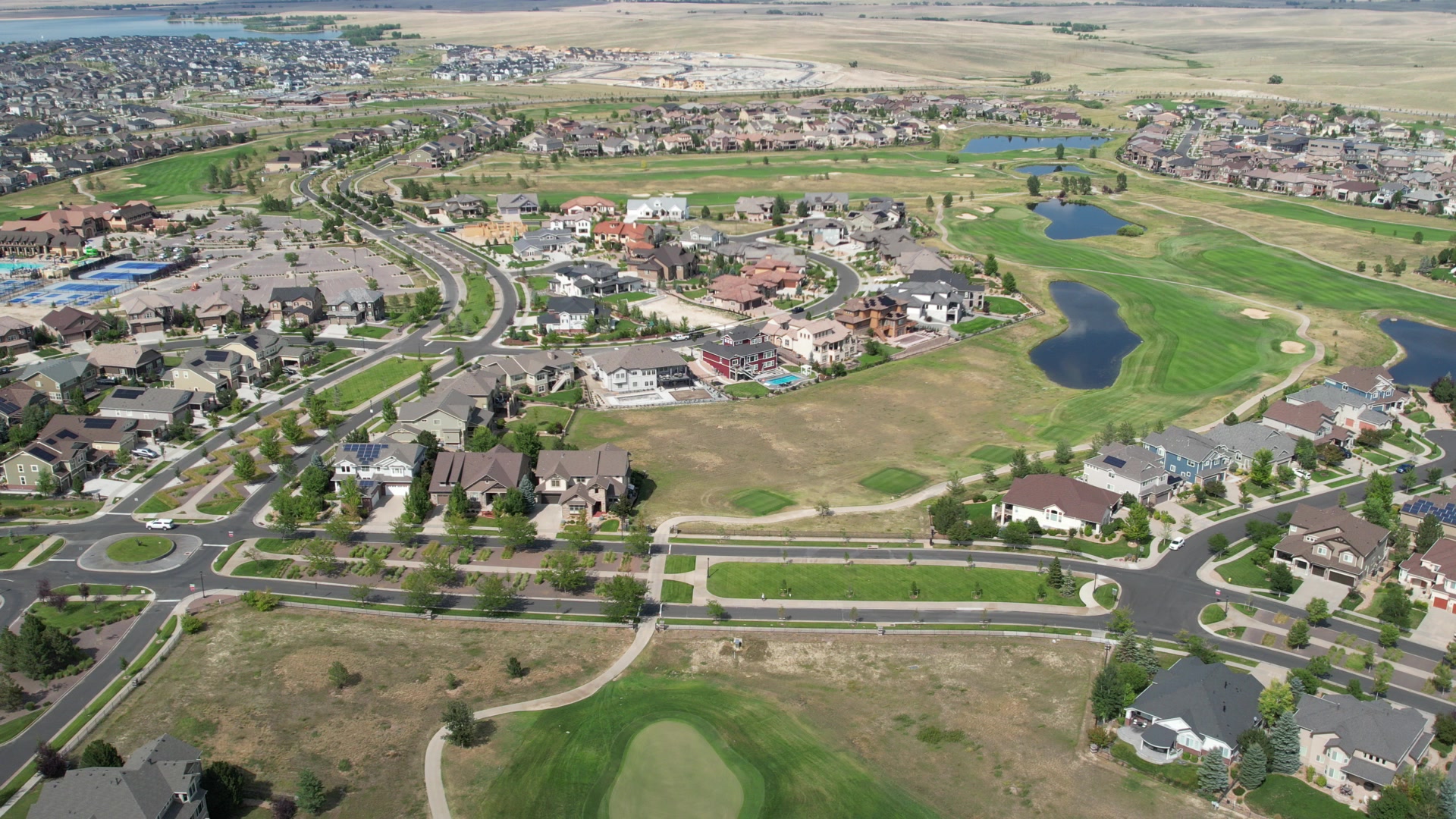
The way I think about it, Aurora is three cities in three counties. Northwest Aurora, the original city, sits against the Denver line along East Colfax: the oldest housing, plus the Anschutz Medical Campus and the VA hospital, which in my humble opinion have changed the city for the better. Central Aurora is the Havana corridor: ranch homes, mature trees, mid-century bones, and quietly some of the best eating in Colorado. Southeast Aurora is what you see scrolling listings: new construction, golf courses, reservoirs, well-rated schools and one of the safer parts of the metro.
The reputation deserves a straight answer. Aurora's violent-crime rate peaked in 2022, when it was the highest of Colorado's large cities, and has fallen by more than a third since; the police department reported overall crime down about 25 percent from 2024 to mid-2026. The 2024 "gang takeover" story was about one neglected apartment complex on Dallas Street: police said no gang had taken over, real crimes did happen there, the city went after the landlord rather than the tenants, a judge closed the building in January 2025, and a nonprofit bought it in June 2026 with plans to reopen it as income-restricted housing. The improvement is real, and the northwest still carries more crime than the southeast. Both things are true.
One correction, because I make the mistake on camera myself: Aurora is not a suburb. It has its own police, mayor and water utility. It was platted in 1891 as Fletcher, renamed Aurora in 1907, and grew up around two Army posts: Fitzsimons General Hospital (1918–1999) and Buckley Field (early 1940s). What replaced Fitzsimons is why the economy looks the way it does.
Why people choose Aurora
- The Anschutz Medical Campus: UCHealth University of Colorado Hospital, Children's Hospital Colorado and the Rocky Mountain Regional VA Medical Center on one former Army base
- Buckley Space Force Base, the city's largest employer, and the veteran community that comes with it
- Denver International Airport next door, reached by E-470 or the A Line
- Cherry Creek schools in much of the south and southeast, in newer houses
- Diversity you can taste: Aurora Public Schools students speak more than 160 languages, and Havana Street has the food to prove it
What gives people pause
- A crime reputation that is partly earned and partly out of date; the FAQ has the dates and details
- Southeast Aurora is a long way from downtown and the mountains; from Lakewood it takes me close to an hour
- Most new master-planned communities sit in a metro district, an extra mill levy on the property tax bill
- The airport cuts both ways: great if you fly for a living, a lot of planes overhead if you don't. And out east it's flat; you're going to feel a little Kansas-y
- School district, county and metro district all change by address
Where is Aurora, and how do you get around?
Aurora runs from the Denver line at roughly Yosemite Street east onto the plains, from north of I-70 near the airport to E-470 on the south. I-225 cuts north-south through the middle between I-25 and I-70, and E-470 wraps the east side to the airport. Aurora is built for a car; you'll need one.
- Into Denver: From Central Aurora, plan on 25 to 45 minutes depending on I-225 and I-70 traffic. From the southeast in real traffic, it's worse.
- Into the Tech Center: I-225 south to I-25, or Arapahoe Road from the far southeast.
- Light rail: The R Line runs along I-225 with ten Aurora stations, from Peoria through Fitzsimons, Colfax and Iliff to Nine Mile and Dayton, then on to Lincoln. Nine Mile has the biggest park-and-ride on the Aurora stretch.
- The airport: The A Line stops at Peoria (transfer from the R Line), in Aurora, and at 40th Ave & Airport Blvd–Gateway Park on the Aurora border. By car, E-470 is the airport road for the east side; tolling is all-electronic, so get an ExpressToll tag or expect a bill in the mail.
- Colfax: East Colfax Bus Rapid Transit, Union Station to the Colfax R Line station at I-225, broke ground in May 2026 and is expected to open in 2027.
- The mountains: The honest answer is that Denver sits between you and them. Plan on an hour to an hour and a half to the foothills with traffic, via I-70 or E-470 to C-470. You still see the mountains; you just don't live at their feet.
What are Aurora's neighborhoods like?
Older in the northwest, mid-century in the middle, new in the southeast and by the airport. Pick the Aurora first, then the house.
Original Aurora and Fitzsimons
The northwest corner, between Colfax and the Denver line, with the Anschutz campus and the Fitzsimons R Line station at its heart. Genuinely the oldest housing in the city and, in my experience, the lowest price per square foot: the place for anyone at Anschutz or the VA who wants to walk to work, and a big area for investors. It is also where most of the city's crime is concentrated; look at the specific blocks. The Aurora Cultural Arts District along East Colfax is the creative side, and Stanley Marketplace, a former aviation plant turned food hall on the Denver line, is worth a visit.
Central Aurora: the Havana corridor, Village East and Mission Viejo
Mid-century ranch homes with mature trees, rarer here than transplants expect. Village East and Mission Viejo are popular with value buyers: bigger lots, shade and streets that have been around for decades. Havana Street runs through the middle, with Korean, Ethiopian, Vietnamese, Salvadoran and Mexican within a few miles of each other. That's one of the big reasons I get out to Aurora all the time. I dig me some good food.
Heather Gardens
A 55-and-over community of more than 2,400 condos, townhomes and patio homes on 200 acres near I-225 and the Nine Mile station, with a nine-hole golf course, a big clubhouse and a social calendar a lot of people underestimate. The downsides: the age restriction and an HOA that gets pretty significant. Heritage Eagle Bend, in the far southeast, is the other 55-plus community people ask about.
Southeast Aurora: Southlands, Southshore, Blackstone, Tallyn's Reach and Saddle Rock
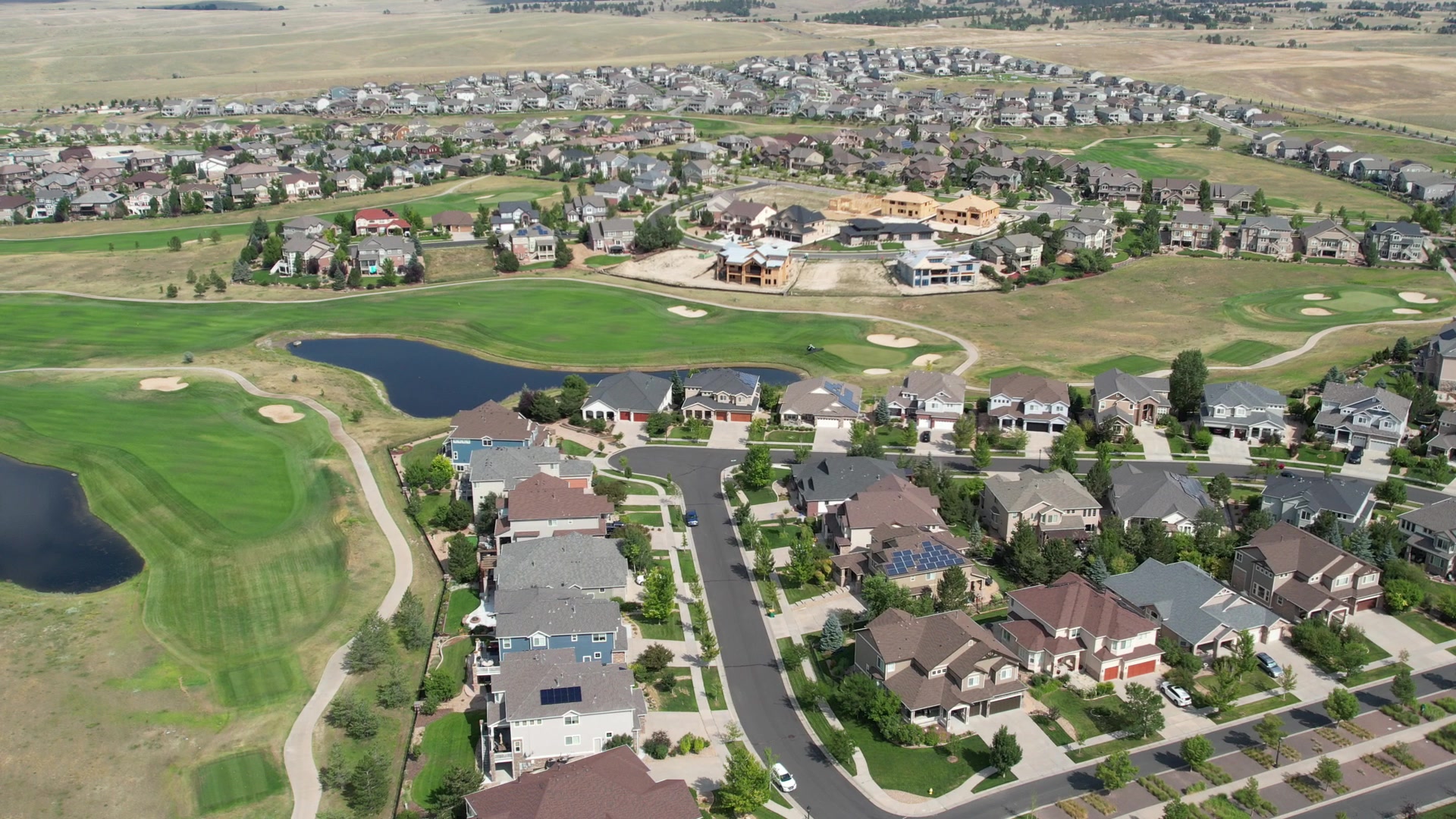
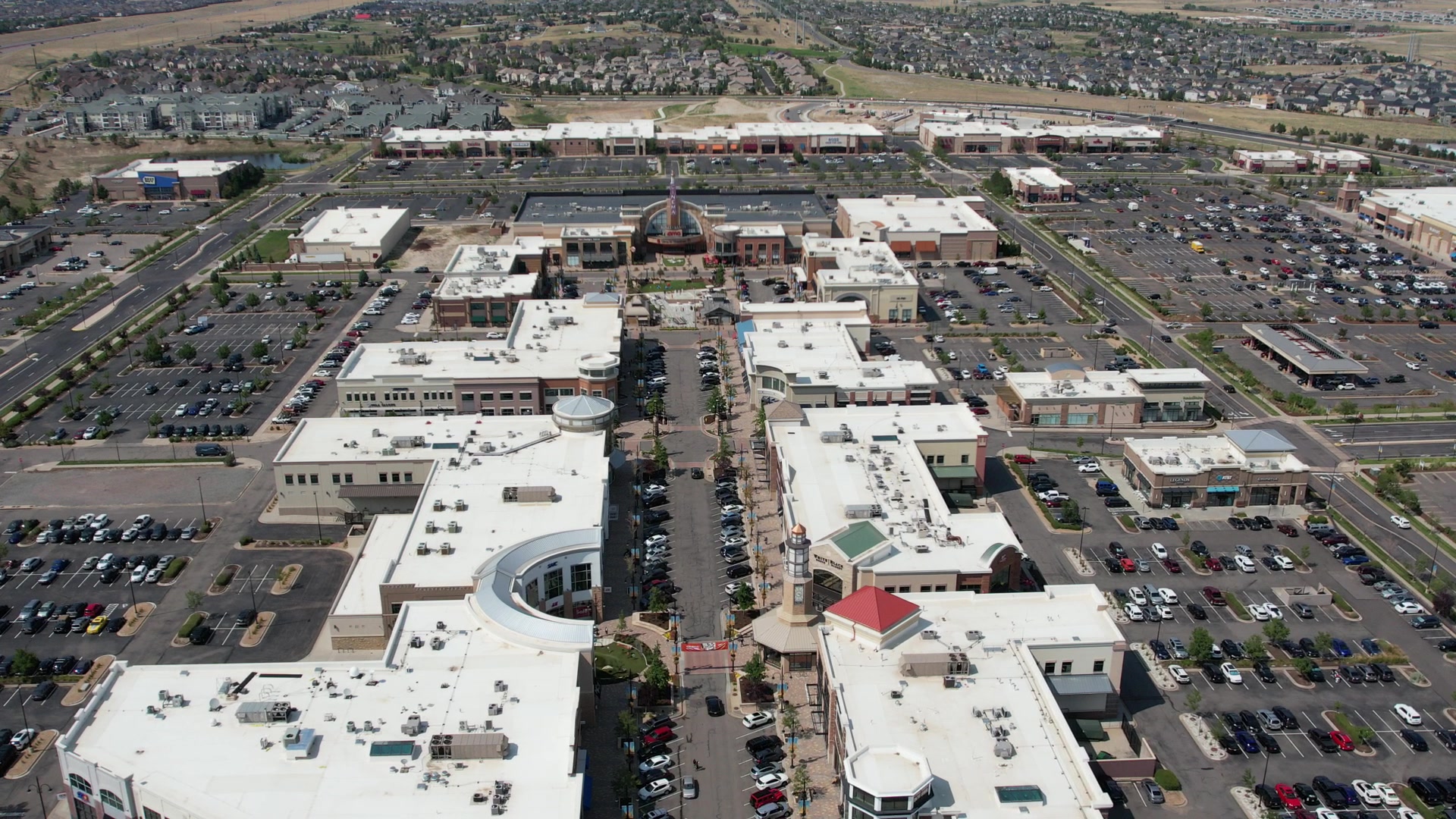
The southeast, and a fast-growing part of Aurora. Southlands, at Smoky Hill Road and E-470, is the hub: an open-air lifestyle center from 2005 with a theater, a winter ice rink and, as people will tell you, a lot of chains. Southshore sits beside the Aurora Reservoir with its own lake, clubhouse and saltwater pool, at premium pricing. Blackstone and Tallyn's Reach are what people picture when they say "turnkey": pools, clubhouses, trails, Cherry Creek schools, HOA and metro district included. Beacon Point backs up to the reservoir, Copperleaf is the newer, denser, more attainable entry into Cherry Creek schools, and Saddle Rock, ten minutes away, is built around the city's golf course that once hosted the Colorado Open. The downside is simple: you are a long way from downtown Denver. You will feel a little out on an island.
Murphy Creek
Pay attention to this one. A master-planned golf community along the city's links-style course, new construction, a well-regarded neighborhood school. It is also the exact neighborhood where a relocating family looks at a nice new house with an Aurora address, assumes Cherry Creek, and is wrong: Murphy Creek P-8 is Aurora Public Schools. It sits in multiple metro districts, each with its own levy. Don't assume anything here.
The Aurora Highlands and Painted Prairie
The airport corridor, off E-470 north of I-70. The Aurora Highlands is a 4,000-acre master plan with its first school (Aurora Highlands P-8, 2023) and an AdventHealth hospital that opened Sept. 29, 2026; before it, the nearest ER was at least nine miles away. Painted Prairie, at 60th and Picadilly, is 628 acres planned for about 3,400 homes, with seven parks open and a town center planned, per the metro district's 2022 overview. Both are Aurora Public Schools, both are in metro districts, and both are about twenty minutes from the terminal, which is why pilots and flight crews love them. The honest downside: it's flat, the trees haven't grown yet, and if you don't fly, it's wind and prairie. Green Valley Ranch, next door, is Denver, not Aurora.
What does it cost to own a home in Aurora?
Price the whole monthly payment, not the house. Aurora adds a wrinkle: the county changes by address.
- Property tax — Most of Aurora is Arapahoe County; the north side, including Painted Prairie and the Aurora Highlands, is Adams County; a slice of the far south is Douglas County. Each has its own assessor; pull the exact address before you offer.
- Metro districts — This is what gets buyers in trouble. New communities pay for roads, parks and schools with a metro district, an extra mill levy on your property tax bill that repays the bonds used to build roads, parks and utilities. Assume one on any new build. The levy is on the tax bill, not the HOA statement.
- HOA — Expect one in every master-planned community; Heather Gardens' dues cover a clubhouse and golf course. The mid-century neighborhoods in Central Aurora often have none.
- Insurance — Hail, as everywhere on the Front Range, and wind on the treeless east side. Anything near Sand Creek, Toll Gate Creek or Cherry Creek gets a flood-zone check.
- Sales tax — Aurora sets its own rate; check the city's sales tax page, and note the county portion changes with the county.
- Housing-age costs — Original Aurora houses can be a century old and Central Aurora is 1960s and 1970s: roofs, sewer lines, electrical and expansive-soil foundations belong on the inspection list.
What kinds of homes are in Aurora?
Everything. Pre-war and post-war houses in the northwest; 1960s–1980s ranches and split-levels in Central Aurora; 1990s and 2000s golf-course homes in Saddle Rock, Tallyn's Reach and Murphy Creek; 2010s-to-new master-planned construction in Southshore, Blackstone, Copperleaf, Painted Prairie and the Aurora Highlands. Aurora has flat land and a lot of it, so builders put up variety: not every new build is a five-bedroom monster. For condos, Heather Gardens is the big one.
How do schools work in Aurora?
Aurora is not a school district; at least five districts operate inside the city. Most of it is Aurora Public Schools, officially Adams-Arapahoe 28J: more than 38,000 students (recent district figures) from more than 130 countries speaking more than 160 languages. Much of southern and southeastern Aurora is Cherry Creek School District, about 55,000 students across 69 schools (recent district figures), with Grandview and Cherokee Trail among the high schools people ask about. A handful of addresses fall into Douglas County RE-1 in the far south, or 27J and Bennett 29-J out east.
Two things to get right. First, confirm the district for the exact address; Murphy Creek is the cautionary tale. Second, don't assume a district's reputation applies to every school in it. Since 2022, APS has closed some schools near the Denver boundary and, under its Blueprint APS facilities plan, opened new P-8s, including Aurora Highlands P-8 (2023), so the school a listing mentions may have changed. Colorado has open enrollment; in-district families get priority. We live in an area where the district overall wasn't rated the best, and there are plenty of fantastic options for our kiddo. Do the homework on the individual school.
What is there to do in Aurora?
Parks, trails and open space
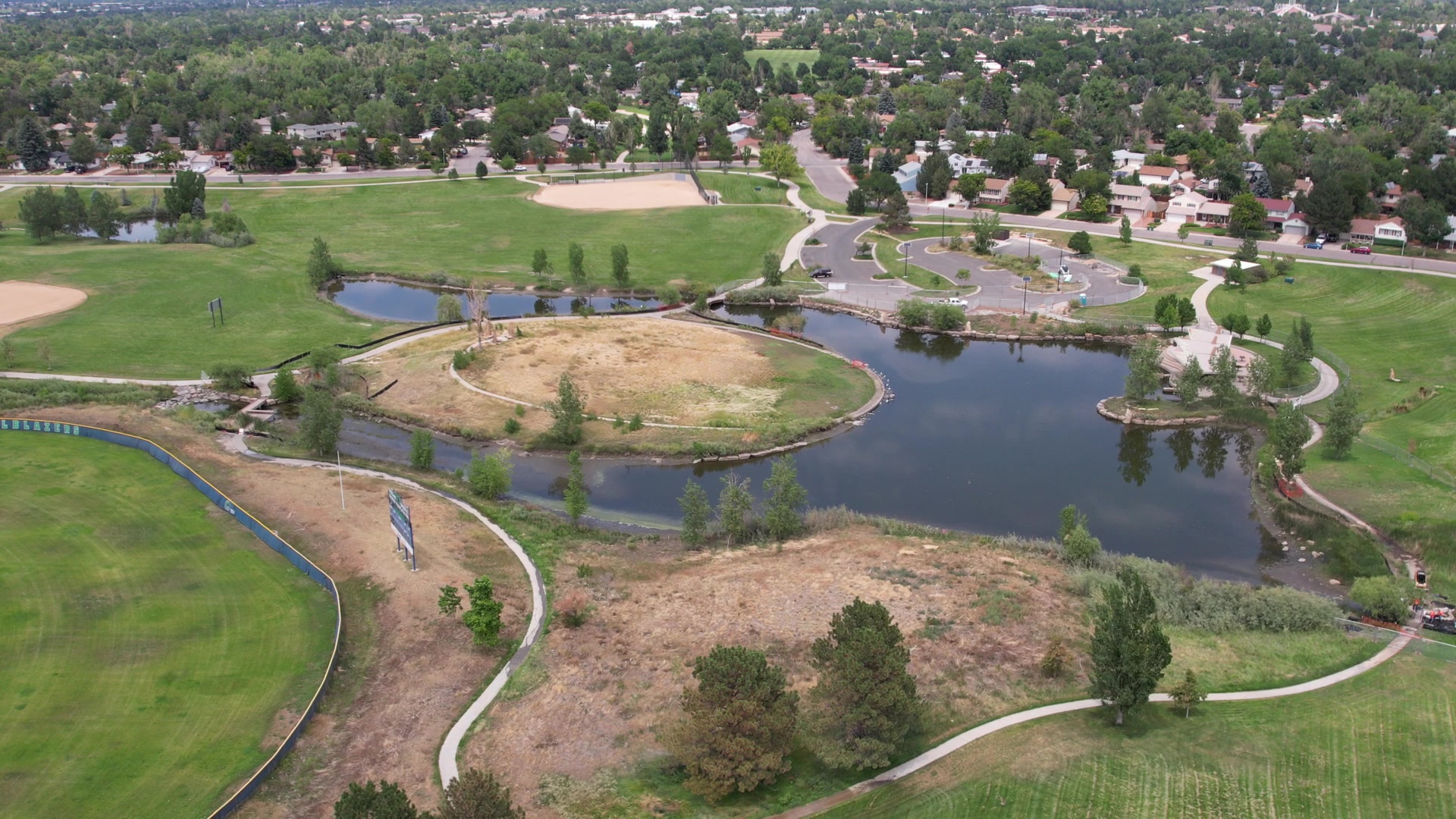
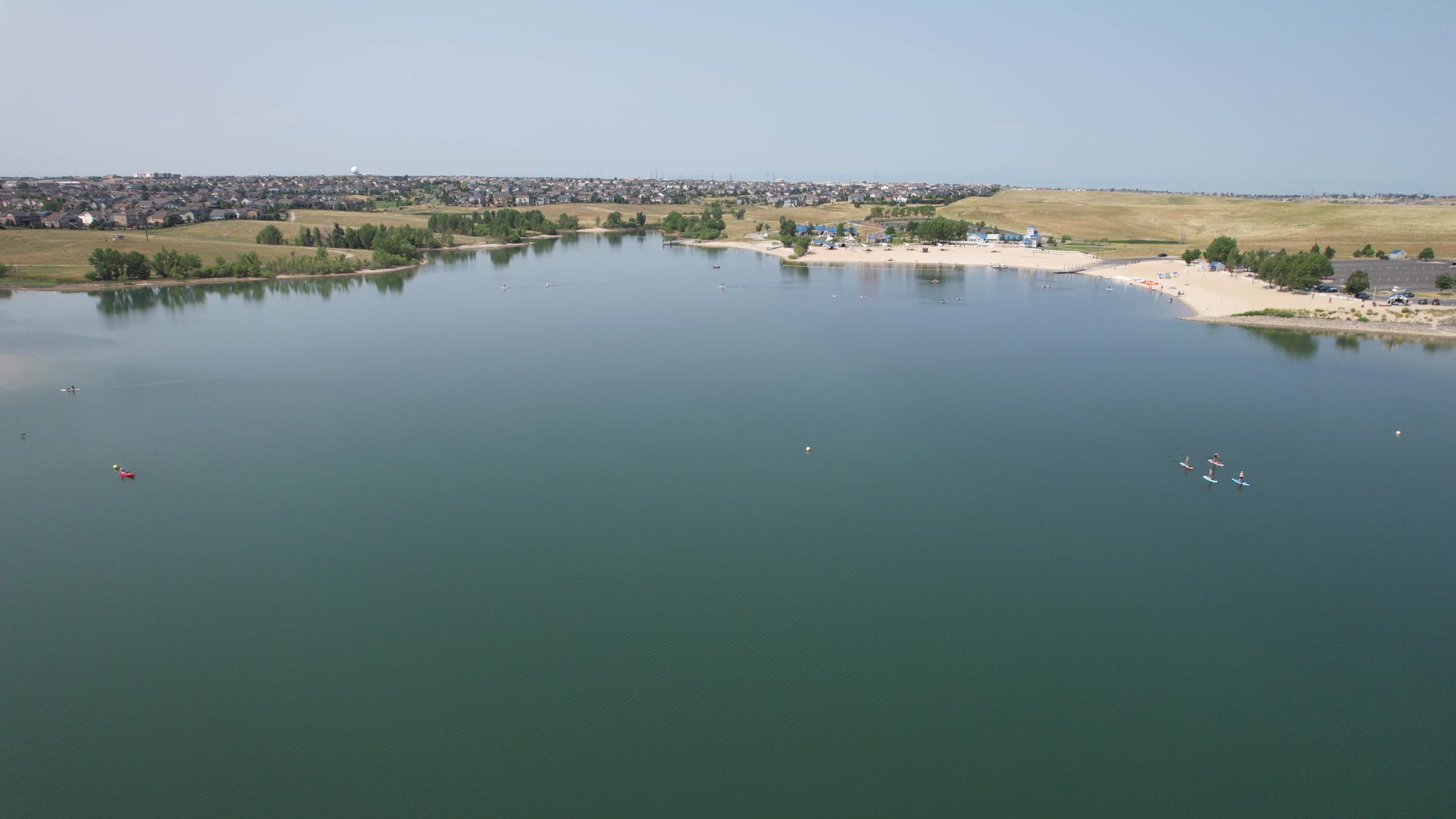
The city manages more than 100 parks and more than 6,000 acres of open space. The two reservoirs are the headline. Cherry Creek State Park, in Arapahoe County, bordered by Aurora, is 3,346 acres with an 880-acre reservoir, a swim beach, a marina and boat ramps and 35 miles of trails; it allows powerboats, which matters because there isn't a lot of open water in this metro. The Aurora Reservoir, in the far southeast, is 800 acres of drinking-water storage with an 8.5-mile paved loop, a seasonal swim beach and electric motors only, so the water stays flat and it's fantastic for paddleboarding. I really enjoy going with my family; my daughter can get in the water, get on a paddleboard, do a little kayaking. It gets packed in summer. It's also where Denver scuba shops do certification dives; I can tell you it's muddy and you won't see much. Morrison Nature Center at Star K Ranch, 240 acres with 13 miles of trails, is the quiet option; so is the Plains Conservation Center.
Events and culture
The Aurora Fox Arts Center on East Colfax, a 245-seat city-run theater in a Quonset hut built as a movie house in 1946, anchors the Aurora Cultural Arts District and is home to the Aurora Symphony. The Havana district runs more than 20 events a year, and Southlands does a winter ice rink and summer fountain concerts.
Food and beer
Havana Street, full stop: more than 100 restaurants and global markets along 4.3 miles, with a Korea Town stretch and H Mart. Stanley Marketplace has Annette, run by James Beard Award winner Caroline Glover, inside a 50-vendor hall. Southlands is where you go for chains. Aurora's food scene is underrated; Havana Street is the proof.
Three places to start
- Havana Street — more than 100 restaurants and global markets along 4.3 miles; plan lunch at one place and dinner at another.
- The Aurora Reservoir — walk a piece of the 8.5-mile paved loop and watch the paddleboards on the flat, electric-motors-only water.
- The Fitzsimons R Line station and the Anschutz Medical Campus — UCHealth University of Colorado Hospital, Children's Hospital Colorado and the VA, the medical campus at the center of the city's economy.
Who are the big employers in and near Aurora?
Aurora has a real job base, which not every suburb can say. Buckley Space Force Base is the largest employer, home to Space Delta 4, the Space Force's missile-warning delta, and the Colorado Air National Guard's 140th Wing: roughly 3,500 active duty, 4,000 Guard and reserve, 2,400 civilians and 2,500 contractors (recent base figures). The Anschutz Medical Campus is the other pillar: UCHealth University of Colorado Hospital and Children's Hospital Colorado opened here in 2007, the VA followed in 2018, and the campus counts nearly 25,000 faculty and staff (recent campus figures), with the Fitzsimons Innovation Community next door for biotech. If you work in medicine, research or biotech, that campus alone is a reason to look at Aurora. Raytheon, Kaiser Permanente, The Medical Center of Aurora and Amazon round out the private side. Denver International Airport, a record 82 million passengers in 2025, sits next door, with the 1,501-room Gaylord Rockies resort, open since 2018, anchoring the airport-area growth.
A word on the VA, because I know the building well. Rocky Mountain Regional is twelve buildings on 31 acres, opened in 2018 at roughly five times its original budget after Congress handed the job to the Army Corps of Engineers. The construction was an embarrassment. My treatment there, and my veteran buddies' experiences, have been very positive.
How does Aurora compare with nearby areas?
- Aurora vs. Denver — Aurora is its own city with more land; Denver has the downtown, the walkable neighborhoods and the shorter mountain drive. The two blur along Colfax, at Stanley Marketplace and at Green Valley Ranch, which is Denver.
- Aurora vs. Centennial and Parker — The southeast's neighbors share Cherry Creek schools (Centennial) and the E-470 corridor. Centennial is more established; Parker has its own downtown. Southeast Aurora is usually newer and farther out.
- Aurora vs. Lakewood — Lakewood and Aurora sit directly across Denver from each other: both large, both with a Colfax. Both have desirable pockets and pockets people warn you about.
- Aurora vs. Commerce City and Brighton — Aurora's northern neighbors are also building fast near the airport, in 27J schools. The Aurora Highlands and Painted Prairie compete directly with them.
A lender's take on Aurora
Aurora has a version for almost everyone. What I find with the people I actually talk to is that it's great for veterans and active military, for people in healthcare, research and biotech, for people flying out of DIA, for families chasing Cherry Creek schools without paying a Cherry Creek Village price, for the 55-and-up crowd, and for anyone trading commute time for square footage.
The honest trade is that you have to pick your Aurora on purpose. The northwest is older, closer, cheaper per square foot and carries the crime statistics; the southeast is newer, quieter, farther, and comes with a metro district. Nobody gets both. Aurora is usually described by people who have never been there, who read a headline, or who lived in one part of it and left. To say a 163-square-mile city has one reputation is naive at best. You don't get about 400,000 people (2020s Census estimates) living somewhere because the whole place is a dump.
Buying in Aurora: what to do first
- Get pre-approved before you tour. Builders move on their timeline, not yours.
- Take the exact address to the right county assessor, Arapahoe, Adams or Douglas, and pull every taxing district. If a metro district shows up, get the levy before you write the offer.
- Do the school test. Look up the district and the actual neighborhood school for the address. New house does not mean Cherry Creek.
- Price the whole payment with property tax, metro district, HOA dues, insurance and E-470 tolls if you'll use them.
- Drive the commute at rush hour from the actual neighborhood, ride the R Line once if the train is part of the plan, and drive to the mountains on a Saturday to decide if the distance is a dealbreaker.
- Veterans: a VA loan works on a 1950s Original Aurora bungalow and a new build in the Highlands alike. If the property is in a metro district, tell me early so the payment is right the first time. If Buckley or the VA is your reason for being here, say so; it changes which Aurora we look at.
In pictures

Watch the videos

Help shape what Jimmy films next
Which town should Jimmy cover next, and what do you still want to know? Tell us, and we'll email you when the guide and video are out.
Thank you — this genuinely helps. We'll let you know when it's ready.
Frequently asked questions
Is Aurora, Colorado a suburb of Denver?
No. Aurora is Colorado's third-largest city, with about 400,000 people (2020s Census estimates) and roughly 163 square miles of land, more than Denver. It has its own police department, mayor and water utility and borders Denver on the east.
Is Aurora, Colorado safe?
It depends on which part. Aurora's violent-crime rate peaked in 2022, when it was the highest among Colorado's large cities, and has fallen by more than a third since, with the police department reporting overall crime down about 25 percent from 2024 to mid-2026. Crime is concentrated in the older northwest near Colfax; the southeast's newer neighborhoods see far less of it. Check the specific neighborhood, not the city.
What really happened with the Venezuelan gang story in Aurora?
In 2024 the owners of the Edge at Lowry, a neglected apartment complex on Dallas Street, claimed a Venezuelan gang had taken it over, and the story went national during the presidential campaign. Aurora's police said no gang had taken over the complex and the city said the problem was confined to specific properties, though real crimes did occur there, including a violent home invasion and kidnapping in December 2024 that led to 16 arrests. Code-enforcement records show years of neglect before 2024; the city sued the landlord, a judge ordered the complex closed in January 2025, the landlord settled with the city for $300,000 in 2026, and a nonprofit neighborhood trust bought the buildings in June 2026 to reopen them as income-restricted housing.
What school district is Aurora in?
Mostly Aurora Public Schools (Adams-Arapahoe 28J), with much of the south and southeast in Cherry Creek School District and small slices in Douglas County RE-1, 27J and Bennett 29-J. The district is set by the address, not the city, so confirm it before you buy.
What county is Aurora in?
Three: Arapahoe for most of the city, Adams for the north side near the airport, and Douglas for a small piece of the far south. Your county determines your assessor, your property tax bill and part of your sales tax.
Does Aurora have light rail?
Yes. RTD's R Line runs along I-225 with ten stations in Aurora, from Peoria to Dayton, and the A Line commuter rail to Denver International Airport stops at Peoria, in Aurora, and at 40th Ave & Airport Blvd–Gateway Park on the Aurora border. Bus rapid transit on East Colfax broke ground in May 2026 and is expected to open in 2027.
How far is Aurora from Denver International Airport and the mountains?
The airport borders Aurora's northeast side; the Aurora Highlands and Painted Prairie are about 20 minutes from the terminal, and E-470 reaches it from the southeast. The mountains are the trade-off: plan on an hour to an hour and a half to the foothills with traffic, because Denver is in between.
Take this guide with you
Get the printable PDF version to read offline, share with your family or mark up on your scouting trip. Enter your name and email and it's yours.
Thanks! Your guide is ready.
Download the PDFNo spam. Jimmy may follow up personally to see if you have questions about the move.
Sources
Guide reviewed October 24, 2026, and reviewed again twice a year.
- Aurora, Colorado (population, area, counties, Fletcher 1891, renamed 1907, incorporated 1928, Fitzsimons, Buckley, school districts, employers, parks and open space, 2024 gang controversy timeline)
- Anschutz Medical Campus (256 acres, Fitzsimons closure 1999, UCHealth and Children's 2007, VA 2018, nearly 25,000 staff, Fitzsimons Innovation Community)
- NBC News: New Colorado VA hospital is state of the art, and more than $1 billion over budget (July 2018; 12 buildings, 31 acres, $1.73 billion vs. $328 million, Army Corps of Engineers)
- Buckley Space Force Base (Space Delta 4, 140th Wing, personnel counts, $1 billion economic impact)
- Denver International Airport (33,531 acres, 82.4 million passengers in 2025, proximity to Aurora)
- TravelPulse: Colorado's Largest Combined Resort and Convention Center Debuts (Gaylord Rockies, Dec. 20, 2018, 1,501 rooms, 485,000 sq ft, 85 acres)
- R Line (RTD) (stations, park-and-rides, Peoria–Nine Mile opening Feb. 2017, Lincoln terminus)
- A Line (RTD) (Peoria and 40th & Airport Blvd–Gateway Park stations)
- H Line (RTD) (Dayton, Nine Mile, Iliff and Florida stations)
- RTD: RTD service changes take effect Sept. 27 (fall 2026; H Line suspended during downtown rail reconstruction)
- E-470 (47 miles, all-electronic tolling, Smoky Hill, Quincy, I-70 and Peña interchanges)
- Denver Gazette: Aurora celebrates groundbreaking of Colfax bus rapid transit project (May 2026; Union Station to Colfax Station, $280 million, 2027 completion, Downtown Development Authority)
- Denver7: Aurora police chief credits data-driven strategies for 25% drop in crime since 2024 (July 2026)
- CBS Colorado: Aurora officials say major crimes in the city are dropping as prevention programs make progress (Oct. 2025)
- Colorado Politics: Report: Denver, Aurora see sharp decline in crime rates (Oct. 2025; Common Sense Institute, 2022 peak, 36 percent violent-crime decline)
- AP via ABC News: Police deny Venezuela gang has taken over rundown apartment complex in Denver suburb (Sept. 2024)
- Denver7: Troubled Edge of Lowry apartment complex in Aurora shuts down as advocates claim city mishandled process (Feb. 2025; January emergency closure order, Dec. 17 arrests, code records back to 2020)
- Westword: Aurora settles with slumlords who blamed gang ($300,000 settlement, Nov. 2024 lawsuit)
- BusinessDen: Nonprofit buys infamous Aurora apartment complex (June 2026; East Colfax Community Collective)
- Denverite: What's next for the Aurora apartments at the center of the Venezuelan gang story (July 2026; EC3 purchase, 60-unit complex, planned income-restricted housing, reopening could take a couple of years)
- Aurora Public Schools: Fast Facts, Demographics (38,000-plus students, 130 countries, 160 languages, 42 percent second-language learners)
- Aurora Public Schools (Colorado) (Adams-Arapahoe 28J, area served, annexations into other districts)
- Aurora Public Schools: APS breaks ground on two new P-8 schools (Blueprint APS, Aurora Highlands P-8, 2023 opening)
- Sentinel Colorado: Statewide school enrollment continues decline, Aurora data mixed (APS closures near the Denver boundary, growth in the east)
- Colorado Department of Education: Open Enrollment
- Cherry Creek School District (enrollment, 69 schools, communities served, Greenwood Village headquarters)
- Murphy Creek P-8 (Aurora Public Schools)
- Cherry Creek State Park (3,346 acres, 880-acre reservoir, swim beach, 35 miles of trails, visitors)
- Colorado Parks and Wildlife: Cherry Creek State Park (marina, two boat ramps)
- Aurora Reservoir (800 acres, 8.5-mile trail, electric motors only, swim beach, scuba, 1989–1990)
- Denver7: Morrison Nature Center hidden gem in Aurora (Star K Ranch, 240 acres, 13 miles of trails)
- Aurora Fox Arts Center (9900 E. Colfax, opened 1946, city-run, 245 seats, Aurora Cultural Arts District)
- On Havana Street: About (Havana BID, 4.3 miles from 6th to Dartmouth, 100-plus restaurants and markets, Korea Town, events)
- Stanley Marketplace (former Stanley Aviation plant 1954–2007, reopened Dec. 2016, 50-vendor court, Annette)
- Southlands (Aurora, Colorado) (Smoky Hill Road and E-470, opened 2005, 1.7 million sq ft, ice rink, concerts)
- Heather Gardens (age-restricted, 2,400-plus units, 200 acres, nine-hole course, clubhouse, near I-225 and Nine Mile station)
- Colorado AvidGolfer: Saddle Rock Golf Course (Dick Phelps, 1997, former home of the Colorado Open, city golf system)
- Tallyn's Reach Master Association (metro district, clubhouse and pool)
- Denver Gazette: AdventHealth opens first hospital in Aurora Highlands (Sept. 2026; 4,000-acre community, P-8 opened 2023, nearest ER previously at least nine miles away)
- Painted Prairie Metro District: Community at a Glance (628 acres, about 3,400 homes, 60th and Picadilly, Harmony Ridge P-8, Vista Peak, seven parks, metro district)
- City of Aurora: Sales Tax (city rate)
- City of Aurora: Aurora Water (city water utility)
- Adams County Assessor (property search portal)
- Douglas County Assessor (property search)
- Arapahoe County Assessor (property search)
- Destination Denver Colorado: Is Aurora REALLY That Bad? | Moving to Aurora Colorado (July 2026)
- Destination Denver Colorado: The Truth About Aurora Colorado / The Pros And Cons You Need To Know! (Sept. 2025)
- Destination Denver Colorado: Aurora Colorado The Good The Bad and The Ugly (Dec. 2024)
Photo credits
- Photos: Jimmy Everetts / Destination Denver Colorado.
Thinking about moving here?
Ask Jimmy anything about the area, the neighborhoods or the move itself. No pressure, just straight answers from a local.


