


Arvada

The short answer
Arvada is a city of about 120,000 people northwest of Denver, mostly in Jefferson County with a small slice in Adams County, built around Olde Town, a National Register historic district with a commuter rail station in the middle of it. It suits buyers who want a walkable historic downtown with a train to Union Station, a 150-mile trail network out the back door, Jeffco schools and I-70 straight into the mountains, with the choice of a 1970s brick ranch close in or a brand-new house against the foothills. It suits people less well if they work in the Tech Center or on the far east side, if they want a big local job base (most of Arvada commutes), or if a metro district on top of property tax is a deal-breaker for the newer northwest neighborhoods.
Watch: Jimmy's video on this area
Is Arvada the right fit for you?
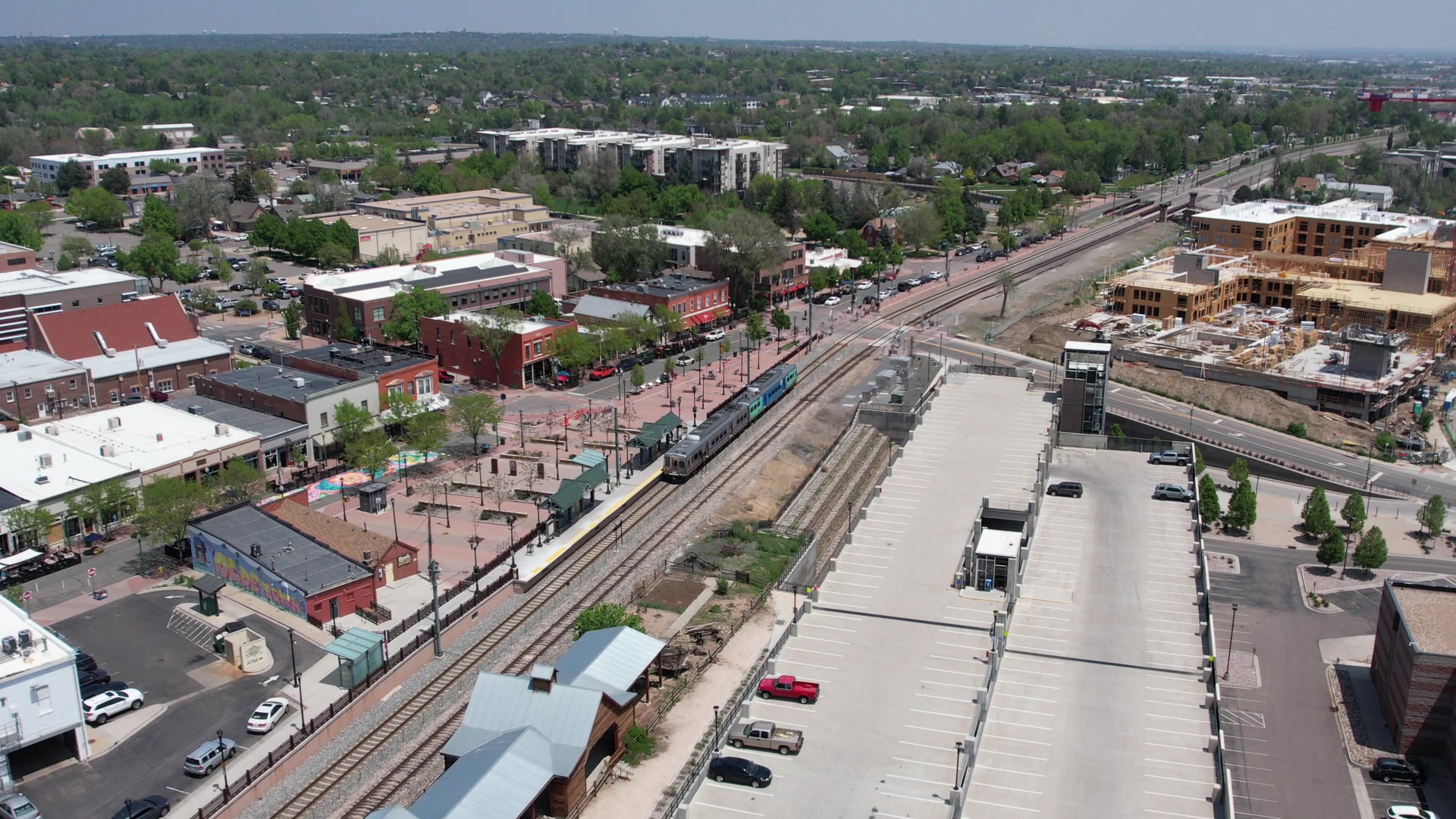
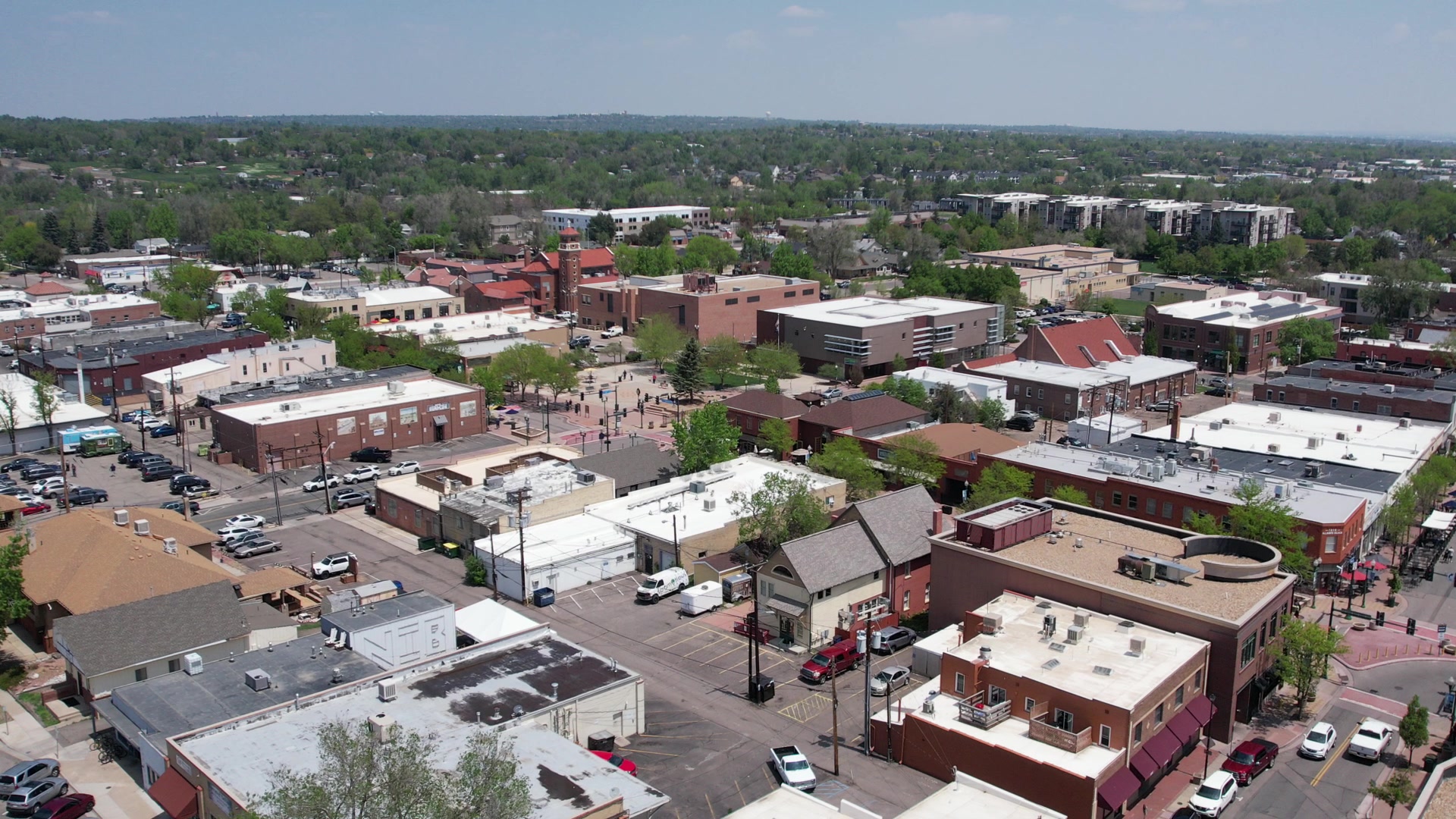
Olde Town Arvada is probably my favorite local downtown area in the metro. In my opinion it's the most walkable downtown that's really close to Denver.
But Arvada is a lot more than Olde Town. It's one of the larger suburbs on the west side, about 39 square miles. The historic core sits maybe 15 to 20 minutes west of downtown Denver on I-70; from there the city stretches north and, mostly, west to Highway 93 and the foothills. I call that far northwest part "Farvada," lovingly, and I have to say it in every video I make about the place, because it's a genuinely different experience: newer, bigger, quieter, farther from everything except the mountains.
A little history. In June 1850 a prospector named Lewis Ralston panned gold from the creek that now carries his name, the first documented gold strike in Colorado; the site is in the city's Gold Strike Park. The town was platted in 1870 along the railroad and incorporated in 1904. Farmers worked the bottom land along Ralston and Clear creeks, and Arvada's Pascal celery earned it the title "Celery Capital of the World" until production declined after World War II. My take: forget the gold rush, we've got celery. Arvada grew from a few hundred people to more than 120,000, and the farm town at its heart is still there.
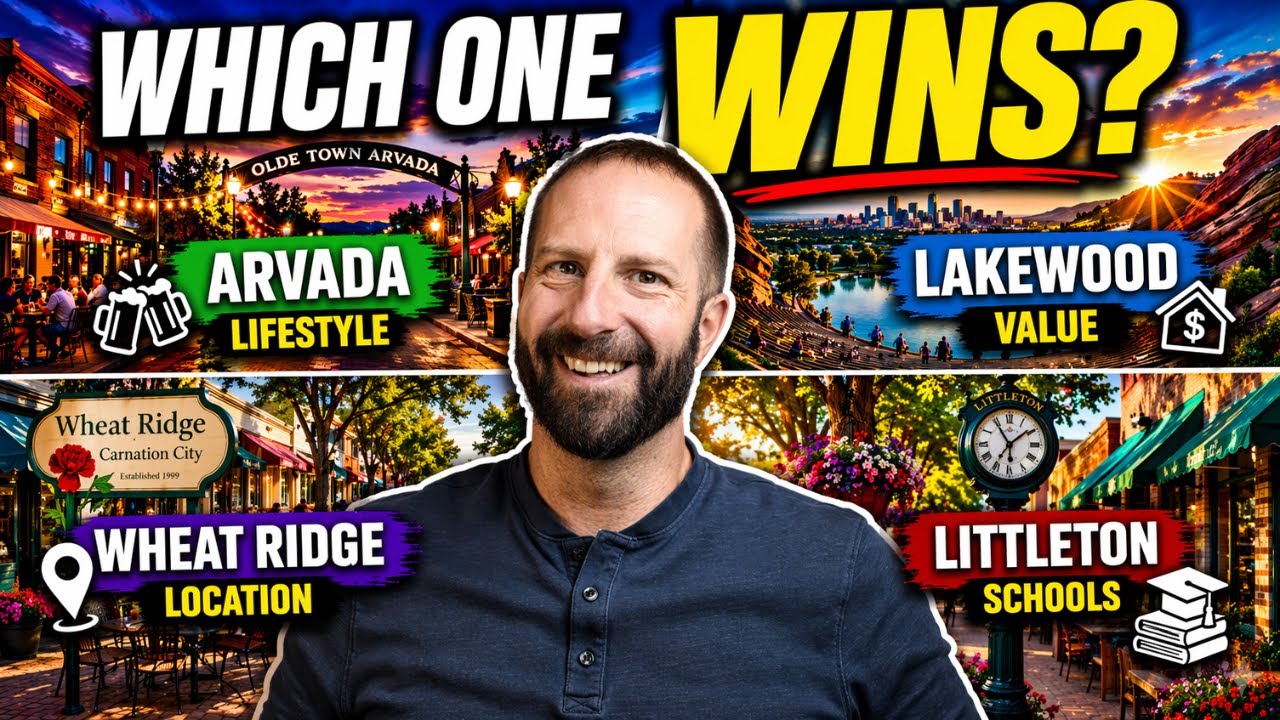
I draw the Arvada-Littleton parallel all the time: a historic core, decades-old neighborhoods around it, new construction pushed to the far edge. Living in Lakewood, I don't have a centralized downtown or much walkability. If you want that without moving into a major city, Arvada and Littleton will be high on your list. Arvada suits you less well if your job is in the Tech Center, or if you want to live and work in the same town; most of Arvada doesn't.
Why people choose Arvada
- Olde Town: a National Register historic district with restaurants, breweries, a farmers market and streets closed to cars
- The G Line: Olde Town to Union Station in about 21 minutes, with a transfer to the A Line for the airport
- More than 100 park sites, about 4,200 acres of parks and open space and 150-plus miles of trails
- I-70 heads straight west into the mountains, and parts of the city are already in the foothills
- A full range of housing: 1920s bungalows, 1970s brick ranches, brand-new master plans
What gives people pause
- Arvada is a commuter suburb. As of 2025, only about 17 percent of residents both live and work in the city.
- The newer northwest neighborhoods, Candelas in particular, sit in metro districts: a second levy on top of property tax.
- Candelas borders the Rocky Flats National Wildlife Refuge, the former nuclear weapons plant site. Make your own call.
- Jeffco closed several Arvada elementaries in 2023 and Arvada K-8 in 2024. The school you're assuming may not be the school you get.
- The city declared a drought in 2026, and watering limits were still in place as of fall 2026. City Council postponed proposed drought surcharges, and in August 2026 staff tabled them; they could come back in spring 2027. Big new lawns cost money to keep green.
Where is Arvada, and how do you get around?
Arvada sits northwest of Denver, bordered roughly by Wheat Ridge and I-70 on the south, Westminster on the east and north, and Highway 93 and the foothills on the west. Olde Town is about seven miles from the State Capitol.
- Into Denver: I-70 east; from Olde Town, 15 to 25 minutes depending on traffic. From the far northwest, 35 to 45.
- Into Boulder, Broomfield and Golden: Highway 93 or Indiana north for Boulder and Interlocken, reasonable from north Arvada. Highway 93 south puts west Arvada in Golden in minutes.
- Into the Tech Center: I-70 to I-25, or Wadsworth to C-470. Not quick at rush hour.
- Commuter rail: RTD's G Line opened in 2019 and runs 11.2 miles from Wheat Ridge·Ward Road to Union Station with three Arvada stops: Arvada Ridge (at Kipling, 200-space park-and-ride), Olde Town Arvada (a shared parking garage plus five bus routes) and 60th & Sheridan·Arvada Gold Strike. Olde Town to Union Station is about 21 minutes; as of the fall 2026 schedule, trains run roughly every 15 minutes most of the day and every half hour early and late.
- The airport: G Line to Union Station, transfer to the A Line. By car it's a long way.
- The mountains: The west side's advantage. I-70 west is right there, and some neighborhoods are already in the foothills. Honest caveat: I-70 can be a parking lot on a ski weekend.
What are Arvada's neighborhoods like?
The pattern: closer to Olde Town is older and more walkable; farther northwest is newer and bigger, more likely a metro district, and closer to the mountains.
Olde Town and the historic core
The blocks around Olde Wadsworth and Grandview: 1920s to 1950s bungalows, historic homes, some modern infill and a few duplexes, with apartments, townhomes and condos nearby. You pay a premium per square foot for the walk: five or ten minutes to the restaurants, the breweries and the train. It's quiet, not a loud downtown where people are out until two in the morning. This is my personal favorite part of the city, and it's been big for the people I've helped move here.
Southeast Arvada and Gold Strike
The oldest post-war neighborhoods east of Wadsworth toward Sheridan, around Gold Strike Park and its station. Mid-century ranches on modest lots, the Arvada Marketplace shopping center at Wadsworth and I-70, and new apartments near the rail line, including a 260-unit income-restricted project at 52nd and Marshall due in late 2026. The most attainable way into Arvada, and the closest to Denver.
Lake Arbor
North-central Arvada around Lake Arbor Park: 1970s and 1980s brick ranches, split-levels and two-stories with mature trees. Lake Arbor is spectacular, and it's where a lot of people find the balance: close enough to Olde Town, peaceful, some mountain views, a reasonable drive downtown. The Goldilocks part of Arvada.
West Woods
Northwest Arvada off Quaker Street, built around the city-owned West Woods Golf Club. 1990s homes with golf and foothill views, a big family draw and well regarded overall. The transition from established Arvada into Farvada.
Leyden Rock
Farther northwest, on the hills around the old Leyden coal mine, which ran from 1903 to 1950 and now holds city water underground. About 1,500 acres and 1,800 homes, with roughly 60 percent left as open space, 17 miles of trails, a rec center and parks. I've had a couple of clients move there and I have friends out that way; it's well developed, with very nice homes, and they really enjoy it.
Candelas
The far northwest corner, technically Arvada but almost Golden, north of Highway 72 between Indiana Street and Highway 93. Nearly 1,500 acres in six villages, new construction from the 2010s to today, pushed against the foothills. It's governed by the Cimarron Metro District plus an HOA, so expect a higher tax bill. Its entire northern boundary is the Rocky Flats National Wildlife Refuge. I'm not an expert on Rocky Flats and there's a lot of fact and a lot of fiction out there; what I can tell you is that a ton of people live out here and enjoy it, and I haven't heard a lot of drawbacks. In a November 2025 video I shared that new friends from this very channel, moving here from North Carolina, found Candelas to be the perfect spot for them and were under contract to purchase a house out there.
What does it cost to own a home in Arvada?
Know the whole monthly payment, not the price. Arvada-specific points:
- Property tax — Almost all of Arvada is Jefferson County; look up any address at the Jefferson County Assessor's property records search. A small piece of the east side is in Adams County and gets an Adams County bill.
- Metro districts — This is the one that gets buyers in trouble. New communities pay for roads, sewers, parks and pools with a metro district, essentially a second tax on top of property tax: a loan taken out for the build that you're paying back. Candelas is the Arvada example I use. The levy is on the tax bill, not the HOA statement.
- Districts you don't choose — The Arvada Fire Protection District and Apex are separate taxing districts from the city, on most Arvada property tax bills; Apex's boundaries cover most, not all, of the city, so check the address.
- HOA — Expect one in Candelas, Leyden Rock, West Woods and most subdivisions built after about 1990. The older core and the 1960s–70s neighborhoods often have none.
- Insurance — Hail, as everywhere on the Front Range. Far-west neighborhoods against the foothills should expect wildfire questions; new wildfire codes for certain zones took effect July 1, 2026. Anything near Ralston, Little Dry or Van Bibber creeks deserves a flood-zone check.
- Water — Arvada runs its own utility and declared a drought in 2026, with lawn watering limited to two days a week as of fall 2026. Council postponed proposed drought surcharges and staff tabled them in August 2026; they could return in spring 2027. Budget for it on a big lot.
- Sales tax — Arvada sets its own rate; the city's sales tax page has it.
- Older-home costs — Olde Town houses can be a century old; much of the city is 1950s–1980s. Roofs, sewer lines, electrical and expansive-soil foundations belong on the inspection list.
What kinds of homes are in Arvada?
Whatever you're looking for, Arvada probably has it: 1920s–1950s bungalows around Olde Town, mid-century ranches east and south, 1970s–80s brick ranches and split-levels in Lake Arbor and the north-central neighborhoods, 1990s golf-course homes in West Woods, and 2010s-to-new master-planned construction in Leyden Rock and Candelas. Townhomes and apartments cluster around the three G Line stations, and more are coming: a 435-unit project on W. 64th Ave. in west Arvada was in city hearings in spring 2026. Arvada is one of the few close-in west-side suburbs where you can still buy new, if you're willing to live in Farvada.
How do schools work in Arvada?
Nearly all of Arvada is in Jeffco Public Schools, Colorado's second-largest district with about 75,000 students and 160 schools as of January 2025. Four comprehensive high schools serve the city: Arvada High (opened 1900), Arvada West (1960), Pomona (1973, a 6–12 school since 2024) and Ralston Valley (2000, in the northwest). Ralston Valley is among the more popular, known for its STEM program and high rankings; the people we've helped move here have been positive about their schools overall. Don't take any one school as the only option. The Adams County portion is in Westminster Public Schools.
Two things to get right. First, Jeffco closed Arvada elementaries in 2023 (Parr, Peck and Thomson, with Campbell converted to preschool) and Arvada K-8 in 2024, so a school a listing mentions may not exist anymore. Second, Jeffco runs one online choice system, EnrollJeffco: enter the address, see the neighborhood school, and apply to any other district or charter school in one application, with in-district residents getting priority. There are plenty of charter and private options, and Red Rocks Community College has an Arvada campus.
I'm not within a couple of minutes of the school I want for my daughter here in Lakewood, but I'm well within a quick drive. Look at the specific school for the specific address, not the district's reputation.
What is there to do in Arvada?
Parks, trails and open space
The city counts more than 100 park sites, about 4,200 acres of parks and open space, and 150-plus miles of off-street trails; 96 percent of residents live within a half mile of a park. The Ralston Creek Trail is the backbone, 12.5 miles from Gold Strike Park west to Arvada Blunn Reservoir. The Little Dry Creek Trail runs six miles across the north side as part of the Rocky Mountain Greenway, and the Van Bibber Creek Trail runs through Stenger Sports Complex on the west. Two Ponds National Wildlife Refuge, 72 acres at 80th and Kipling, is the smallest urban refuge in the system and a cool spot to walk. Standley Lake, on the northern edge in Westminster, is a 1,200-acre reservoir inside a 3,000-acre regional park with boating (no trailered boats since 2019), paddling and a campground. Apex Center at 13150 W. 72nd Ave. is the big public rec center: two NHL-size ice rinks, an indoor water park, a climbing wall and three gyms. Arvada has three public golf courses; the city owns two of them, West Woods and Lake Arbor.
Events
Olde Town is the stage. The Arvada Harvest Festival started in 1925 to celebrate the first paved road between Denver and Arvada and marked its 100th year in 2025. In 2026 the city denied the festival's permits over safety and cost concerns, and organizers planned a smaller event at the Jaycees Hall on Yukon Street for Sept. 11–13; its long-term home is unsettled as of fall 2026. First Fridays in Olde Town remind me of Canton and Akron when I lived in Ohio, with everyone out and about. Second Saturdays, the farmers market (one of my absolute favorite farmers markets), the St. Patrick's Day Festival and the tree lighting fill out the Olde Town calendar. Across town, the Arvada Kite Festival in April at Stenger is good old-fashioned family fun, and Arvada Days and Arvada On Tap fill the summer. The Arvada Center for the Arts and Humanities, open since 1976 with three theaters, galleries, an amphitheater and the Arvada History Museum, is a cornerstone of the community.
Food and beer
Olde Town is the dining district for the whole northwest side: restaurants, breweries, taverns and coffee shops packed into a few blocks, with Olde Wadsworth and Grandview closed to cars since the pandemic so the patios spill into the street. As of May 2026, the city was studying making the Pedestrian Zone permanent, and it was still in place. The Schoolhouse is one of my absolute favorites.
Three places to start
- Olde Town on a First Friday or Second Saturday — Walk the closed streets, then stand at the station when a G Line train pulls in.
- Ralston Creek Trail from Memorial Park west — Ride it toward Long Lake Regional Park as the older neighborhoods give way to the newer northwest side.
- Apex Center and Standley Lake — The rec center shows what the Apex levy buys; the lake shows how much open water sits at the top of the city.
Who are the big employers in and near Arvada?
Arvada is a community hub and a commuter suburb more than a job center. There's no Lockheed Martin here: it's small businesses, services and retail, and most professionals use the G Line or I-70 to get to Denver, Golden or Boulder. The economic development association counted 64 new businesses in 2024, and the Denver Gazette put the city's total at about 3,000 businesses in June 2024, light on chains. The big in-town story is Quantum Commons, a 70-acre campus along Highway 72 owned by the Colorado School of Mines for the Mountain West quantum tech hub; its first building opened in August 2025 and the first phase is due by the end of 2026. Barber-Nichols, a local manufacturer, had a plant expansion in hearings in 2026. Jeffco Public Schools, the City of Arvada, Apex and Red Rocks Community College are the public anchors. Nearby: Intermountain Health Lutheran Hospital, 226 beds, opened its new campus just over the line in Wheat Ridge in 2024; Interlocken and Boulder are a reasonable drive from north Arvada.
How does Arvada compare with nearby areas?
- Arvada vs. Westminster — Next door east and north, sharing Standley Lake. Westminster is building a downtown from scratch on the old mall site and has one B Line station on its south edge; Arvada has a century-old downtown and three G Line stops.
- Arvada vs. Wheat Ridge — Immediately south and smaller, with the G Line terminus and the new Lutheran Hospital. Closer to Denver; Arvada has the downtown and the newer housing.
- Arvada vs. Golden — The mountain town at the mouth of Clear Creek Canyon with the School of Mines; much smaller and farther from Denver. Candelas is where the two blur together.
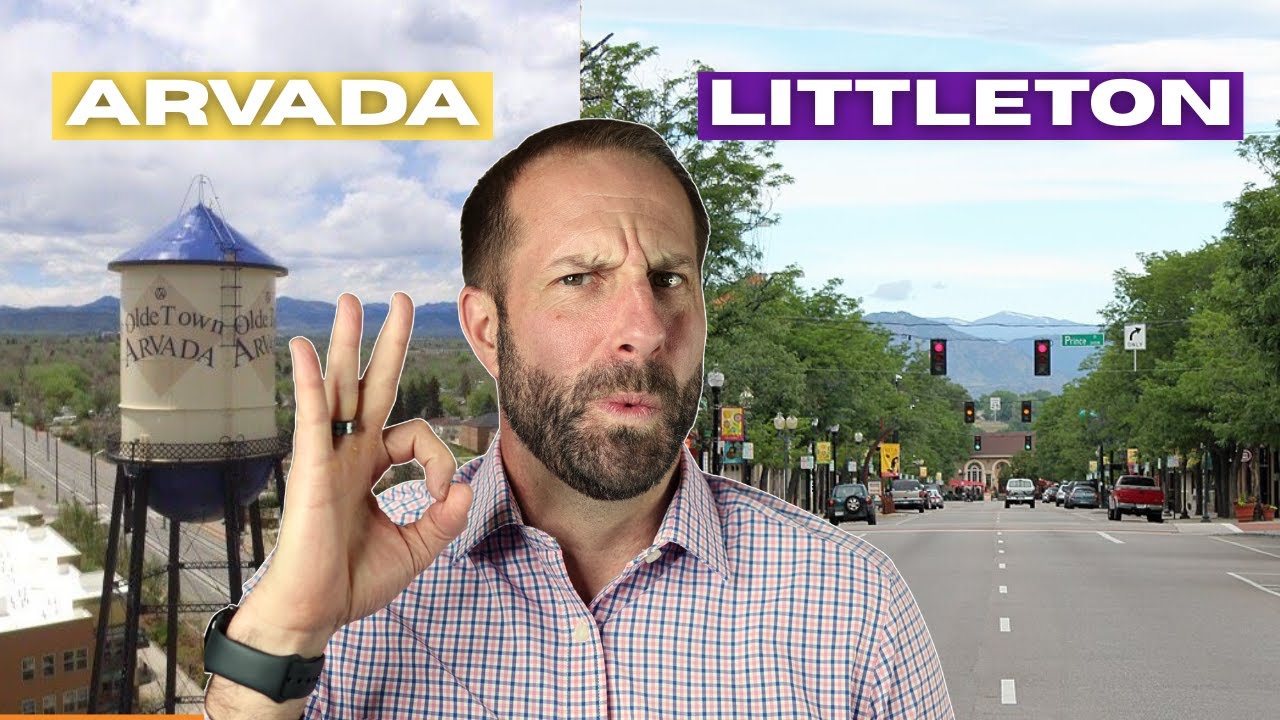
- Arvada vs. Littleton — My standard comparison. Littleton has the prettier, more historic Main Street and a real job base at Lockheed Martin; Arvada has the more walkable, car-free downtown, the faster rail trip and quicker I-70 mountain access. Flip a coin; I wouldn't be brokenhearted in either.
A lender's take on Arvada
I draw a lot of comparisons between Arvada, northwest of Denver, and Littleton, southwest of Denver. They have some similarities and some strong positives, and Arvada has a lot of momentum behind it. That's why it keeps growing in popularity.
The honest trade is that the older core and Farvada cost differently and live differently. The core is older, pricier per square foot, and the house will need things. Farvada is newer and bigger, with a metro district, an HOA, a longer drive to everything but the mountains, and, in Candelas, the Rocky Flats history next door. Decide which Arvada you're buying before you fall for either one.
Is your priority a faster rail commute, quick I-70 mountain access and a brewery-filled downtown? Then Arvada is probably your answer.
Buying in Arvada: what to do first
- Get pre-approved before you tour. Houses near Olde Town go fast; northwest builders have their own timelines.
- Take the exact address to the county assessor's site, Jefferson or Adams, and pull the tax districts. If there's a metro district, get the levy before you write the offer.
- Price the whole payment with property tax, metro district, Apex and fire levies, HOA dues, insurance and water (proposed drought surcharges were tabled in August 2026 but could return in spring 2027).
- Do the school test. Run the address through EnrollJeffco and confirm the neighborhood school is still open.
- Do the lifestyle check. Drive the commute at rush hour from the actual neighborhood and ride the G Line once if the train is part of your plan. Decide how much Olde Town, the mountains and Boulder access each matter.
- Veterans: a VA loan works on a 1920s Olde Town bungalow and a new build in Candelas alike. If the property is in a metro district, tell me early so the payment is right the first time.
In pictures



Watch the videos
Help shape what Jimmy films next
Which town should Jimmy cover next, and what do you still want to know? Tell us, and we'll email you when the guide and video are out.
Thank you — this genuinely helps. We'll let you know when it's ready.
Frequently asked questions
Is Arvada part of Denver?
No. Arvada is its own city, incorporated in 1904, with about 120,000 residents across roughly 39 square miles. Olde Town is about seven miles northwest of the Colorado State Capitol.
What county is Arvada in?
Mostly Jefferson County. A small portion on the east side, with fewer than 3,000 residents at the 2020 census, is in Adams County. The county determines your assessor, tax bill and, for the Adams slice, your school district.
What school district is Arvada in?
Jeffco Public Schools for nearly the entire city, with Arvada, Arvada West, Pomona and Ralston Valley high schools. The small Adams County portion is in Westminster Public Schools. Jeffco closed several Arvada elementary schools in 2023 and Arvada K-8 in 2024, so check the specific school for the specific address.
Does Arvada have light rail?
Arvada has commuter rail: RTD's G Line, with stations at Olde Town Arvada, Arvada Ridge and 60th & Sheridan·Arvada Gold Strike, running to Union Station in about 21 minutes from Olde Town. Transfer at Union Station to the A Line for Denver International Airport.
How far is Arvada from downtown Denver and the mountains?
Olde Town is about 15 to 25 minutes from downtown Denver by I-70, longer at rush hour; the far northwest neighborhoods are 35 to 45 minutes. I-70 west from Arvada reaches the foothills in minutes, and the western edge of the city is already in them.
Is Candelas safe to live in given Rocky Flats?
Candelas borders the Rocky Flats National Wildlife Refuge, the former plutonium-trigger plant that operated from 1952 to 1992 and was cleaned up and closed in 2005–2006. The refuge opened trails to the public in September 2018, while about 1,300 acres at the center remain under Department of Energy control and off limits. Federal and state agencies say living nearby poses no significant risk; some environmental groups and school districts have disagreed. Read the agency reports and decide for yourself.
What is Olde Town Arvada?
Arvada's historic downtown, listed on the National Register of Historic Places since 1998 with 42 contributing buildings, including an 1882 school and a 1903 bank. It has restaurants, breweries and shops, a G Line station, a farmers market and events like First Fridays, and two blocks closed to car traffic since the pandemic.
Take this guide with you
Get the printable PDF version to read offline, share with your family or mark up on your scouting trip. Enter your name and email and it's yours.
Thanks! Your guide is ready.
Download the PDFNo spam. Jimmy may follow up personally to see if you have questions about the move.
Sources
Guide reviewed October 24, 2026, and reviewed again twice a year.
- Arvada, Colorado (population, counties, platting, incorporation, Ralston gold strike, celery history, area, school districts, Rocky Flats)
- City of Arvada: About Arvada (population, area, parks and trails figures, golf courses, school district)
- City of Arvada: Parks, Trails, and Open Space (90-plus parks, 4,200 acres, 150 miles of trails, Arvada Blunn Reservoir)
- City of Arvada: Trails and Open Space (150-plus-mile network, open space acreage)
- City of Arvada: Primary Trails (Ralston Creek Trail 12.5 miles, Little Dry Creek Trail, Van Bibber Creek Trail, Rocky Mountain Greenway)
- TrailLink: Van Bibber Creek Trail (route through Stenger Sports Complex)
- City of Arvada: Open Space
- City of Arvada: Park Inventory and Amenities (100-plus park sites, Lake Arbor Park, Memorial Park, Ralston Central Park, Stenger, Long Lake Regional Park, Gold Strike Park, Majestic View)
- City of Arvada: Olde Town Arvada (National Register, street closures, Strategic Reinvestment Plan, G Line, 2026 construction impacts)
- City of Arvada: Olde Town Arvada pavement improvements, temporary parklet removal begin May 11 (Pedestrian Zone streets, May 2026)
- City of Arvada: Festivals, Arts, and Culture (Festivals Commission and Olde Town BID events, Arvada Center)
- City of Arvada: Arvada Kite Festival (April 2026, Stenger Sports Complex, 21st year)
- City of Arvada: Arvada Economic Development Association
- City of Arvada: Business (upcoming hearings including Candelas amendment and Barber-Nichols plant expansion; sub-area plans)
- City of Arvada: Avalon Arvada (Welby Center) development case (435 units, 20.1 acres, 2026 hearings)
- City of Arvada: Sales Tax Information
- City of Arvada: The Arvada Report, June–July 2026 (drought declaration, watering restrictions, surcharges, wildfire codes, Arvada Fire Protection District, Comprehensive Plan)
- City of Arvada: Water Restrictions (Stage 1, two-day-a-week lawn watering since April 15, 2026)
- Arvada Press: Arvada tabling proposed drought surcharges as residents work to conserve water (Aug. 26, 2026; surcharges postponed and tabled, could return spring 2027)
- City of Arvada homepage (Stage 1 water restrictions April 2026, Summerfest)
- Jefferson County Assessor (property records search, Golden office)
- G Line (RTD) (commuter rail, opened April 26, 2019, 11.2 miles, stations)
- RTD: G Line schedule, eastbound (Olde Town Arvada to Union Station travel time, frequency)
- Olde Town Arvada station (opening, parking garage, bus connections)
- Arvada Ridge station (Kipling, 200-space park-and-ride, Red Rocks Community College, transit-oriented development)
- Olde Town Arvada historic district (National Register 1998, 42 contributing buildings, 1882 school, 1903 bank)
- Jefferson County Public Schools (Colorado) (enrollment, school count, Arvada high schools, 2023–24 closures, Pomona 6–12)
- Westminster Public Schools
- Chalkbeat: Jeffco launches universal enrollment site to make school choice easy (EnrollJeffco, in-district priority)
- Ralston Valley High School (opened 2000, northwest Arvada)
- Red Rocks Community College: Arvada Campus (health sciences programs)
- Rocky Flats Plant (operations 1952–1992, FBI raid, cleanup completion, refuge act, DOE-retained acreage)
- Rocky Flats National Wildlife Refuge (acreage, trails opened September 15, 2018, school district and legislative objections, DOE area)
- Candelas, Colorado (location, six villages, Cimarron Metro District, Rocky Flats boundary, agency positions, Jefferson Parkway)
- Candelas (nearly 1,500 acres, villages, home types)
- Denver7: Broomfield city leaders set the record straight on future of the Jefferson Parkway (stalled, 2019 soil sample)
- Rick Engineering: Leyden Rock Master Planned Community (1,500 acres, 1,800 homes, 60 percent open space, 17 miles of trails)
- Leyden, Colorado (coal mine 1903–1950, gas storage, city water reservoir)
- West Woods Golf Club (City of Arvada, three nine-hole courses, Quaker Street)
- City of Arvada: Golf Courses and Restaurants (three public courses in Arvada; city owns West Woods and Lake Arbor)
- Standley Lake (1,200 acres, 3,000-acre regional park, Westminster, trailered-boat ban 2019, campground)
- City of Westminster: Standley Lake Regional Park and Wildlife Refuge (paddle boarding, kayaking, camping, no trailered boats)
- Two Ponds National Wildlife Refuge (72 acres, smallest urban refuge, 1992)
- Apex Park and Recreation District: About (separate special district, boundaries, facilities, founded 1956, property-tax funding)
- Apex Park and Recreation District: Apex Center (two NHL rinks, 23,000 sq ft indoor water park, climbing wall, three gyms)
- Ralston Creek (Colorado) (length, route, Lewis Ralston June 22, 1850, Gold Strike Park)
- Arvada Center for the Arts and Humanities (opened 1976, three theaters, galleries, amphitheater, history museum)
- Arvada Press: Arvada Harvest Festival centennial in Olde Town (1925 origin, 2025 parade, attendance)
- Denver7: City of Arvada denies permits for century-old Harvest Festival over safety and financial concerns (Aug. 2026)
- Arvada Press: Arvada Harvest Festival to return with smaller events at Jaycees Hall (Aug. 2026; permits denied, Sept. 11–13 plans at Jaycees Hall on Yukon Street)
- Denver Gazette: Arvada gears up to celebrate 120 years with summerlong event (history, 3,000 businesses, 100-plus parks)
- Denver Gazette: Arvada highlights local amplifier company during Economic Development Week (17 percent live-work figure, 64 new businesses in 2024, Quantum Commons)
- Denver Gazette: Campus for Colorado's quantum tech hub begins to power up (Quantum Commons first building, Aug. 2025)
- Connect CRE: Marshall Pointe Apartments, 260 affordable units at 5190 Marshall St., completion second half of 2026
- Pine Tree: Arvada Marketplace (Wadsworth at I-70/I-76, Sam's Club)
- Intermountain Health Lutheran Hospital (226 beds, new Wheat Ridge campus opened August 3, 2024)
- Destination Denver Colorado: Here's What People Moving to Arvada Colorado NEED to Know! (Dec. 2024)
- Destination Denver Colorado: Living in Arvada or Littleton CO (Nov. 2025)
Photo credits
- Photos: Jimmy Everetts / Destination Denver Colorado.
Thinking about moving here?
Ask Jimmy anything about the area, the neighborhoods or the move itself. No pressure, just straight answers from a local.


