


Longmont
The short answer
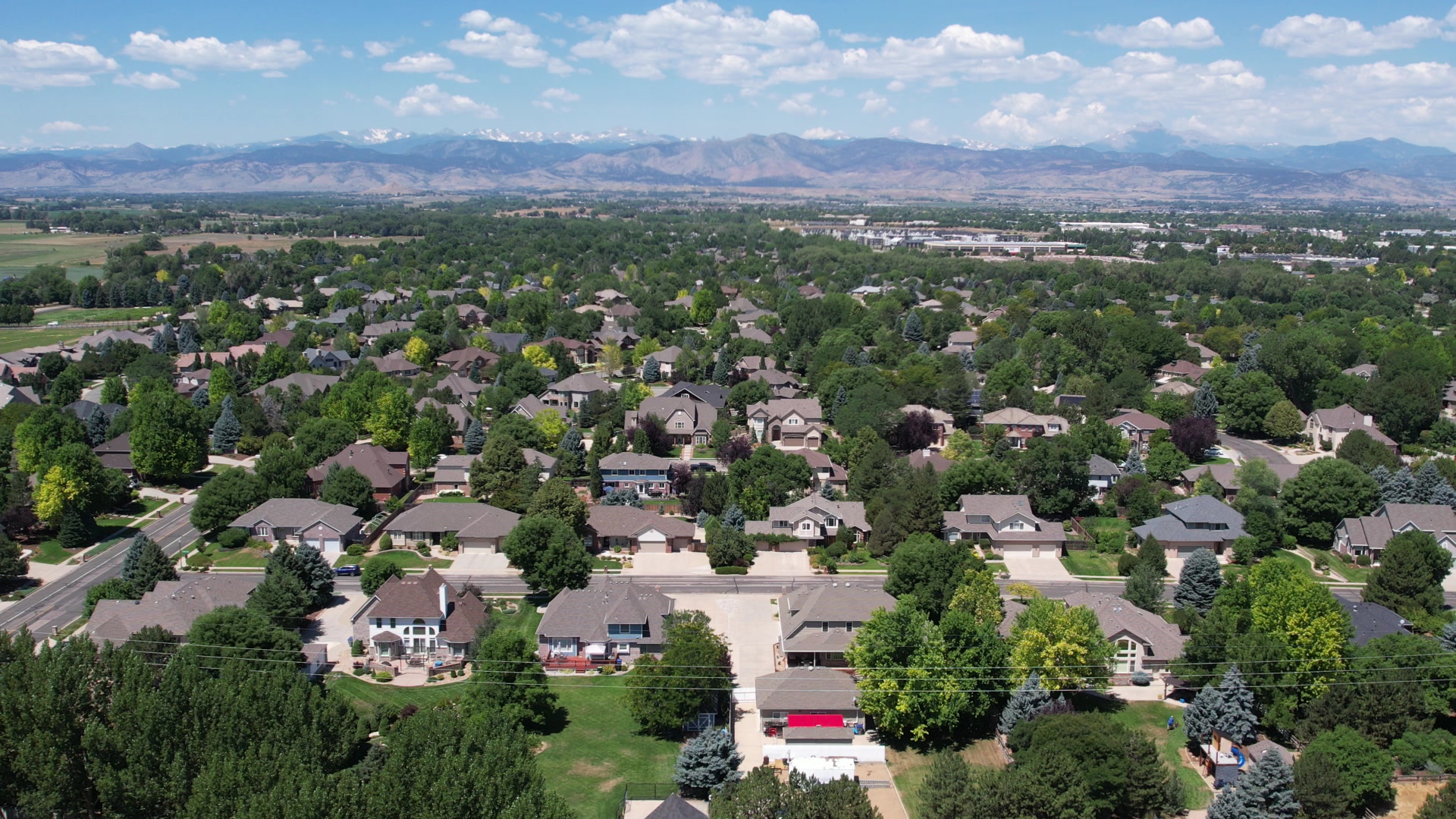
Longmont is a city of about 100,000 people in northeastern Boulder County, with its eastern edge reaching into Weld County, roughly 36 miles north of downtown Denver and about 16 miles northeast of Boulder. It has a historic Main Street, its own electric utility and city-owned fiber internet, two big lakes inside or next to town, and St. Vrain Valley Schools. It suits people who want quick access to Boulder, a real downtown and a single-family house with a yard, with Denver, Fort Collins and the mountains all within about an hour. It suits people less well if they need to commute to Denver or the Tech Center every day, if they're counting on a train (as of fall 2026, there isn't one), or if they assume every Longmont address has the same county, taxes and flood risk.
Watch: Jimmy's video on this area
Is Longmont the right fit for you?
Longmont is a town that is rapidly growing on me. For years it sat in Boulder's shadow, but in the last decade it has really come into its own. It has that real town feel: a great downtown Main Street, breweries, tech jobs and open space, with Boulder about 20 to 30 minutes away and the mountains right there.
Longmont was founded in 1871 by the Chicago-Colorado Colony, led by Robert Collyer, and incorporated in 1885. It was a farm colony, not a mining camp: it grew as an agricultural town after the railroad arrived from Boulder in 1877, and a sugar factory went up in 1905. Most of the modern city is recent. Longmont had about 52,000 people in 1990 and 98,900 in 2020; the Census Bureau's July 2025 estimate is just over 100,000, roughly Boulder's size. It also sits lower, about 4,980 feet to Boulder's 5,320.
One thing to know up front: the city lies in two counties. Most of it is in Boulder County, but it extends east into Weld County, so two homes a few miles apart can have different assessors and tax bills.
Why people choose Longmont
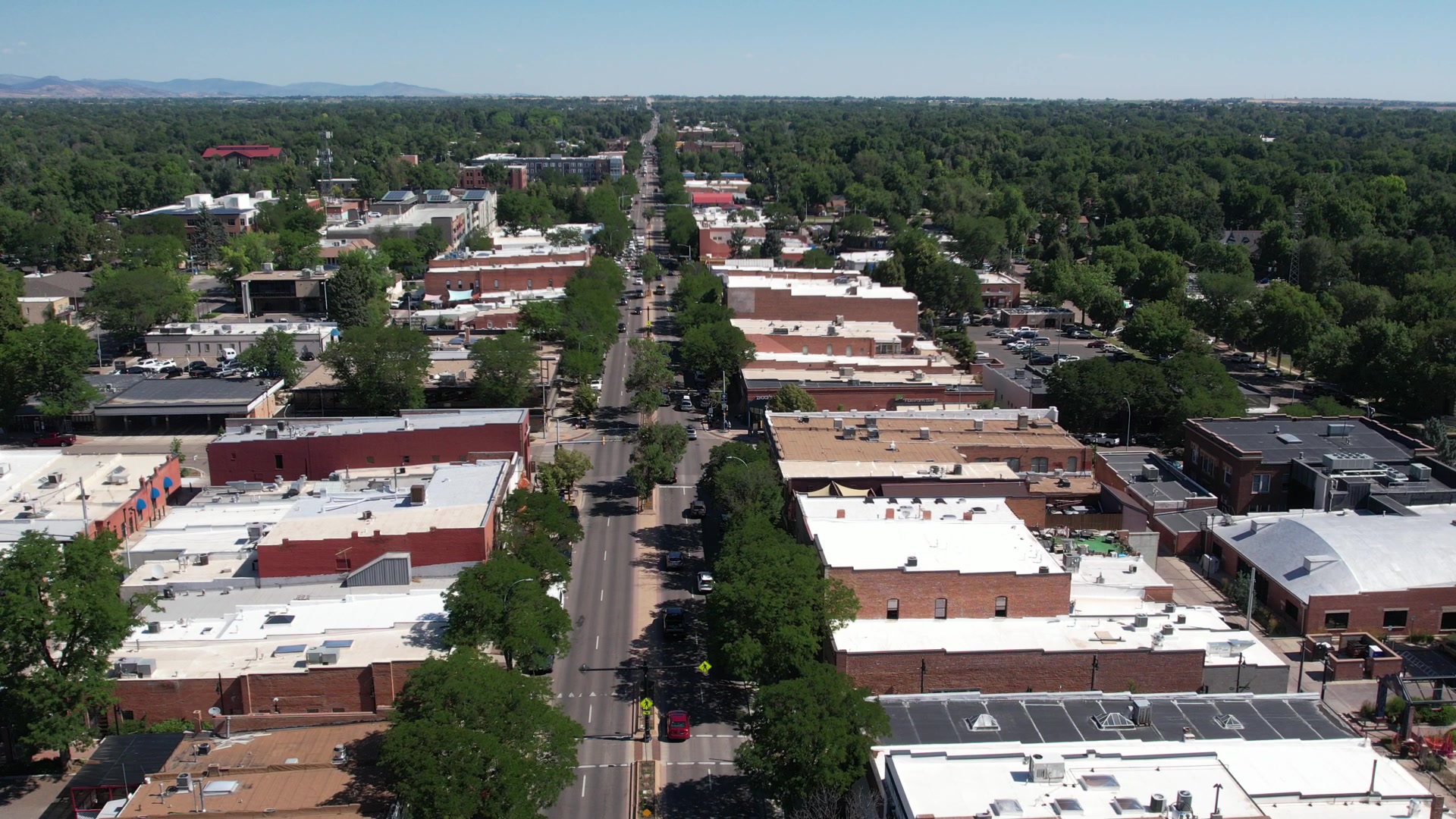
- A historic Main Street downtown, on the National Register since 2017, with restaurants, breweries and the Dickens Opera House
- Boulder about 25 minutes away by car, with daily buses (as of fall 2026) and bus rapid transit due in mid-2027
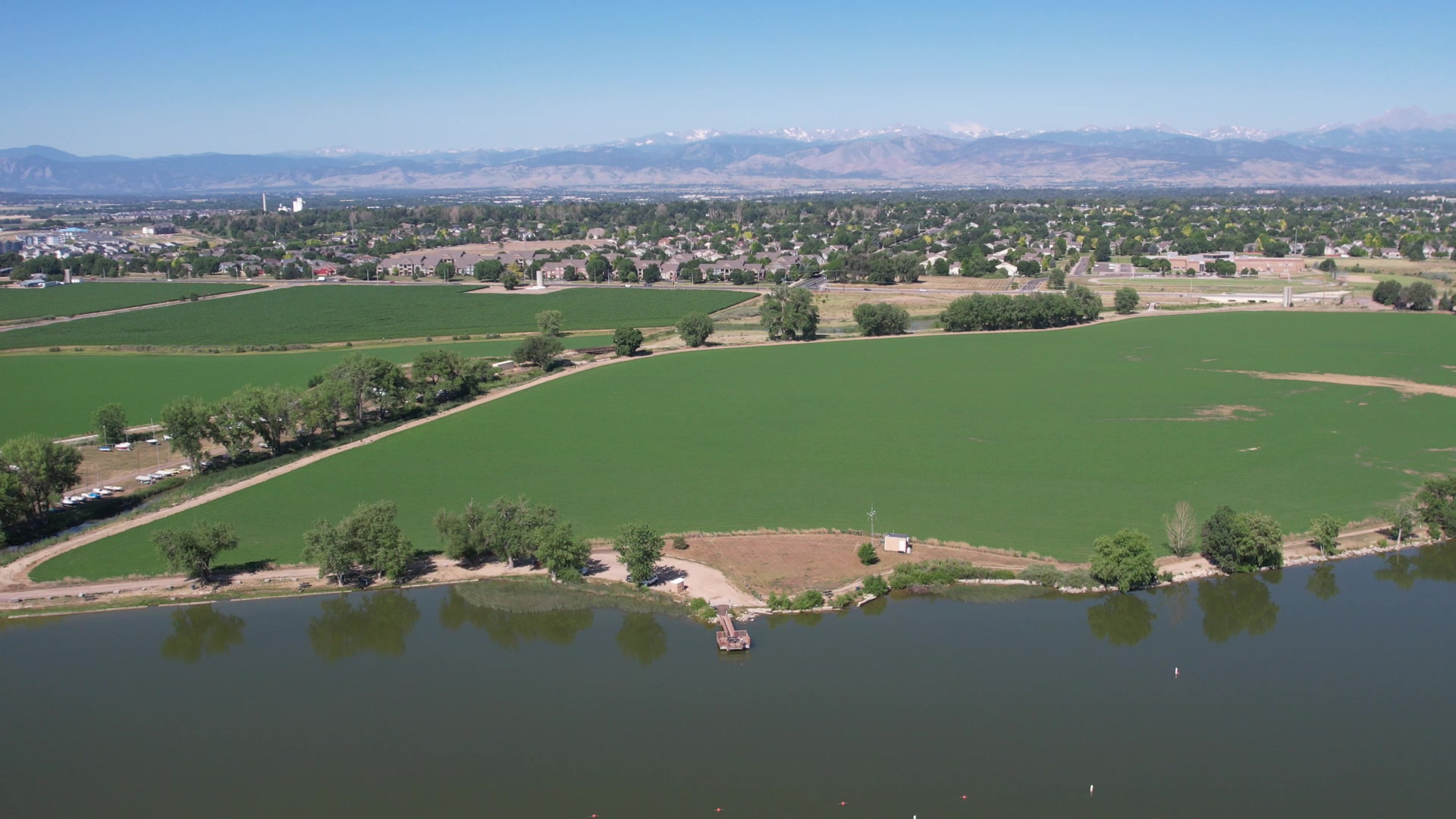
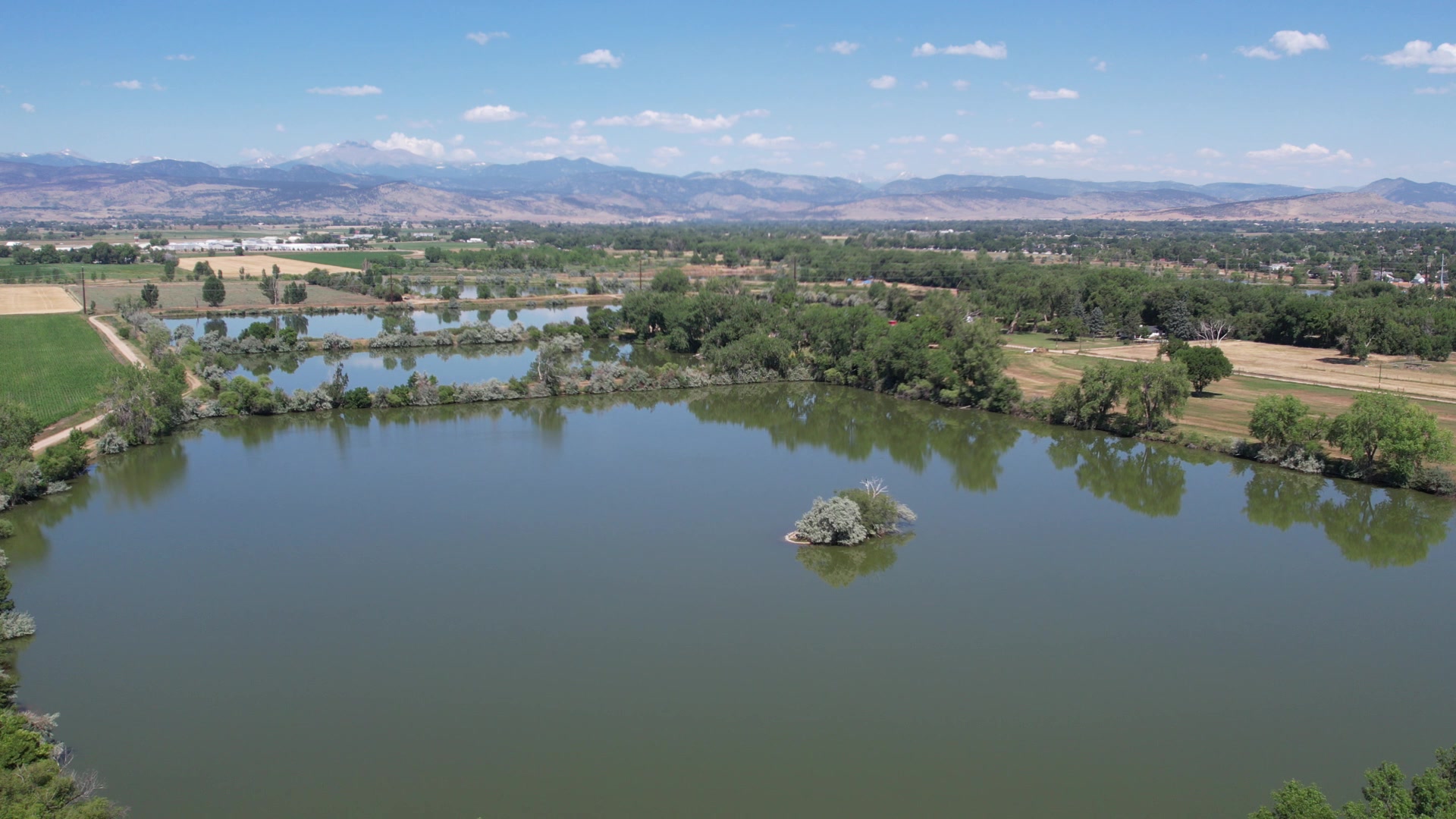
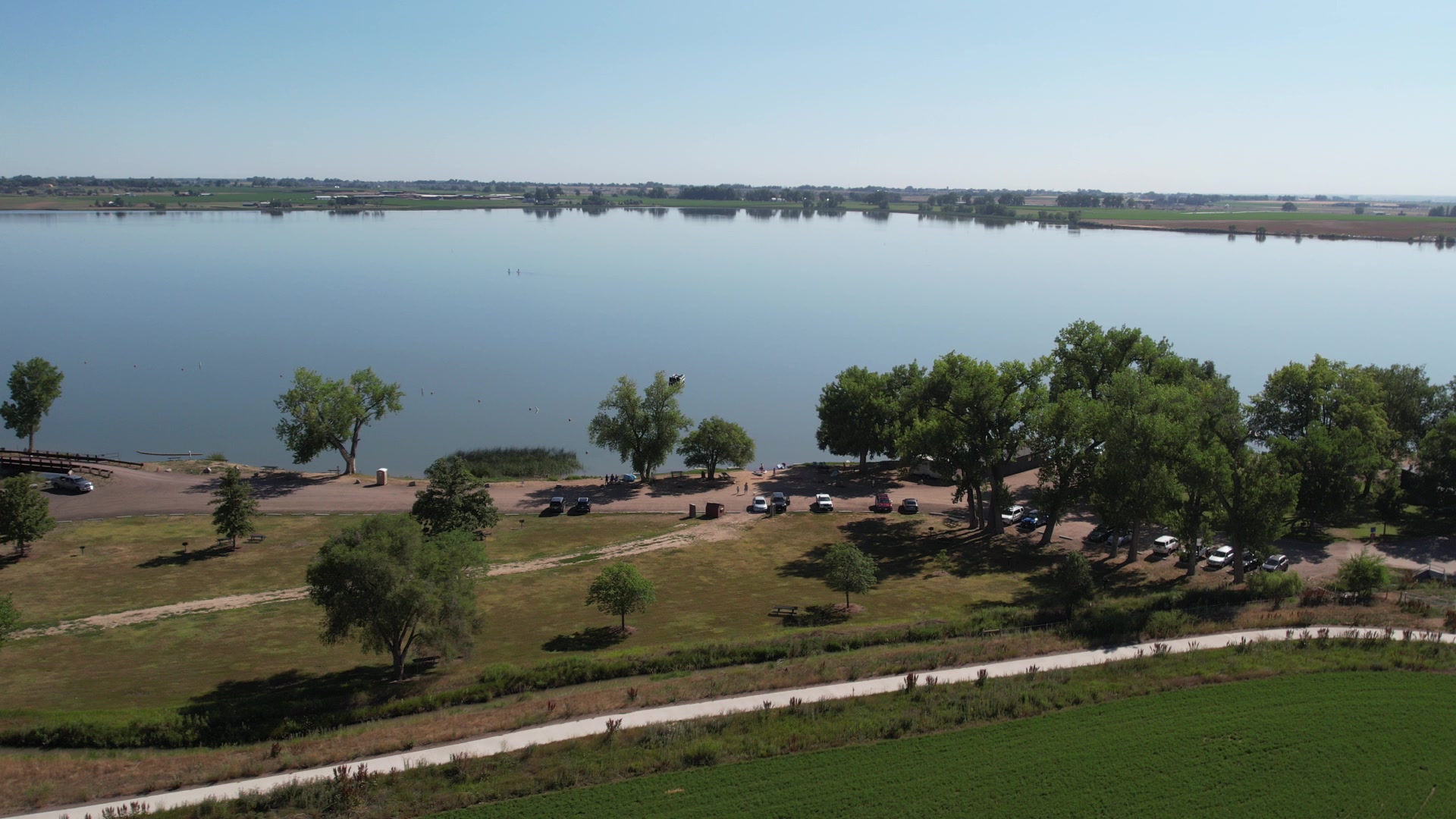
- Union Reservoir, 736 acres with wakeless boating and a swim beach, and McIntosh Lake, with a 3.5-mile loop and Longs Peak behind it
- City-owned electric service since 1912 and NextLight, the city-owned fiber network PCMag readers ranked the top internet provider overall in 2026
- St. Vrain Valley Schools, including P-TECH programs where students can earn an associate degree
- A short drive to Lyons, Estes Park and Rocky Mountain National Park
What gives people pause
- No train as of fall 2026. Rail to Longmont was promised in RTD's 2004 FasTracks plan and still isn't built; a state-backed service is targeted for as early as 2029.
- Denver is a real commute: about 45 minutes off-peak; plan on more at rush hour.
- Two counties, two assessors. Confirm which one applies before you compare homes.
- St. Vrain Creek flooded badly in September 2013. Flood work since then has changed the risk, but as of fall 2026, FEMA's December 2012 maps still set insurance requirements.
- New homes may carry the cost of the water rights the city requires developers to bring, and some add a metro district.
Where is Longmont, and how do you get around?
Longmont sits on the plains along St. Vrain and Left Hand creeks, between Boulder to the southwest and Loveland to the north. Main Street (US 287) runs through downtown and the Diagonal (CO 119) runs to Boulder and east to I-25. Drive times are off-peak OpenStreetMap estimates from downtown.
- Into Denver: About 36 miles and 45 minutes, usually via CO 119 and I-25. Plan on more at rush hour.
- Into Boulder: About 16 miles and 25 minutes on the Diagonal.
- Into the Tech Center: About 49 miles and an hour off-peak.
- North: Loveland is about 17 miles and 25 minutes; Old Town Fort Collins about 41 miles and 50 minutes.
- Buses: As of fall 2026, RTD's BOLT runs daily between Longmont and Boulder, LD1 connects Longmont with Denver and LD3 with Broomfield. The downtown hub is the 8th & Coffman Park-n-Ride. FLEX regional buses run to Berthoud, Loveland and Fort Collins. The Flatiron Flyer on US 36 doesn't come to Longmont.
- Bus rapid transit: RTD's Diagonal Flyer, two bus rapid transit lines on CO 119 between Boulder and a new Park-n-Ride near US 287 and CO 66, is expected to start in mid-2027, replacing BOLT and the J route.
- Rail: As of fall 2026, Longmont is the planned end of RTD's Northwest Rail, which stops at Westminster today. RTD's 2024 study of a scaled-back peak service (three trips each way on weekdays) has no planned start date, and full Northwest Rail is unfunded and pushed to the 2040s. Separately, the Front Range Passenger Rail District's Colorado Connector plans starter service on BNSF track from Denver through Boulder and Longmont to Fort Collins as early as 2029; a district sales-tax measure to fund expansion is on the November 3, 2026 ballot. Treat any train as a future benefit, not your commute.
- 1st & Main Transit Station: The city broke ground October 9, 2026 on a five-story station with 10 bus bays and about 700 parking spaces, built for the bus rapid transit and the planned rail stop. Completion is targeted for the end of 2027.
- The airport: DIA is about 44 miles and 50 to 55 minutes. Longmont's Vance Brand Airport is general aviation only.
- The mountains: CO 66 to Lyons, then US 36 to Estes Park, about 33 miles and under an hour, puts you at Rocky Mountain National Park.
What are Longmont's neighborhoods like?
Housing runs from older homes in the historic core to pricier homes in Prospect and West Longmont, with newer subdivisions on the edges.
Downtown and Main Street
Downtown Longmont became a National Register historic district in 2017 and is the heart of the city: restaurants, coffee shops, breweries, the 1881 St. Stephen's Episcopal Church building and the Dickens Opera House at 3rd and Main. It's constantly busy, just enough: a lot of people moving around, but not packed.
Old Town: the historic east and west sides
The blocks on either side of Main Street hold the East Side (1986) and West Side (1987) National Register historic districts, plus the old Carnegie Library on 4th Avenue. In my view, Old Town is one of the more popular neighborhoods in Longmont: older homes within a walk of Main Street. Check the city's preservation rules before planning an addition.
Prospect New Town
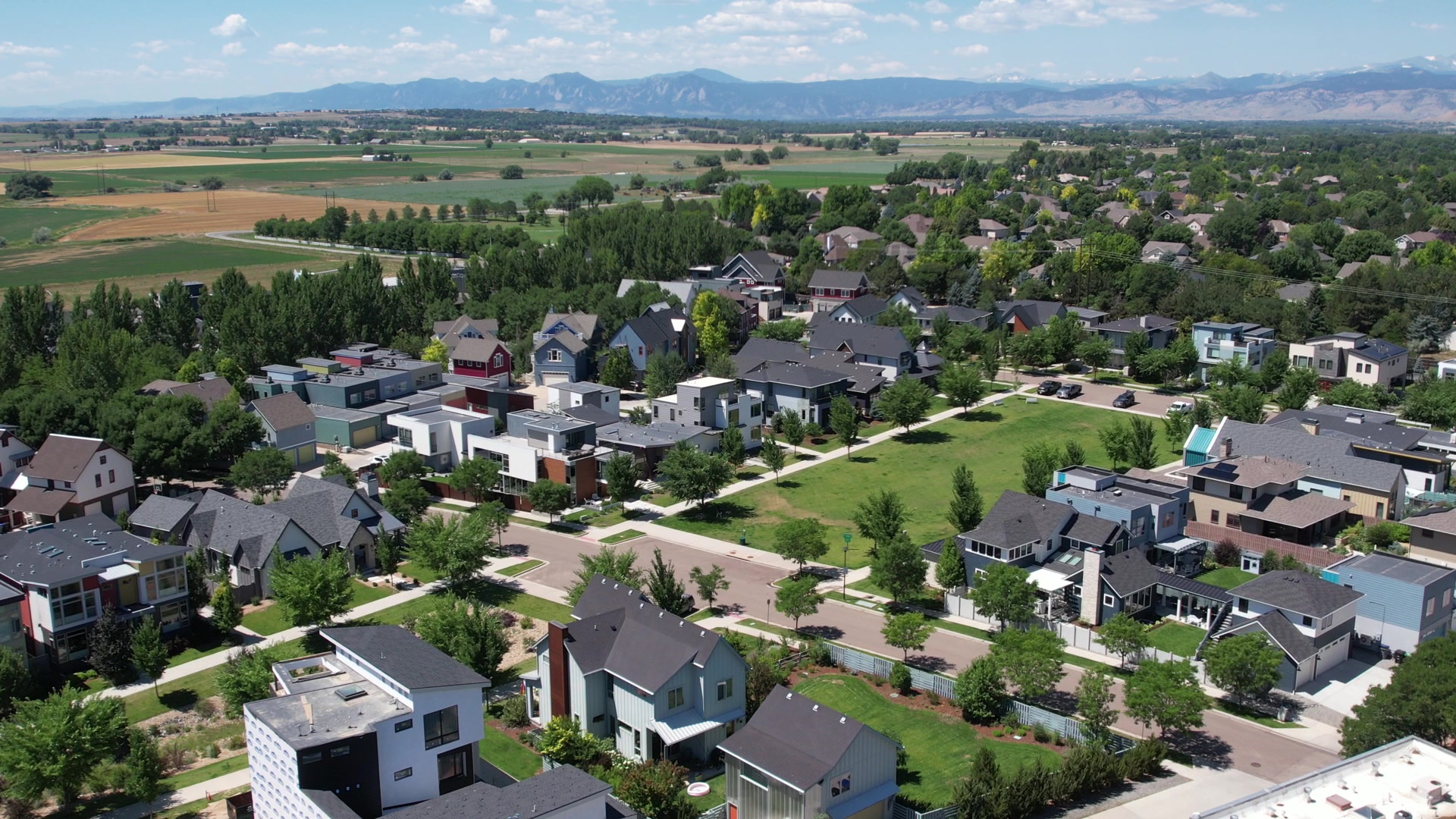
Prospect is one of my absolute favorites. It was Colorado's first full-scale New Urbanist neighborhood, planned by Duany Plater-Zyberk & Company, the firm behind Seaside, Florida, on an 80-acre former tree farm owned by developer Kiki Wallace's family, and approved in 1995. The plan puts a small town center within a five-minute walk of every home, with rear lanes, row houses and live-work lofts. You pull in and it's like a small town inside a suburb, almost a time capsule: shops and coffee on a little main street, and no two houses alike, from colonial-looking to modern. There's so much tree cover that it's very tough to film with a drone. I kept trying to find that main street from the air and it was camouflaged.
West Longmont and McIntosh Lake
West Longmont, toward the foothills, is where many of the city's pricier homes sit. McIntosh Lake on the northwest side has a 3.5-mile loop, non-motorized boating and a view of Longs Peak. It's the side closest to Lyons and the mountains.
North Longmont and the CO 66 edge
The north side runs up toward CO 66, where RTD's new bus rapid transit Park-n-Ride is planned (due with the BRT in mid-2027). The city line gets fuzzy here: in 2024 NextLight reached the Anhawa and Strawberry Circle neighborhoods north of CO 66, about 125 homes outside city limits that already had Longmont utilities. A Longmont mailing address doesn't always mean the city of Longmont.
East Longmont and the Weld County side
East of County Line Road (Weld County Road 1), Longmont is in Weld County, out toward Union Reservoir and 313-acre Sandstone Ranch. Newer subdivisions here can come with an HOA and sometimes a metro district. The property is valued by the Weld County Assessor in Greeley, and the tax bill comes from the Weld County Treasurer.
South Main, 1st & Main and the Sugar Mill area
The south end of downtown along St. Vrain Creek is Longmont's biggest redevelopment area. The city's Southeast Longmont urban renewal plan covers about 280 acres around the new transit station, where it projects 800 to 1,200 homes, and the 1905 sugar factory. Much of it sat in the floodplain, which is why the flood work matters here. As of fall 2026 it's a neighborhood to watch, not a finished one.
What does it cost to own a home in Longmont?
Longmont-specific points on the whole monthly payment:
- Property tax — Two counties, two assessors. Mill levies differ by county and by the special districts an address sits in, so look up the exact address with the Boulder County or Weld County Assessor. ZIP codes (80501, 80503, 80504) don't settle it; the city warns that mailing addresses aren't a reliable guide to city limits.
- Metro districts — Title 32 metropolitan districts can fund streets, sidewalks, stormwater and other public infrastructure, and their levy appears as a separate line on the property tax bill, not the HOA statement. Check the state's special district map and the title commitment before you offer.
- HOA — Newer subdivisions often have one. Many older core neighborhoods have none.
- Water and tap fees — City water comes from the St. Vrain watershed, stored at Ralph Price Reservoir in Button Rock Preserve, and from the Colorado-Big Thompson Project. New development must bring its own water rights under the city's Raw Water Requirement, and that cost, plus tap fees, may show up in new-home prices. Current fees are on the city's water rates page. Outside city limits, confirm who provides the water.
- Utilities — Longmont Power & Communications is the city-owned electric utility and NextLight is city-owned fiber. Confirm both serve the address.
- Insurance — The Front Range sits in "Hail Alley," with damaging storms from mid-April to mid-September. Wind is the other risk: the 2021 Marshall Fire, a wind-driven grass fire with gusts up to 115 mph, burned more than 1,000 structures in Superior and Louisville. Ask insurers early.
- Flood — St. Vrain Creek, Left Hand Creek, Spring Gulch and Lykins Gulch all have mapped floodplains. Check the city's Floodplain Inquiry Map. As of fall 2026, the December 2012 FEMA maps still set insurance requirements; if a mapped flood zone touches the building and the loan is federally backed, flood insurance will likely be required.
- Sales tax — Longmont adds its own city sales tax to state and county taxes. Check the city's sales and use tax page for the current combined rate.
What kinds of homes are in Longmont?
The oldest houses are in the historic east and west sides near Main Street. Most of the city is newer than people expect: Longmont nearly doubled between 1990 and 2020, so many homes are subdivision houses from the 1990s on, with new construction on the edges. Prospect adds something unusual for the Front Range, a dense, walkable mix of houses, row houses, live-work lofts and apartments over garages. As of fall 2026, more apartments are planned around 1st & Main. In 2025 I said there was new home construction in Longmont that was still affordable by Front Range standards; check current pricing before you count on that.
How do schools work in Longmont?
St. Vrain Valley Schools serves Longmont and a 411-square-mile area including Erie, Firestone, Frederick, Lyons, Mead and Niwot, about 33,000 students in 60 schools and programs. Longmont's high schools are Longmont, Silver Creek, Skyline and New Meridian. The district's P-TECH programs let students start in ninth grade and finish with an associate degree in four to six years, including Skyline's FalconTECH in computer information systems (IBM is a partner), Longmont High's TrojanTECH in business and Silver Creek's RaptorTECH in cybersecurity (Seagate is a partner). The Innovation Center on Quail Road, opened in 2018, has robotics, aerospace and biomedical labs where students hold jobs building projects for local businesses and community groups. In my view, St. Vrain is one of the most innovative districts in the state.
Charter schools in Longmont include Flagstaff Academy, St. Vrain Community Montessori and Twin Peaks Charter Academy, and there are several private schools. Front Range Community College's Boulder County Campus is in Longmont, with a downtown campus planned at 1st & Main as of fall 2026.
Open enrollment applications are taken December 1 to 15, 2026 for the next school year; seats depend on space and families provide transportation. Charters enroll separately. Check the school for the specific address.
What is there to do in Longmont?
Parks, trails and open space
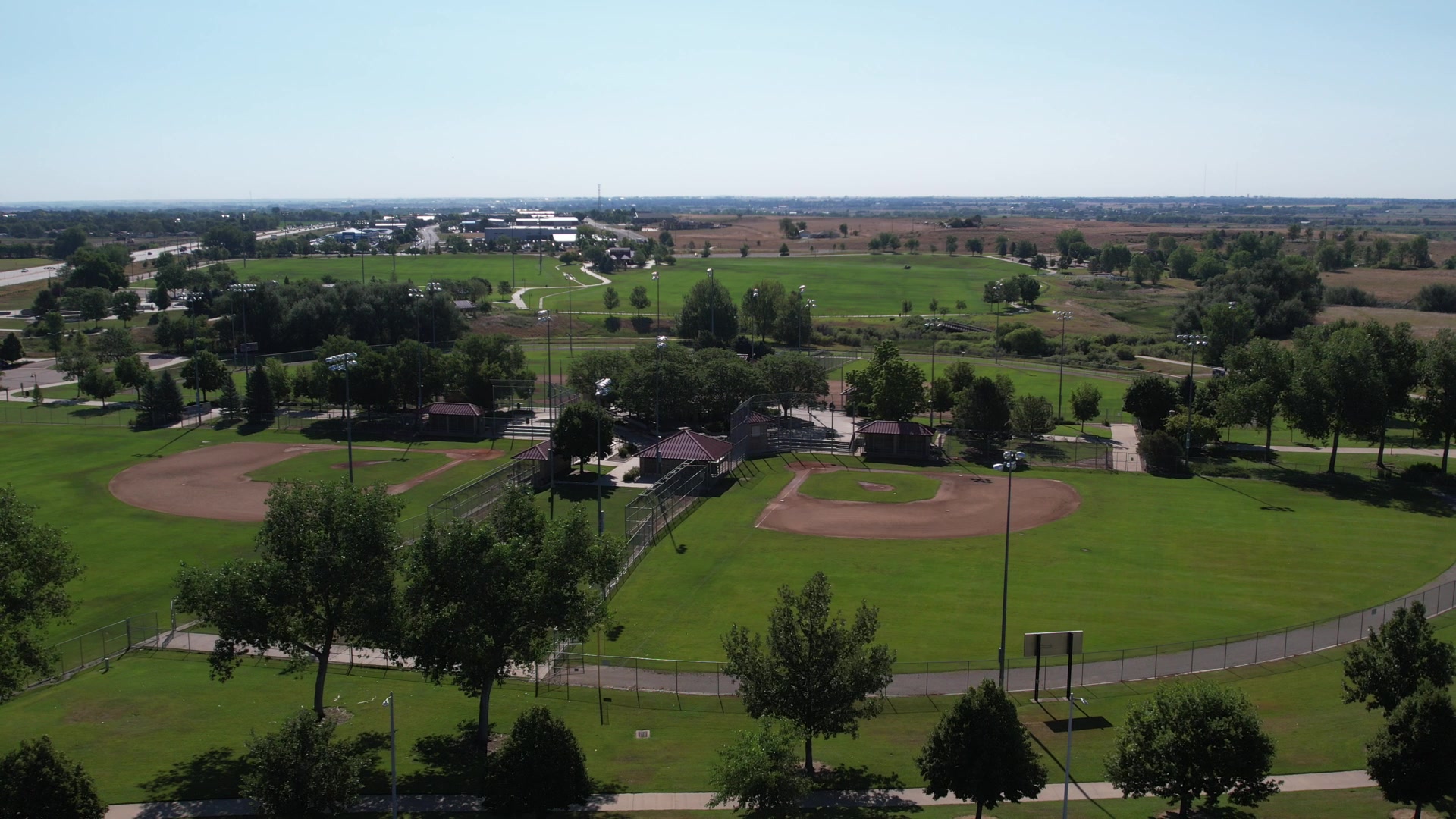
The city lists 45 parks and ten greenways, including the St. Vrain Greenway, and voters made the open space sales tax permanent in 2024. Union Reservoir has wakeless boating, paddleboarding, a swim beach, a dog beach and a fishing pier; camping ended in 2018. McIntosh Lake allows only non-motorized boats and no swimming. Sandstone Ranch, on the east side, has ball fields, a skate park and trails. Button Rock Preserve, about seven miles west of Lyons, protects the city's water supply along North St. Vrain Creek; it's walk-in hiking and fishing, and no dogs since May 2023.
Events and culture
Longmont has one of my favorite farmers markets in Colorado: the Boulder County Farmers Market runs Saturday mornings at the Boulder County Fairgrounds, April through November in 2026. Downtown hosts a Halloween parade, the Dickens Opera House stages shows, the Firehouse Art Center runs exhibits and classes, and the Longmont Museum on Quail Road is free the second Saturday of each month.
Food and beer
Main Street is the food scene. My wife is Venezuelan, and some of our favorite Latin restaurants are in Longmont. Left Hand Brewing, founded in 1993 and known for Milk Stout Nitro, sits on the St. Vrain just outside downtown.
Three places to start
- Prospect New Town — If you go to Longmont, make sure you check it out. It's like driving into a little town inside the town.
- Main Street — Some of the best restaurants you're going to find in all of Colorado. My wife and I love to eat there.
- Union Reservoir — Get out for the day, get the boat out (wakeless only) and get the kids out for a swim.
Who are the big employers in and near Longmont?
The city's 2020 financial report listed St. Vrain Valley Schools as the largest employer, followed by the City of Longmont, Seagate Technology, Intrado, Longmont United Hospital, UCHealth Longs Peak Hospital, McLane Western, the Federal Aviation Administration and Circle Graphics. Longmont United, with 186 beds, has been part of CommonSpirit Health since Centura Health split in 2023; Longs Peak opened in 2017. Crocs, often linked to Longmont, is headquartered in Broomfield, having moved from Niwot in 2020, and IBM is a school partner rather than a top city employer. Boulder is the nearest big job center, where CU and Ball Corporation are the biggest employers.
How does Longmont compare with nearby areas?
- Longmont vs. Boulder — About the same population, 25 minutes apart. Boulder has the university and Boulder Valley schools and sits against the foothills. Longmont has more space, less altitude and its own electric utility and fiber.
- Longmont vs. Erie — Erie, about 11 miles south, also straddles Boulder and Weld counties and grew fast, to about 38,600 by 2024. It's closer to Denver; St. Vrain and Boulder Valley both serve parts of it.
- Longmont vs. Loveland — Loveland, about 17 miles north in Larimer County, is a city of about 81,000 (2025 Census estimate) known for public art, with Thompson schools. It also flooded in 2013, on the Big Thompson, and it's closer to Fort Collins.
- Longmont vs. Lafayette and Louisville — Smaller former coal towns in southeast Boulder County with Boulder Valley schools, 20 to 25 minutes south and closer to Denver. Louisville lost 553 homes in the Marshall Fire.
A lender's take on Longmont
To me, what makes Longmont great is that, as of 2025, you could still get a single-family home with a yard and access to Boulder, access to Denver, even access to Fort Collins, at a reasonable price. Longmont is a charming mix of farmland, tech space and breweries, and I'm a fan of downtown. When I ask clients and friends, Longmont gets good responses on schools, the outdoors, health care and quality of life.
If you're looking to be farther from Denver but don't want to drive all day to get to the airport, Longmont is one of the towns to look at. It's a great overall town, and it's really started to grow on people.
If you're weighing a newer home on the Weld County side against an older home in central Longmont, compare the line items, not just the price. Newer east-side subdivisions often have an HOA and sometimes a metro district, whose levy appears on the property tax bill. Many older core neighborhoods have no HOA and sit in Boulder County. Look up both exact addresses with the county assessor and the state's special district map before you decide.
Buying in Longmont: what to do first
- Get pre-approved before you tour, so you know your real number including taxes, insurance and any HOA or metro district.
- Confirm the county and city limits for the exact address with the Boulder County or Weld County Assessor. Don't rely on the ZIP code.
- Check the flood map in the city's Floodplain Inquiry Map, and get an insurance quote, flood included if needed, before you're under contract.
- Ask about the metro district, HOA and utilities: the levy, the dues, and whether city water, Longmont Power & Communications and NextLight serve the address.
- Confirm the school and drive the commute at rush hour from the actual neighborhood, and check RTD's current BOLT and LD schedules if a bus is part of your plan.
- Veterans: a VA loan works on a historic home in Old Town and a new build on the east side alike. If the property is in a mapped flood zone or has a metro district, raise it early so it's built into the numbers.
In pictures

Watch the videos


Help shape what Jimmy films next
Which town should Jimmy cover next, and what do you still want to know? Tell us, and we'll email you when the guide and video are out.
Thank you — this genuinely helps. We'll let you know when it's ready.
Frequently asked questions
Is Longmont in Boulder County or Weld County?
Both. Most of Longmont is in northeastern Boulder County, and the city extends east into western Weld County, roughly east of County Line Road. Check the Boulder County or Weld County Assessor for the exact address, since the county sets part of the property tax bill.
Does Longmont have a train to Denver?
Not as of fall 2026. RTD's Northwest Rail line to Longmont is unbuilt and unfunded, and the state-backed Colorado Connector plans starter service through Longmont as early as 2029. As of fall 2026, RTD's LD1 bus connects Longmont with Denver and BOLT runs to Boulder.
How far is Longmont from Denver and Boulder?
About 36 miles and 45 minutes by car to downtown Denver off-peak; plan on more at rush hour. Boulder is about 16 miles and 25 minutes away on the Diagonal Highway (CO 119).
What school district serves Longmont?
St. Vrain Valley Schools, which serves about 33,000 students across a 411-square-mile area. It runs P-TECH programs and an Innovation Center, and Longmont has three charter schools. Confirm the specific school for any address.
What is NextLight?
NextLight is Longmont's city-owned fiber-optic internet service, offered alongside the city's own electric utility, Longmont Power & Communications. PCMag readers ranked it the top internet provider overall in 2026.
Is flooding still a risk in Longmont?
St. Vrain Creek flooded badly in September 2013, and the city's Resilient St. Vrain project has since widened and rebuilt much of the creek through town, with the Army Corps reach substantially complete in 2026. As of fall 2026, the 2012 FEMA maps still set insurance requirements; check the city's Floodplain Inquiry Map for any address.
What is Prospect New Town?
Prospect New Town is a neighborhood on Longmont's south side and Colorado's first full-scale New Urbanist community, approved in 1995 and planned by Duany Plater-Zyberk & Company on a former tree farm. It has a small walkable town center, rear lanes and varied architecture.
Take this guide with you
Get the printable PDF version to read offline, share with your family or mark up on your scouting trip. Enter your name and email and it's yours.
Thanks! Your guide is ready.
Download the PDFNo spam. Jimmy may follow up personally to see if you have questions about the move.
Sources
Guide reviewed October 25, 2026, and reviewed again twice a year.
- Longmont, Colorado (counties, founding, incorporation, elevation, distances, top employers from the 2020 ACFR, Vance Brand Airport, FLEX, NextLight, FRCC)
- City Population: Longmont (1990–2020 census counts, July 2025 Census estimate)
- Boulder, Colorado (population, elevation, top employers)
- OpenStreetMap (OSRM) off-peak driving estimates from Longmont to downtown Denver, Boulder, the DTC, DIA, Fort Collins and Loveland
- OpenStreetMap (OSRM) driving estimates from Longmont to Estes Park, Erie, Lafayette and Louisville
- RTD: Service resumes at 8th•Coffman Park-n-Ride (routes served)
- RTD: Route LD1 Longmont/Denver and LD3 Longmont/Broomfield map (effective Jan. 2026)
- RTD: Route BOLT Boulder/Longmont map (effective June 2026)
- Transit.wiki: RTD Route BOLT (endpoints, days of service)
- RTD: CO 119 Bus Rapid Transit Project (Diagonal Flyer, 2027 opening)
- CDOT: CO 119 Bus Rapid Transit (routes replacing BOLT and J, mid-2027)
- Flatiron Flyer (US 36 stations, Longmont not served)
- RTD: Northwest Rail Peak Service Study (completed 2024, no planned start date)
- B Line (RTD) (Westminster terminus, Northwest Rail extension)
- CPR News: RTD report shows long odds for train to Boulder, Longmont in next decade (Oct. 2025)
- Colorado Governor's Office: Interagency agreement toward northern Front Range passenger rail (June 2025)
- Colorado Sun: BNSF, state reach tentative deal on rail service to northern Colorado (April 2026)
- Colorado Connector: District board approves final delivery plan (Aug. 2026)
- Colorado Connector: Longmont station (1st and Main district)
- Colorado Connector (2029 starter service target, 2026 ballot measure)
- Front Range Passenger Rail (status, Northwest Rail timing)
- KKTV: Colorado voters to decide on sales tax for Front Range rail, Nov. 3 (Oct. 2026)
- Denver7: Colorado Connector sales tax measure heads to November ballot (2026)
- City of Longmont: Longmont breaks ground on 1st & Main Transit Station (Oct. 2026)
- City of Longmont: 1st Amended Southeast Longmont Urban Renewal Plan, minor modification (Sept. 2026)
- City of Longmont: Longmont Power & Communications (public power since 1912)
- City of Longmont: NextLight expands north of Colo. 66 (March 2024)
- Broadband Breakfast: NextLight wins overall Readers' Choice for ISPs for 2026 (June 2026)
- City of Longmont: Resilient St. Vrain Project
- DredgeWire: St. Vrain Creek flood risk reduction project nears completion in Longmont (Aug. 2026)
- City of Longmont: Are You in a Floodplain? (Floodplain Inquiry Map, FEMA map status, creeks)
- City of Longmont: Water (sources, Raw Water Requirement, rates and fees)
- City of Longmont: Sales and Use Tax
- Colorado Division of Property Taxation: Boulder County Assessor
- Colorado Division of Property Taxation: Weld County Assessor
- Colorado Division of Local Government: Special Districts (metro districts, special district map)
- City of Wheat Ridge: Metro Districts (Title 32, what they fund, separate line on the tax bill)
- Weld County: Treasurer (collects county property taxes)
- Boulder County: East County Line Road / Weld County Road 1 widening (road owned half by each county, April 2023)
- Colorado State Highway 66 (Boulder/Weld county line)
- Rocky Mountain Insurance Information Association: Hail
- Boulder County: Wildfires (seasonal high winds, Marshall Fire)
- Marshall Fire (date, structures, wind gusts)
- National Register of Historic Places listings in Boulder County (Downtown, East Side and West Side districts, Dickens Opera House)
- Prospect New Town (history, DPZ, design)
- St. Vrain Valley Schools: About (area, communities, enrollment, schools, charters)
- St. Vrain Valley Schools: Schools directory (Longmont schools and charters)
- St. Vrain Valley Schools: P-TECH Programs
- St. Vrain Valley Schools: Innovation Center
- St. Vrain Valley Schools: Innovation Center grand opening (2018)
- St. Vrain Valley Schools: Open Enrollment
- City of Longmont: Parks directory (45 parks)
- City of Longmont: Greenways and Trails
- City of Longmont: Open Space (sales tax history)
- City of Longmont: Union Reservoir Nature Area
- City of Longmont: McIntosh Lake Nature Area
- City of Longmont: Button Rock Preserve
- City of Longmont: Sandstone Ranch Community Park & Nature Area
- City of Longmont: Longmont Museum
- Boulder County Farmers Markets: Longmont (2026 season)
- Downtown Longmont: Events (Halloween parade, Firehouse Art Center, Dickens Opera House)
- Left Hand Brewing Company
- Longmont United Hospital (CommonSpirit, beds)
- UCHealth (Longs Peak Hospital)
- Crocs (Broomfield headquarters since 2020)
- Erie, Colorado
- Loveland, Colorado
- U.S. Census Bureau QuickFacts: Loveland city, Colorado (July 1, 2025 population estimate)
- Lafayette, Colorado
- Louisville, Colorado (Marshall Fire losses)
- Boulder Valley School District (communities served)
- Destination Denver Colorado: What Are the Best Towns in Northern Colorado? (Aug. 2024)
- Destination Denver Colorado: The Best Towns of N. Colorado / Longmont Loveland Fort Collins Greeley & MORE! (Aug. 2024)
- Destination Denver Colorado: If I was Moving to Colorado Today - Here Are The Towns I Would Live In (April 2025)
- Destination Denver Colorado: If You're Moving to Colorado You HAVE to See These Towns! (Aug. 2025)
Photo credits
- Photos: Jimmy Everetts / Destination Denver Colorado.
Thinking about moving here?
Ask Jimmy anything about the area, the neighborhoods or the move itself. No pressure, just straight answers from a local.


