


Castle Rock
The short answer
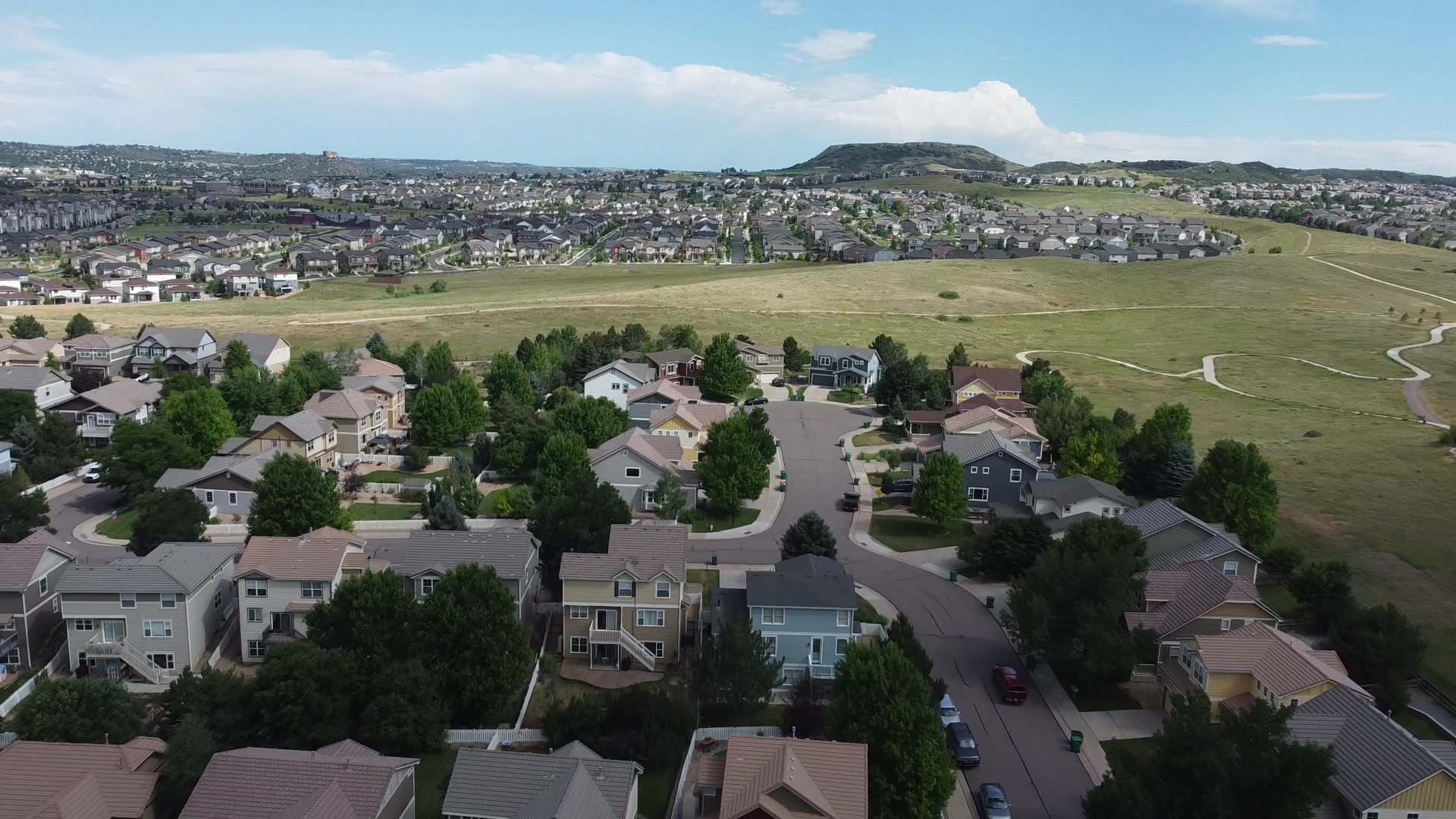
Castle Rock is the Douglas County seat, a home-rule town on I-25 about 28 miles south of downtown Denver, with roughly 84,000 people as of the 2025 estimate and a real historic downtown around the butte it's named for. It suits buyers who want a town with its own identity rather than a spillover suburb, daily access to trails and open space, Douglas County schools and services, and a predictable I-25 commute to the Denver Tech Center or Colorado Springs. It suits people less well if they commute to downtown Denver, Boulder or the north metro, want to walk to daily errands, want nightlife, or want to own a home without an HOA or a metro district.
Watch: Jimmy's video on this area
Is Castle Rock the right fit for you?
I'll start where I started in the video: Castle Rock is one of the Denver metro's most popular suburbs, and the word "suburb" undersells it. Growing up in Colorado, my family used to drive from Denver down to Pueblo, and Castle Rock was a little dimple on the way: the Rock itself, a very scenic spot, and the outlet malls, which are still there. That was it. Today it's a substantial, extremely popular town, among the most popular in the south metro if not all of Denver.
Castle Rock sits in the East Plum Creek valley at about 6,224 feet, roughly 28 miles south of downtown Denver and 37 miles north of Colorado Springs, with I-25 running through the heart of town. It was founded in 1874, picked as county seat for its central location, and incorporated in 1881. It has been its own place for 150 years and still acts like it: close enough to get to Denver in a reasonable time, far enough that you don't feel like a suburb of it.
Why people choose Castle Rock
- A real town identity. Downtown exists, it's used, people care about it. It is not a decorative Main Street.
- Douglas County. Faster permitting: things tend to move faster in Douglas County (can't wait to see the comments on that one). I just feel like it's a lot more efficient, and when it comes to crime, Douglas County does not mess around. If you like predictability and fewer surprise rules, it's a great fit.
- Distinct neighborhood personalities. The Meadows, Founders Village, Crystal Valley and Castle Pines Village next door all feel different. Not copy and paste.
- You're on I-25, not buried off it, so the commute is more predictable than Highlands Ranch, Parker or far east Aurora.
- Outdoor access every day: Philip S. Miller Park, Ridgeline and Castlewood Canyon are right there, and the Town manages 104 miles of trails and more than 4,000 acres of open space.
- A steady market. Castle Rock doesn't lead the metro in appreciation spikes, and it hasn't led it in declines either. People buy here and stay.
- A slower, family-centric pace. "Peaceful" was the word I heard most.
What gives people pause
- You drive a lot, and the jobs skew south. The Tech Center is easy. Downtown Denver, Boulder or the north metro, and that drive will mentally break you. If Google says 35 to 40 minutes clear, plan on an hour with traffic.
- It isn't walkable within town. You drive to downtown, the grocery store, school and activities. If a 5-to-10-minute drive is fine with you, you'll be fine.
- Restaurants are good, not great, with limited variety.
- HOA intensity is real in the newer communities: strict architectural rules and active enforcement. Trash cans out, garage door open, you'll hear about it. Forget painting your house pink.
- It can be tough to break into social circles. Castle Rock is less transient and more family-oriented. People are friendly; they're just not actively looking for new friends. We're not Midwest welcoming.
- Growth. Dawson Trails on the south end was approved in 2022 for 5,850 homes, and Pine Canyon, which straddles I-25, was annexed in 2025 for 1,800 more. Traffic and water are the live debates.
Where is Castle Rock, and how do you get around?
Castle Rock straddles I-25 at exits 179, 181, 182, 184 and 185, with Plum Creek Parkway, Wolfensberger Road and Founders Parkway (Highway 86) as the main crossings. Most of the newer growth is east of the interstate; the historic town and the Meadows are west. BNSF and Union Pacific freight lines run through town along US 85.
- Into the Denver Tech Center: Straight up I-25 to Lone Tree and Greenwood Village. This is the commute Castle Rock handles best and the one I hear the fewest complaints about.
- Into downtown Denver: About 28 miles. In my experience, 30 to 45 minutes with no traffic; 45 minutes to an hour if you're headed to north Denver at rush hour, and worse with a wreck.
- Colorado Springs: About 37 miles south on I-25. A real share of Castle Rock commutes this direction.
- Transit: Castle Rock is outside the RTD district, so there is no RTD bus or light rail; the nearest stations are RidgeGate Parkway and Sky Ridge in Lone Tree. CDOT's Bustang South Line between Colorado Springs and Denver stops in Monument and Lone Tree but not in Castle Rock as of fall 2026; a Castle Rock mobility hub on I-25 is in site selection as of CDOT's January 2026 update, with no construction date.
- The airport: I-25 north to E-470, then the toll road east to Peña Boulevard. Budget tolls if you fly often.
- The mountains: Good access once you reach C-470 north of town, which links to US 285 and I-70. The stretch of I-25 between Castle Rock and C-470 is the usual bottleneck.
- The Crystal Valley interchange: The new Exit 179 at Crystal Valley Parkway, discussed since the 1980s, began construction in spring 2024. The northbound ramps opened in July 2026; the southbound ramps and the rest of the project are scheduled to finish in 2027. It gives the south end its own I-25 access and relieves Plum Creek Parkway.
What are Castle Rock's neighborhoods like?
Castle Rock is a historic core plus a ring of master plans, most of them inside a metro district. The ones buyers ask about most:
The Meadows (northwest, west of I-25)
The big one: a master plan climbing the hills west of I-25 toward Ridgeline Open Space. Two amenity centers with pools (The Grange and the Taft House), about 24 miles of trails, Castle View High School, the hospital and the Meadows Town Center are all inside it. The most self-contained way to live in Castle Rock, with the fullest set of metro district levies to match.
Founders Village (east of I-25, along Founders Parkway)
An established east-side neighborhood that predates the newer master plans farther out, with its own metro district. Not walkable, but a shorter drive to downtown than Terrain or Cobblestone Ranch.
Crystal Valley Ranch (far south, east of I-25)
A master-planned community on the southern edge with a rec center, Pinnacle Park and about 600 acres of open space. The new Crystal Valley interchange finally gives it its own exit, which is why Dawson Trails and the Costco are going in across the highway. Newer homes, big views, long trip to the north metro.
Terrain (east side)
A newer master-planned community on the east side, inside a metro district (the Town's 2022 report lists it with Castle Oaks Metro #3). Polished, HOA-forward, the clearest example of the newer east side.
Cobblestone Ranch (far east, off Highway 86 toward Franktown)
The far east side of town near the Parker line. Check the district's School Locator Map for the specific address. Quieter and farther from I-25 than anything else on this list.
Plum Creek (south-central, along Plum Creek Parkway)
Built around the Plum Creek Golf Club, with Plum Creek Park, a paved creek path and the Vistas at Plum Creek apartments. Established homes, and the closest neighborhood to the Outlets.
Downtown and Craig & Gould (the historic core)
Wilcox Street and the blocks around it, with rhyolite buildings from the 1870s on, plus the Craig & Gould neighborhood just west, which holds the highest concentration of historically significant structures in Douglas County. Small lots, old trees, no master-plan HOA, and the only part of town where walking to dinner is realistic. Riverwalk, Mercantile Commons and the Encore condos brought the first real downtown residents.
Castle Pines Village (next door, unincorporated)
Not in Castle Rock or the City of Castle Pines: a gated community of about 4,300 people at the 2020 census in unincorporated Douglas County, founded in 1981 around the Jack Nicklaus-designed Castle Pines Golf Club and the Country Club at Castle Pines. Dense pines, its own homes association and metro district water, and the luxury end of this part of the county. If you buy here, you deal with Douglas County, not the Town.
What does it cost to own a home in Castle Rock?
Same rule as everywhere: know the whole monthly payment, not just the price. Castle Rock specifics:
- Property tax — Douglas County assesses and collects. Your total mill levy depends on which authorities cover the exact parcel, including any metro district. The Douglas County Assessor's property search and taxing-authority pages show the list for any address. Look it up before you offer.
- Metro districts — Castle Rock has more than a dozen (the Town's 2022 metro district report lists 13), and most newer master-planned communities sit in one. The levy shows up on the property tax bill, not the HOA statement, and varies widely between neighborhoods. For new construction, Colorado law has required since 2022 that the builder disclose the district's maximum debt mill levy and an estimated tax bill at or before contract. For resales, pull the district's budget yourself.
- HOA — Assume one outside the historic core. Ask for dues, reserves, what they cover and the design guidelines. This is the town where people told me the architectural rules bite.
- Water — Castle Rock Water is a Town utility, and water is the long-term story here. Deep Denver Basin aquifers, which don't recharge, still supplied about 65 percent of the town's water in 2025. The Town's 2026 plan sets a goal of 100 percent renewable water by 2065 through the Plum Creek Water Purification Facility, Rueter-Hess Reservoir storage and regional partnerships. Expect watering rules and rate increases to pay for it.
- Sales tax — Castle Rock collects its own town sales tax. Use the state's sales tax rate locator for the exact address.
- Insurance — Hail is the biggest premium driver statewide, per the Colorado Division of Insurance. Wildfire exposure matters on the wooded edges and in Castle Pines Village. Get a quote before you go under contract.
- Housing-age costs — Most of the stock is 1990s and newer, but expansive soils and builder-grade finishes deserve a careful inspection. In Craig & Gould, budget like you would for a 1900s house.
What kinds of homes are in Castle Rock?
Mostly single-family homes in master-planned communities built from the 1990s through today, from production two-stories in the Meadows and Terrain to larger custom homes in Crystal Valley, and acreage estates south of Castle Rock, such as Bell Mountain Ranch. Townhomes and 55-plus villas cluster in the Meadows and the newer east-side plans. Downtown has the Riverwalk and Mercantile Commons apartments and the Encore condos, plus a small supply of century-old homes. New construction continues in Terrain and the Meadows, and Dawson Trails will add thousands of homes on the south end over the next 15 years. That volume of new construction is a big reason relocating buyers land here, and why HOAs come with most of it.
How do schools work in Castle Rock?
All of Castle Rock is in the Douglas County School District, Colorado's third-largest at about 61,500 students in 2025-26, headquartered on Wilcox Street downtown. The two comprehensive high schools are Castle View, opened in 2006 in the Meadows, and Douglas County High School on Front Street, the oldest school in the district with roots to 1897 and an International Baccalaureate magnet program. Daniel C. Oakes is the alternative high school; Castle Rock Middle and Mesa Middle feed the two big ones. Near Cobblestone Ranch on the far east side, check the School Locator Map for the specific address.
The district assigns a neighborhood school by address and runs open enrollment on top of it: Round 1 for 2027-28 runs November 2 to December 1, 2026, ranked by district preference points rather than first-come, with a second round from late January into August. Students at their assigned school do nothing to stay. Use the district's School Locator Map for the specific address before you write an offer, because feeder patterns don't follow neighborhood names. Charter options in town include Academy Charter School, Aspen View Academy, World Compass Academy and Renaissance Secondary, each with its own enrollment process, plus Colorado Early Colleges Castle Rock and Arapahoe Community College's Sturm campus in the Meadows.
What is there to do in Castle Rock?
Parks, trails and open space
The Town manages 104 miles of trails, 25 parks and more than 4,000 acres of open space; counting partner land, more than 130 miles of trails and 6,900 acres inside town. Philip S. Miller Park is the showpiece: 300 acres with the 200-step Challenge Hill (178 feet of climbing), an amphitheater with a summer concert series, the Miller Activity Complex indoor rec center, 8 miles of trail and The EDGE zip lines. Rock Park is a 1.3-mile loop to the base of the Rock itself; the summit scramble is discouraged. Ridgeline Open Space above the Meadows has 370 acres and more than 8 miles of trail. Lost Canyon Ranch Open Space, 681 acres on the southeast edge, opened in summer 2026 with about 10 miles of hiking-only trail, reached about 15 miles when the trail network was completed (as of October 2026), and connects to Castlewood Canyon State Park, where Cherry Creek runs past the dam that failed in 1933 and flooded Denver. The East Plum Creek Trail runs under I-25 and connects most of town by bike.
Events
The calendar runs on Festival Park, the two-acre downtown park on Sellars Gulch: a Sunday farmers market from Memorial Day weekend into October, Jazz in the Park on summer Wednesdays, First Fridays, a free summer trolley, and a Longhorn cattle drive from Rock Park down Perry Street to Festival Park on the opening day of the Douglas County Fair and Rodeo in late July. The big one is the Starlighting on the Saturday before Thanksgiving: the 45-foot star on the Rock has been lit since 1936, now with fireworks, and the Season of the Star runs through January. Colorado Artfest, in its fourth decade, is now held in Festival Park.
Food and beer
The honest feedback I got: good, not great, and not a lot of variety. Plenty of chains along I-25, and a developing downtown scene with several breweries and a wine bar. Locals have their go-tos and drive north when they want something different. Downtown is a cool few blocks; it isn't big-city dining and it isn't trying to be.
Three places to start
- Wilcox Street and Festival Park — Park once, walk the rhyolite blocks from the depot museum down to the Riverwalk, and watch how downtown is actually used. Locals say it hasn't peaked.
- Philip S. Miller Park — Climb Challenge Hill, then look at the amphitheater and the trails. It shows the everyday outdoor access Castle Rock offers.
- Ridgeline Open Space from the Meadows — Walk a loop above the houses to see what the biggest master plan here looks like, HOA and all, with the Front Range behind it.
Who are the big employers in and near Castle Rock?
As of 2019, about 80 percent of residents commuted out of town for work, which tells you most of the story. Inside town, AdventHealth Castle Rock in the Meadows is the only hospital, opened in 2013 with a cancer center added in February 2026. Douglas County government, with most of its departments based in town, and the Douglas County School District, headquartered on Wilcox Street, are the big public employers. Retail is a real employer here: the Outlets at Castle Rock, more than 100 brands as of 2026 and the largest open-air center in Colorado; the Promenade at Castle Rock on the north end; and the Costco planned at Dawson Trails, expected in 2027 as of late 2024. Miller's Landing at the Plum Creek Parkway exit has been planned since 2017 as a corporate and hotel site and is still largely future. The real job centers are up I-25: Lone Tree's RidgeGate and Sky Ridge Medical Center, then the Denver Tech Center, and Colorado Springs to the south.
How does Castle Rock compare with nearby areas?
- Castle Rock vs. Parker — Parker has Mainstreet and E-470 and a shorter hop to the DTC; Castle Rock has direct I-25 access, the county seat, more open space and a quieter feel. Pradera and the Pinery are the overlap zone.
- Castle Rock vs. Castle Pines — The City of Castle Pines and Castle Pines Village are smaller, closer to the Tech Center, and built around the gated golf communities. Castle Rock has the downtown, the hospital and far more housing variety.
- Castle Rock vs. Highlands Ranch and Lone Tree — Both are closer to the light rail and the jobs. Castle Rock trades that for a real town, more land and a longer drive.
- Castle Rock vs. Monument — The next town south across the Palmer Divide is smaller and oriented to Colorado Springs, with a Bustang stop Castle Rock doesn't have. If your work is in the Springs, compare the two; if it's in Denver, Castle Rock wins.
A lender's take on Castle Rock
What stuck with me from everyone I asked is how consistently they described the same place: a town, not a suburb; peaceful; steady. It isn't the market that spikes, and it isn't the market that drops. People move here and stay, which is why the resale story is as good as it is and why the social circles can be hard to crack.
The honest trade is the drive and the rules. If you work at the Tech Center or from home, Castle Rock gives you a separation between work and life that people closer in tell me they can't find. If your work is downtown, in Boulder or north of Denver, be realistic about what an hour each way does to you. And know which kind of homeowner you are before you fall for a model home, because most of what's for sale here comes with rules.
Who's it perfect for? Families who want stability over trendiness, people who are done with Denver's density and politics, buyers who want a town identity and a steady market, and anyone who wants space without going full rural. Who will struggle? Walkability lovers, nightlife-first personalities, no-rules homeowners, and people who need Denver at their fingertips.
Buying in Castle Rock: what to do first
- Get pre-approved before you tour. New construction in Terrain and soon Dawson Trails moves on the builder's timeline.
- Price the whole payment: Douglas County property tax with the exact metro district levy, HOA dues, water rates and insurance. In the pines, get the insurance quote first.
- Drive the commute at rush hour from the specific neighborhood, both directions, on a weekday. Then add a wreck on I-25 in your head.
- Read the HOA design guidelines before you offer. Fences, sheds, RVs, paint and solar are where people get surprised.
- Confirm the assigned schools for the exact address on the district's School Locator Map, and note the Round 1 open-enrollment window if you want a different school.
- Veterans: a VA loan works on new construction, including builder contracts, and on homes in metro districts and HOAs. Ask before you sign a builder's purchase agreement.
In pictures



Watch the videos


Help shape what Jimmy films next
Which town should Jimmy cover next, and what do you still want to know? Tell us, and we'll email you when the guide and video are out.
Thank you — this genuinely helps. We'll let you know when it's ready.
Frequently asked questions
Is Castle Rock part of Denver?
No. Castle Rock is a home-rule town and the county seat of Douglas County, incorporated in 1881, about 28 miles south of downtown Denver on I-25. It runs its own police, water utility, parks and permits.
What school district is Castle Rock in?
Douglas County School District, Colorado's third-largest, headquartered in Castle Rock. The comprehensive high schools are Castle View and Douglas County High School, and the district runs open enrollment with Round 1 each November. Use the district's School Locator Map to confirm the assigned schools for a specific address.
Is there light rail or RTD service in Castle Rock?
No. Castle Rock is outside the RTD district. The nearest light rail is RidgeGate Parkway or Sky Ridge station in Lone Tree. CDOT's Bustang South Line between Colorado Springs and Denver does not stop in Castle Rock as of fall 2026, though a mobility hub on I-25 in town is in site selection as of January 2026.
How long is the commute from Castle Rock to Denver?
About 28 miles to downtown. Roughly 30 to 45 minutes with no traffic; 45 minutes to an hour or more at rush hour, especially with a crash on I-25. The Denver Tech Center is closer and the commute Castle Rock handles best.
What is the Crystal Valley interchange?
A new I-25 interchange, Exit 179 at Crystal Valley Parkway, on Castle Rock's south end. Construction started in spring 2024, the northbound ramps opened in July 2026, and the southbound ramps and full project are scheduled to finish in 2027. It serves Crystal Valley Ranch and the new Dawson Trails development, including a Costco planned for 2027.
Do most Castle Rock homes have an HOA or metro district?
Most homes in the newer master-planned communities do. Castle Rock has more than a dozen metro districts (the Town's 2022 report lists 13), and most newer master-planned communities sit in one. The metro district levy appears on the Douglas County property tax bill, not the HOA statement, and varies widely by neighborhood. For new construction, Colorado law requires the builder to disclose the district's maximum mill levy and an estimated tax bill before you sign. The historic downtown and Craig & Gould neighborhoods are the main exception.
Where does Castle Rock get its water?
From Castle Rock Water, a Town utility. Deep Denver Basin aquifers still supplied about 65 percent of the town's water in 2025, with renewable supply from Plum Creek, reuse and imported water making up the rest. The Town's 2026 master plan sets a goal of 100 percent renewable water by 2065 and funds it through rates, so expect watering rules and rate increases.
Take this guide with you
Get the printable PDF version to read offline, share with your family or mark up on your scouting trip. Enter your name and email and it's yours.
Thanks! Your guide is ready.
Download the PDFNo spam. Jimmy may follow up personally to see if you have questions about the move.
Sources
Guide reviewed October 24, 2026, and reviewed again twice a year.
- Castle Rock, Colorado (population, county seat, incorporation, elevation, distances, history, RTD status, commuting share as of 2019, only hospital, county government departments in town)
- Town of Castle Rock: Parks, Open Space and Trails (trail miles, parks, open space acreage, named parks)
- Town of Castle Rock: Philip S. Miller Park (acreage, Challenge Hill, amphitheater, trails, playground, The EDGE)
- Town of Castle Rock: Festival Park (size, features, events)
- Town of Castle Rock: Downtown Castle Rock (history, rhyolite buildings, National Register, Riverwalk, Mercantile Commons, Encore)
- Town of Castle Rock: Celebrate Castle Rock's history during Historic Preservation Month (May 2026; Craig and Gould, depot museum, walking tours)
- Town of Castle Rock: Castle Rock lights up the holidays during Season of the Star (Nov. 2025; Starlighting)
- Town of Castle Rock: Events (farmers market, Jazz in the Park, summer concerts, trolley, cattle drive)
- Town of Castle Rock: Experience the Old West at Castle Rock's annual Longhorn cattle drive July 24 (June 2026; Rock Park down Perry Street to Festival Park, fair opening day)
- Town of Castle Rock: Festival Park Farmers Market brings fresh flavors to Castle Rock starting May 24 (May 2026; Sundays, May 24 to Oct. 11, 2026)
- Town of Castle Rock: Crystal Valley Interchange (scope, cost, funding partners, schedule)
- Town of Castle Rock: Northbound I-25 on- and off-ramps at Crystal Valley interchange now open (July 2, 2026)
- Douglas County: Crystal Valley interchange project in Castle Rock begins (April 2024)
- CBS Colorado: New I-25 Crystal Valley interchange to open by 2027 (Oct. 2024; Exit 179, March 2024 start)
- CBS Colorado: Dawson Trails development to bring new I-25 interchange, thousands of homes to Castle Rock (Feb. 2024)
- Colorado Community Media: Dawson Trails housing starts in Castle Rock (Jan. 2025; overall Dawson Trails plan approved in 2022 for more than 5,800 units)
- Denver Gazette: Douglas County's third Costco store slated for Castle Rock in 2027 (Dec. 2024)
- Bisnow: Castle Rock OKs 535-acre annexation for Pine Canyon master-planned development (June 2025)
- CBS Colorado: Castle Rock approves controversial Pine Canyon development (June 2025)
- Town of Castle Rock: Source Water (Denver Basin, alluvial wells, Plum Creek Water Purification Facility)
- Castle Rock Water: Water Resources Strategic Master Plan 2026 Update (65% nonrenewable in 2025, 100% renewable by 2065 goal)
- Town of Castle Rock: 2022 Metro Districts Mill Levy Report (list of Castle Rock metro districts; Castle Oaks/Terrain in Castle Oaks Metro #3)
- Otten Johnson: New metropolitan district disclosure requirements for new-home sales contracts (effective 2022)
- Douglas County Assessor (property search, taxing authorities, mill levy information)
- Douglas County: Sales Tax Rates and the state rate locator (Castle Rock SCFD exclusion)
- Town of Castle Rock: Revenue / Sales Tax (the Town licenses businesses and collects its own sales tax)
- Denver Gazette: Prettiest Denver suburbs see home insurance premiums soar with wildfire risk (Aug. 2026; hail as top premium driver)
- Douglas County School District (Colorado) homepage (third-largest district, enrollment, headquarters)
- Colorado Department of Education: SchoolView enrollment, Douglas County Re 1 (61,535 students in 2025-26)
- Douglas County School District: Open Enrollment (2027-28 rounds and dates, School Locator Map)
- Douglas County School District: Charter Schools
- Douglas County School District (Colorado) — schools list
- Castle View High School (opened 2006, Meadows address)
- Douglas County High School (1897 roots, Front Street, IB program, enrollment)
- Front Range Express / Bustang (South Line does not stop in Castle Rock; mobility hub under evaluation)
- Bustang South Line schedule and stops
- CDOT: Castle Rock Mobility Hub fact sheet (Dec. 2024; sites, schedule)
- CDOT: I-25 Mobility Hub in Castle Rock, About (Jan. 2026 update; site selection 2025 to 2026, design 2026 and beyond)
- Town of Castle Rock: Transportation FAQ (no RTD, Bustang plans, senior shuttle)
- E-470 (tolled beltway from I-25 in Lone Tree to Denver International Airport)
- Colorado State Highway 470 (C-470 runs from I-25 in Lone Tree past US 285 to I-70 near Golden)
- CDOT: C-470, Wadsworth Boulevard to I-70 (C-470 corridor to I-70)
- Interstate 25 in Colorado (exit list: 179 Crystal Valley Parkway, 181 Plum Creek Parkway, 182 Wilcox Street/Wolfensberger Road, 184 Founders/Meadows Parkway, 185 Castle Rock Parkway)
- The Meadows, Castle Rock, Colorado (parks, trails, schools, Grange and Taft House)
- Livability: Moving to Castle Rock? Check out these 7 neighborhoods (Aug. 2022; Plum Creek, Crystal Valley, Red Hawk, downtown)
- Livability: Delight in Downtown Castle Rock (Aug. 2020; Riverwalk, Encore, Mercantile Commons, Festival Park renovation, Colorado Artfest)
- Larkspur Historical Society: Bell Mountain Ranch (acreage community south of Castle Rock, east of I-25)
- Castle Pines Village, Colorado (CDP, population, founding, golf clubs, homes association, metro district)
- Visit Castle Rock: Golf (Plum Creek Golf Club, Red Hawk Ridge, Castle Pines clubs)
- Visit Castle Rock: Play (Philip S. Miller Park, Castlewood Canyon, The EDGE)
- Visit Castle Rock: History (1874 founding, Jeremiah Gould, rhyolite, depot)
- Castle Rock Depot (1875, Denver & Rio Grande, now museum)
- Denver Gazette: How to hike to the top of Castle Rock (Rock Park loop, 1.3 miles)
- Ridgeline Open Space (370 acres, 8-plus miles of trail)
- Denver Gazette: Trails complete at Lost Canyon on Colorado's Front Range (Oct. 2026; 681 acres, about 10 miles opened summer 2026, about 15 miles complete)
- Castlewood Canyon State Park (location, 1933 dam failure)
- Douglas County: Douglas County Fair & Rodeo (2026 dates, fairgrounds address)
- AdventHealth Castle Rock (opened 2013, renamed 2023, cancer center Feb. 2026)
- Visit Colorado Springs: Outlets at Castle Rock (100-plus stores, largest open-air center in Colorado)
- Outlets at Castle Rock (more than 100 brands, checked Oct. 2026)
- Bowman: Promenade at Castle Rock (177 acres, 1.5 million square feet)
- ColoradoBiz: Drive-by suburb between Denver and Colorado Springs becomes bustling business destination (Oct. 2017; Miller's Landing, Riverwalk, Collaboration Campus)
- Destination Denver Colorado: Living in Castle Rock Colorado (The Perfect Suburb?) (Jan. 2026)
Photo credits
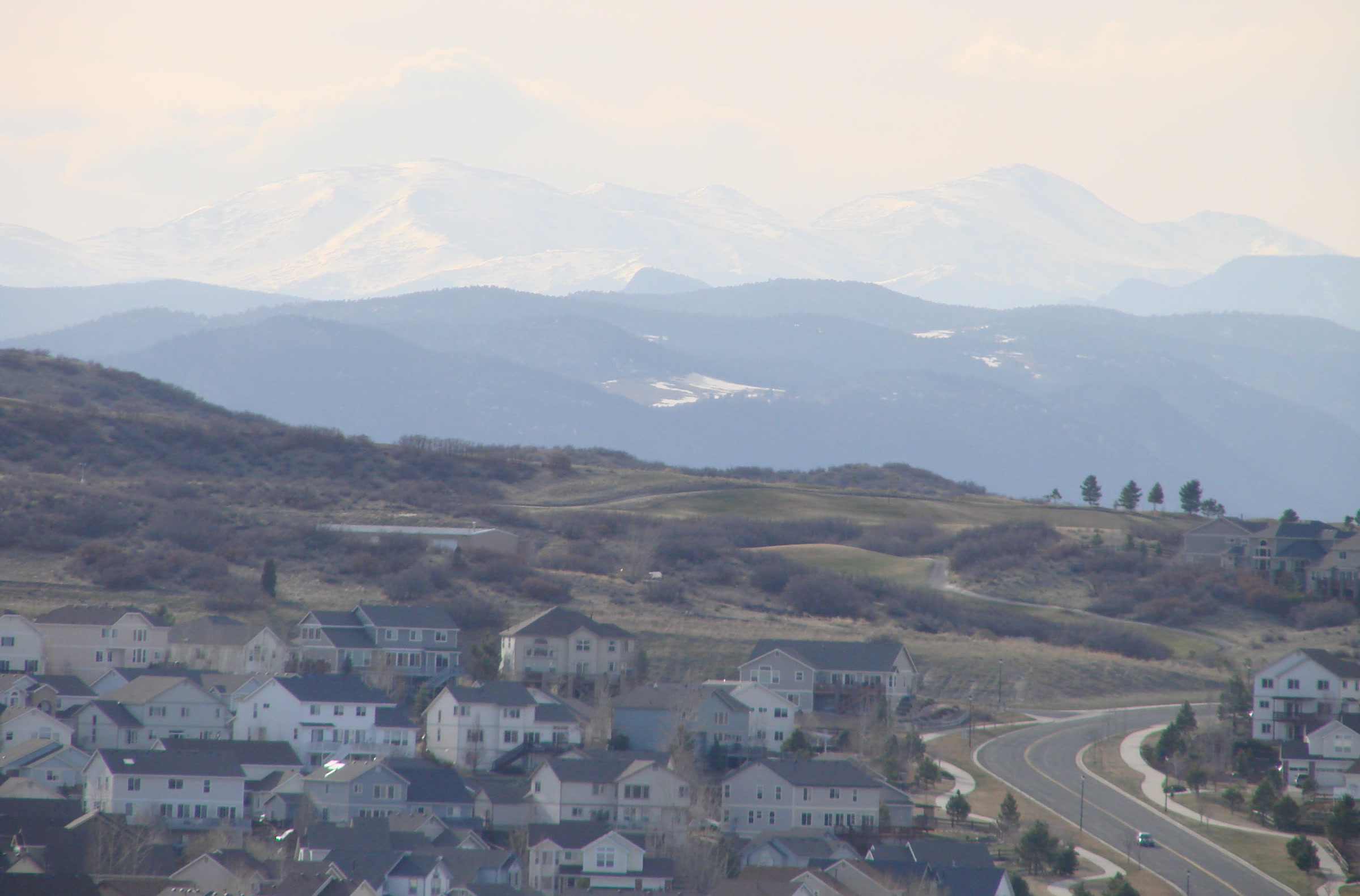
- Mount Blue Sky seen from Castle Rock, above a neighborhood. Photo: Jeff Albright / CC BY-SA 3.0, via Wikimedia Commons.
- Castle Cafe downtown with the Rock behind. Photo: Smallbones / Public domain, via Wikimedia Commons.
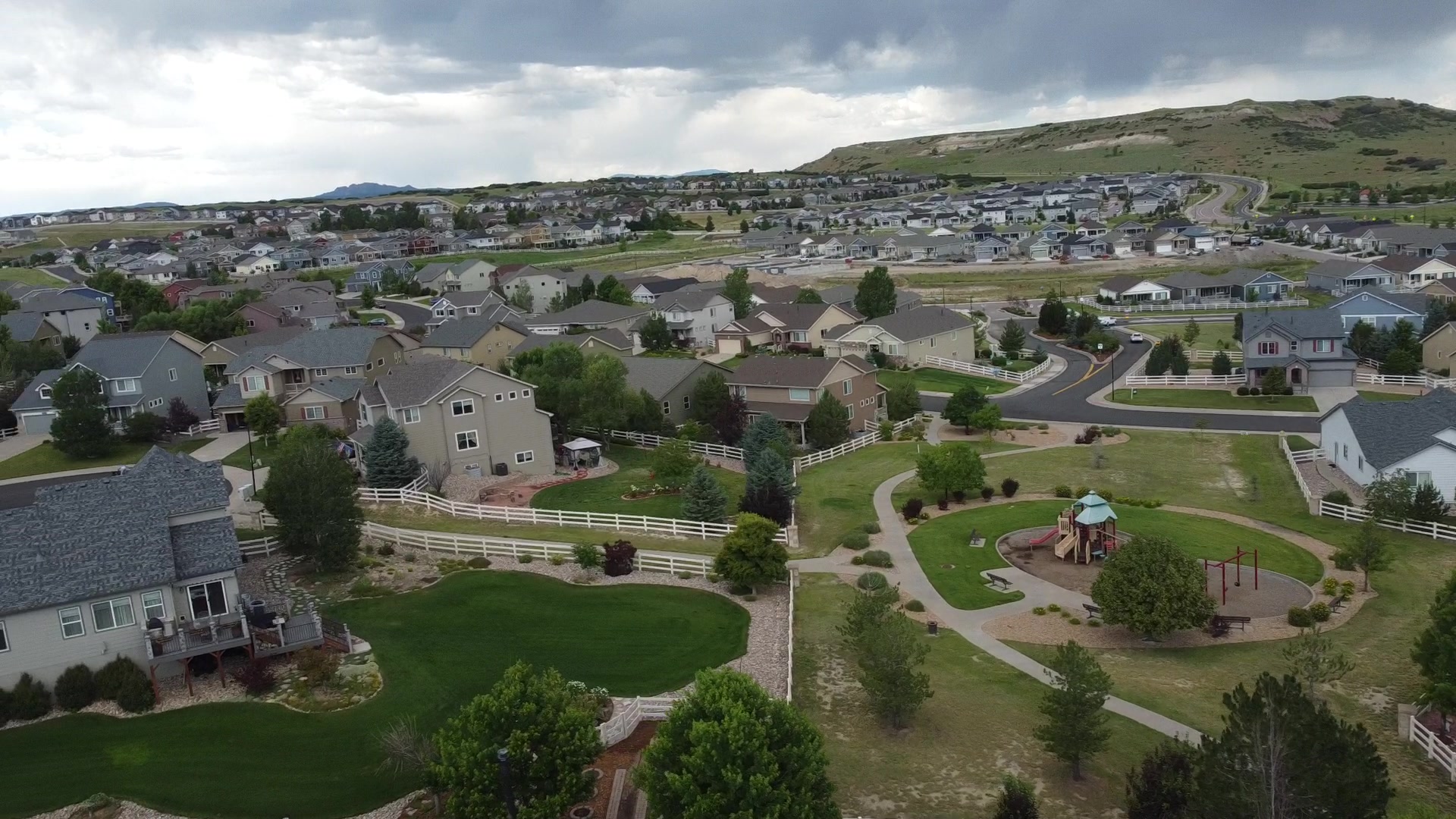
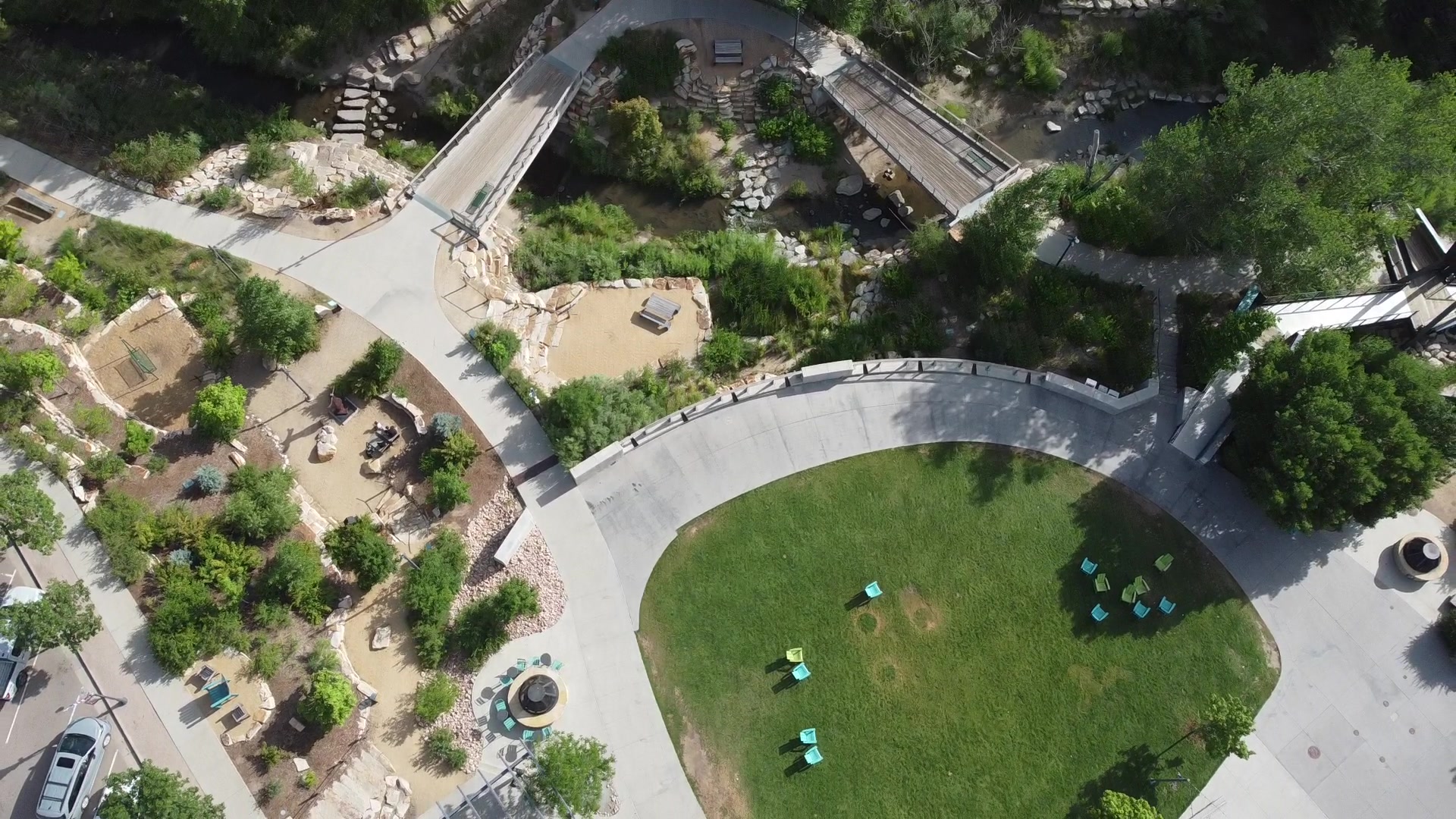
- All other photos: Jimmy Everetts / Destination Denver Colorado.
Thinking about moving here?
Ask Jimmy anything about the area, the neighborhoods or the move itself. No pressure, just straight answers from a local.


