


Central Park

The short answer
Central Park is a Denver neighborhood east of downtown, built on the site of the former Stapleton International Airport, with I-70 running through it. Homes are mostly new construction from the early 2000s on, including single-family houses, row homes, duplexes, condos and apartments. Central Park Station puts it on RTD's commuter rail line between Union Station and Denver International Airport, and I-70 connects it to the rest of the metro. It's separate from New York's Central Park, and from the city park of the same name inside the neighborhood.
Watch: Jimmy's video on this area
What is living in Central Park like?
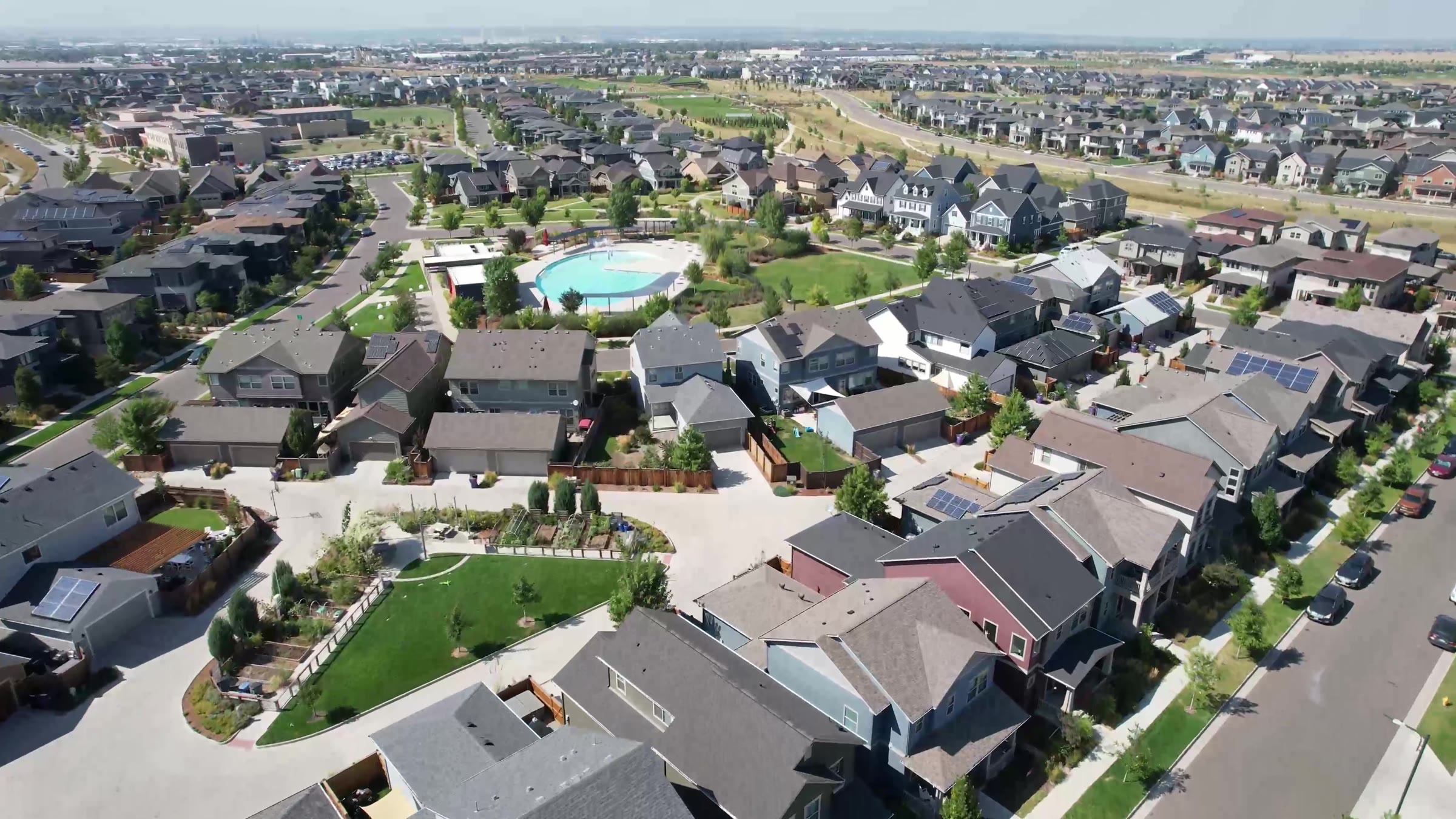
Central Park sits just off I-70, on land that was Denver's airport until Denver International opened in 1995. It's really a master planned community, where they thought through where the parks and trails lead and where businesses go. Most of it is new construction with a modern look, and there's little historic housing. I group it with the more suburban side of Denver.
Three things here are easy to mix up. The neighborhood is one of Denver's official statistical neighborhoods, and it's what this guide covers. The park is an 80-acre city park inside the neighborhood. New York's Central Park has no connection to either one. If you're still choosing a part of the metro, start with the Denver relocation guide.
What draws people here
- Open space. About 1,100 of the community's 4,700 acres are parks and open space.
- Rail inside the neighborhood. Central Park Station is three stops east of Union Station and four stops west of Denver Airport Station.
- Trail connections. Westerly Creek North Park links the Sand Creek Regional Greenway across the neighborhood.
- Bluff Lake. The nature center's 123 acres include a lake with a mile-long trail around it.
What gives people pause
- Layers of charges. Metro district taxes and association assessments can both apply. Confirm each one for the specific address.
- Former-airport land. The site needed a fuel cleanup, covered in the cost section below. Ask what's on record for the parcel.
- I-70. The interstate crosses the neighborhood, so visit any home close to it at the hours you'd be there.
- City lines. A small part of the development is in Aurora, so not every address you see under this name is in Denver.
- Flood maps. Westerly Creek and Sand Creek run through and along the neighborhood, so check FEMA's map for any address near either.
Where is Central Park, and how do you get around?
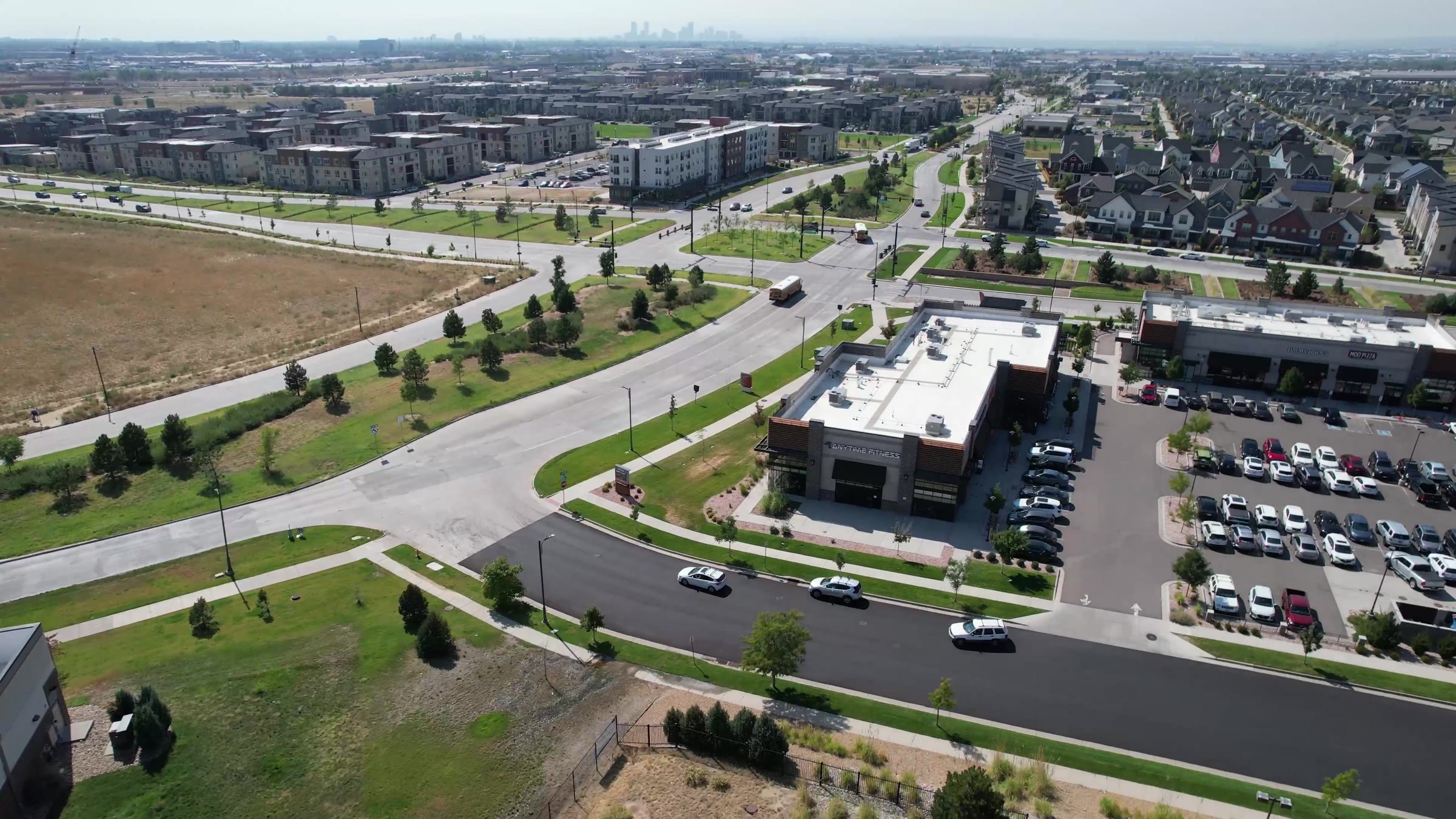
Central Park is in northeast Denver, east of downtown. I-70 crosses it, and Central Park Boulevard is the main north-south street. As of fall 2026, CDOT's Central 70 project is complete from east of I-25 to Chambers Road, and that stretch is in operations and maintenance, so check CDOT for ramp closures. RTD's downtown rail project has changed some service as of fall 2026, so confirm your trip with RTD before you count on it.
- Into downtown: Trains from Central Park Station run to Union Station, three stops west. By car, take I-70 west toward I-25.
- Into the Tech Center: Take I-70 east to I-225, then head south to I-25.
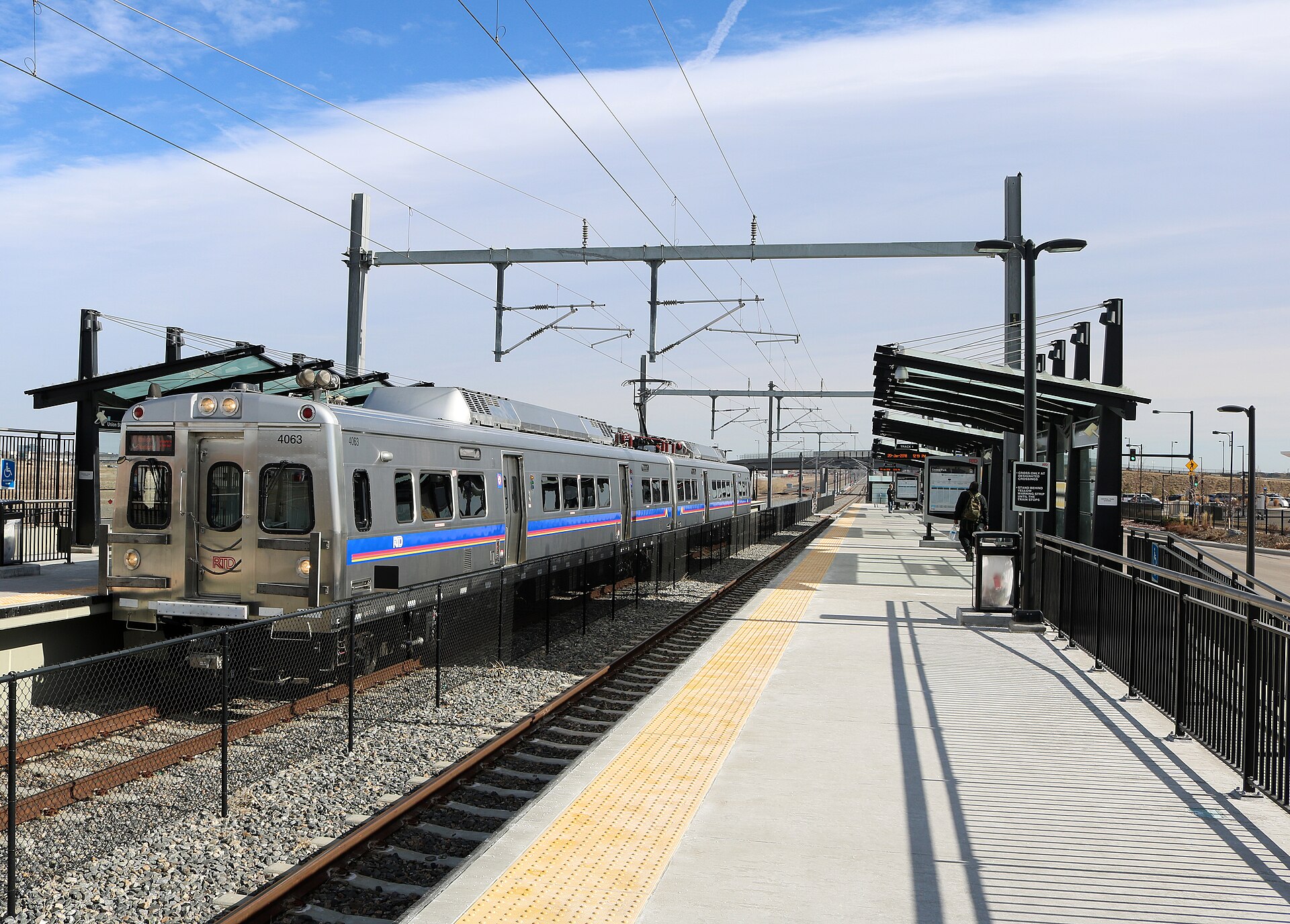
- Transit: Central Park Station, at 8175 E. Smith Road near Central Park Boulevard, is a commuter rail and bus station with a large park-and-ride lot. Trains have stopped here since April 2016, and several RTD bus routes connect here.
- The airport: Trains run east from Central Park Station to Denver Airport Station, four stops away. By car, go east on I-70 to Peña Boulevard, the airport exit.
- The mountains: Take I-70 west.
Where does Central Park start and stop?
Denver's statistical neighborhoods are the boundary source for this guide. The city has 78 of them, used for planning and administration, and Central Park is the name of this one. The community takes in about 4,700 acres and twelve subdivisions, among them Beeler Park, Bluff Lake, Conservatory Green and Wicker Park. For the exact line on any block, check the city's neighborhood map.
The name
The neighborhood used to be called Stapleton, and you'll still see that name in older files. Residents chose Central Park in a July 2020 vote, the master community association's board approved it weeks later, and the Denver City Council supported the change in 2021. Some residents had objected to the old name because Mayor Benjamin Stapleton was a member of the Ku Klux Klan. The new name comes from the city park inside the neighborhood.
North of I-70
Northfield is the part of the neighborhood north of I-70, and it includes the Shops at Northfield. It's a sub-area of Central Park, not a separate statistical neighborhood.
The Aurora side
A small southeastern piece of the development is in Aurora, not Denver. That includes the Aurora side of the Bluff Lake subdivision, south of East 26th Avenue. Denver's statistical neighborhoods stop at the city line, so those homes sit outside the official neighborhood. Check the city, county and school district for any address around there. Bluff Lake Nature Center is a separate property with a Denver address.
Nearby areas often confused with it
North Park Hill and Northeast Park Hill share the western edge. Montbello and East Colfax also share a border, and Aurora lies to the east. None of them is part of Central Park.
What does it cost to own a home in Central Park?
This guide doesn't list prices or tax amounts because they change. It tells you where to look them up. Start with the metro district and the master association.
- Property tax: Denver's formula is assessed value times mill levy. Taxing authorities such as the school district, City Council and special districts set their levies around December 15 each year, so the total can change each year.
- Metro district: A metropolitan district is an independent government entity that can issue debt, levy taxes and impose fees. It isn't an HOA, and what it collects through its mill levy is a tax. Westerly Creek Metropolitan District taxes property in Central Park. Its filings place it in Denver and Adams counties, so check its boundary map for the specific address. As of its 2026 budget, most of the levy goes to Park Creek Metropolitan District for debt service. Park Creek issued the debt, and it finances and builds the public infrastructure here, including roads, drainage, parks, and water and sewer lines. A small share of the levy pays for upkeep of the creek, in-tract parks and other public facilities the city doesn't run. Westerly Creek says most of the levy won't be necessary once the Park Creek bonds are retired, but its website and Park Creek's long-term finance plan give different payoff estimates, so don't budget on a lower levy.
- Finding the mill levy: Use Denver's property search. Choose Real Property, enter the address, scroll to Tax Documents and pick a recent tax year to open the statement. It shows the actual and assessed values. To confirm the mill levy, call Denver's Treasury before you make an offer, since levies reset annually. For an address on the Aurora side, use the records of the county it's in.
- Master association: The Central Park Master Community Association is a nonprofit, separate from the metro district. Its stated job is managing parks and recreation, running recreational and cultural programs, and keeping its facilities going. An association is a private corporation that can charge mandatory assessments, and its rules are in a declaration. Ask whether the home is assessed, what the current amount is, how it's billed and what it pays for.
- Condo or townhome dues: Ask whether the home also belongs to a smaller association, and if so, who handles the stormwater bill.
- Former-airport land: As of 2001, Denver, as owner, had decided the site would be cleaned up to allow unrestricted residential use over the entire area, mostly by digging out and removing contaminated soil. Jet fuel that leaked from tanks, pipelines and hydrants was the main contaminant, along with motor fuels, de-icing liquids and smaller amounts of solvents. Two state agencies shared review: the labor department's oil inspection section for regulated storage tanks and the health department for other releases. Future owners and occupants were not to use groundwater at the site, with city water available instead. That's a 2001 picture, not a report on any one lot, so ask the seller and those state agencies what's on record for the parcel.
- Sidewalk fee: Denver property owners have paid this fee since 2025, whether or not their block has a sidewalk. It appears on the municipal stormwater bill in two payments a year. If an HOA handles the stormwater bill, the HOA pays it. Owners still have to clear snow and ice.
- Trash and recycling: Denver's volume-based trash fee began in January 2023 for buildings with seven or fewer units, and cart size sets the charge. Ask whether the city or a private hauler collects at the home you're considering.
- Flood insurance: Search any address on FEMA's Flood Map Service Center, the official public source, and ask your insurance agent what the result means. Maps change over time.
What kinds of homes are in Central Park?
Construction began in 2001, and the first homeowners moved in by 2002. The mix includes single-family homes, duplexes, row homes, live-work townhomes, condos and apartment buildings. Styles range from traditional to ultra modern. Most single-family homes have alley-loaded garages. Because the land held a working airport until 1995, there's little historic housing here.
How do schools work in Central Park?
Denver Public Schools is the sole public school district in Denver, so addresses inside the official neighborhood are in DPS. In some parts of the city DPS uses enrollment zones instead of single-school boundaries, and an address in a zone comes with a guaranteed seat at one of several schools, not one particular school. What applies depends on the address, so enter each home you're considering into DPS's School Finder. Homes on the Aurora side are outside Denver, so look up the school district for those addresses separately.
What is there to do in Central Park?
Parks, trails and open space
Central Park, the 80-acre city park that gave the neighborhood its name, opened in 2007.
Bluff Lake Nature Center is a 123-acre preserve built around a 9-acre lake. Denver bought the land in the 1940s and it became a crash zone at the end of the airport's runways, which left it largely undisturbed for about fifty years. After the airport closed, a settlement with the Sierra Club led to its protection, and Denver's Department of Aviation transferred ownership to the nature center in 2008.
The Sand Creek Regional Greenway is a public trail and natural area of nearly 13 miles. It was planned to link the High Line Canal in Aurora with the South Platte River Greenway in Commerce City, and it formally opened in 2002. Westerly Creek North Park, which opened in 2016, links it across the neighborhood.
Events
The master association's mission includes ongoing recreational and cultural programming, and as of February 2026, Bluff Lake Nature Center has an indoor classroom and outdoor educational spaces. Check each organization's calendar for what's current.
Food and shops
The Shops at Northfield, which opened in 2006, is the retail center north of I-70. Quebec Square is another high-traffic stop. The Central Park – Sam Gary Branch Library is at 2961 Roslyn St.
Three places to start
- Bluff Lake Nature Center — At 11255 Martin Luther King Jr. Blvd. A mile-long trail goes around the lake.
- Central Park Recreation Center — At 9651 E. Martin Luther King Jr. Blvd. The indoor pool has a lazy river, a splash area, a 25-yard lap pool and a slide.
- Central Park — The 80-acre city park that the neighborhood is named for.
Who are the big employers in and near Central Park?
The big job centers near Central Park sit outside its lines. Anschutz Medical Campus in Aurora, on part of the former Fitzsimons Army Medical Center, holds the University of Colorado's health sciences schools and hospitals including UCHealth University of Colorado Hospital and the Rocky Mountain Regional VA hospital. Downtown is three stops west of Central Park Station, and Denver International Airport is four stops east. Inside the neighborhood, the master plan called for office and retail space.
How does Central Park compare with nearby areas?
- Central Park vs. North Park Hill and Northeast Park Hill — These neighborhoods share Central Park's western edge. Central Park's streets and parks came out of a master plan for the former airport, with construction starting in 2001. Pull the mill levy for an address on each side instead of assuming they match.
- Central Park vs. Montbello and East Colfax — Both are separate Denver statistical neighborhoods that share a border with Central Park, and both are in Denver Public Schools. The metro district and association setup described here is Central Park's, so check any address across the line on its own.
- Central Park vs. Aurora — Aurora is a separate city to the east, and a small part of the development sits there. Confirm the county and school district for any address on that side.
- Central Park vs. Northfield — Northfield isn't a neighbor. It's the part of Central Park north of I-70, with its own retail center.
Buying in Central Park: what to do first
- Get pre-approved before you tour. Metro district taxes and association charges both count toward your monthly cost, so your numbers need to include them.
- Confirm the address. Check whether it's in Denver or Aurora, and whether it's inside Central Park or a neighboring area on the city's map.
- Pull the tax statement. Open a recent one through Denver's property search, then confirm the mill levy with Denver's Treasury. For an address on the Aurora side, use the records of the county it's in.
- Read the documents. Ask for the association's declaration, its current assessment and any smaller association's documents. Read the metro district's service plan and ask about the Park Creek debt behind the levy.
- Check the site. Look up FEMA's flood map and DPS's School Finder, ask what environmental records exist for the parcel, and get a general inspection even on a newer home.
- Veterans: If you're using a VA loan, VA must ensure a financed home is suitable for dwelling purposes, and its minimum property requirements apply to a home finished within a year of the loan too. Build the metro district levy and any association assessment into your payment from the start. If you'd like a read on current pricing for the blocks you're considering, reach out and I'll walk you through it.
In pictures
Watch the videos
Help shape what Jimmy films next
Which town should Jimmy cover next, and what do you still want to know? Tell us, and we'll email you when the guide and video are out.
Thank you — this genuinely helps. We'll let you know when it's ready.
Frequently asked questions
Is Central Park the same as Stapleton?
Yes. Stapleton is the neighborhood's former name, and it was also the name of the airport that stood there. Residents chose Central Park in 2020, and the Denver City Council supported the change in 2021.
Is the neighborhood the same as the park?
No. Central Park the neighborhood is a Denver statistical neighborhood on the former airport site. Central Park the park is an 80-acre city park inside it. Neither has any connection to New York's Central Park.
Is Central Park in Denver or Aurora?
The official neighborhood is in the City and County of Denver. A small southeastern piece of the development, including part of the Bluff Lake subdivision, is in Aurora, so check the specific address.
What is a metro district in Central Park?
It's a government entity that collects a property tax to pay for public infrastructure. Westerly Creek Metropolitan District taxes property here, and it's separate from the master association. Check its boundary map for the specific address.
How do I find the mill levy on a Central Park home?
Start with Denver's property search: choose Real Property, enter the address and open a statement under Tax Documents. Then confirm the mill levy with Denver's Treasury. Levies are set around December 15 each year, so use recent figures. For an address on the Aurora side, use the records of the county it's in.
Can I take the train to the airport from Central Park?
Yes. Central Park Station is on RTD's commuter rail line between Union Station and Denver Airport Station. Some RTD service is changing during its rail project as of fall 2026, so confirm your trip with RTD.
What school district is Central Park in?
Addresses in the official neighborhood are in Denver Public Schools. DPS uses single-school boundaries in some areas and enrollment zones in others, so enter the specific address in its School Finder. Homes on the Aurora side need a separate lookup.
Take this guide with you
Get the printable PDF version to read offline, share with your family or mark up on your scouting trip. Enter your name and email and it's yours.
Thanks! Your guide is ready.
Download the PDFNo spam. Jimmy may follow up personally to see if you have questions about the move.
Sources
Guide reviewed November 3, 2026, and reviewed again twice a year.
- Denver Public Library: Central Park neighborhood history (airport dates, Denver International's opening, redevelopment, acreage, subdivisions, name change, green spaces)
- Wikipedia: Central Park, Denver (location, subdivisions, Northfield, Aurora portion, housing types, park opening, master plan, retail)
- Wikipedia: List of neighborhoods in Denver (78 official statistical neighborhoods; the boundary source for this guide)
- Denverite: Central Park will replace Stapleton as the northeast neighborhood's name, August 2020 (residents' vote in July)
- Denverite: Neighborhood board OKs "Stapleton" name change to Central Park, August 2020 (board approval)
- Sentinel Colorado: Aurora phase of Stapleton redevelopment project underway, August 2016 (Aurora side of the Bluff Lake subdivision)
- Wikipedia: Central Park station (location, opening, stops, connections, park-and-ride)
- RTD: Rail Project FAQs (service changes during the Downtown Rail Reconstruction Project, effective June 7, 2026)
- CDOT: I-70 in Denver, I-25 to Chambers Road (project complete, operations and maintenance)
- Wikipedia: Interstate 70 in Colorado (junctions with I-25, I-225 and Peña Boulevard; route through the mountains)
- CDOT: Interstate 225 (runs between I-25 in Denver and I-70 in Aurora)
- Wikipedia: Denver Technological Center (location at I-25 and I-225)
- Westerly Creek Metropolitan District (official name, what the maintenance share of the levy covers, Park Creek bond estimate)
- Westerly Creek Metropolitan District: Governing Documents (boundary map, service plan, Park Creek agreement)
- Westerly Creek Metropolitan District: 2026 Adopted Budget (transfers to Park Creek, levy purposes)
- Westerly Creek Metropolitan District: 2024 Annual Report (no debt issued by the district; Park Creek issued the debt and builds the improvements)
- Westerly Creek Metropolitan District: 2025 map filing, Adams County (district lies in Adams and Denver counties)
- Park Creek Metropolitan District: Long Term Finance Plan, December 2024 (payoff estimates, levy pledge)
- Front Porch: Why does Central Park have two special districts?, March 2021 (Westerly Creek taxes land in Central Park; what Park Creek finances and builds)
- Colorado Division of Real Estate: HOA Forum, Metro/Special Districts, 2023 (metro district vs. HOA, documents to read)
- City and County of Denver: Property Taxes, Treasury (tax formula, when levies are set, how to pull a statement)
- Colorado Division of Property Taxation: Understanding Property Taxes in Colorado (how taxing authorities set rates)
- Front Porch: Central Park Organizations (master association's name and mission, library address)
- Colorado Department of Public Health and Environment: Solid Waste News & Notes, April 2001 (former-airport cleanup, as of 2001)
- Denverite: Denver sidewalk fee FAQ, December 2024 (who pays, billing, HOAs, snow removal)
- Denverite: Denver's pay-as-you-throw trash policy, January 2023 (who it covers, cart size, billing)
- FEMA Flood Map Service Center (flood map search by address)
- Denver Public Schools: Enrollment Zones (zones, School Finder, hotline)
- Wikipedia: Denver Public Schools (sole public school district in Denver)
- City and County of Denver: Central Park Recreation Center (address, level, pool)
- Bluff Lake Nature Center: History (land purchase, crash zone, settlement, ownership, lake)
- Denverite: Bluff Lake grand reopening, Feb. 13, 2026 (address, acreage, trail, upgrades)
- Sand Creek Regional Greenway: Our History (length, planned links, opening, Westerly Creek North Park)
- Wikipedia: Anschutz Medical Campus (location, former use, institutions)
- Federal Register: VA Minimum Property Requirements notice, Dec. 11, 2023 (purpose and scope of the requirements)
- Destination Denver Colorado: Touring the Best Denver Neighborhoods (Jan. 2025), Jimmy's own observations
- Destination Denver Colorado: Moving to Denver or to Fort Collins (2025), Jimmy's own observations
Photo credits
- Photos: Jimmy Everetts / Destination Denver Colorado.
- Platforms at RTD Central Park Station on the A Line: Jeffrey Beall, CC BY 4.0, via Wikimedia Commons.
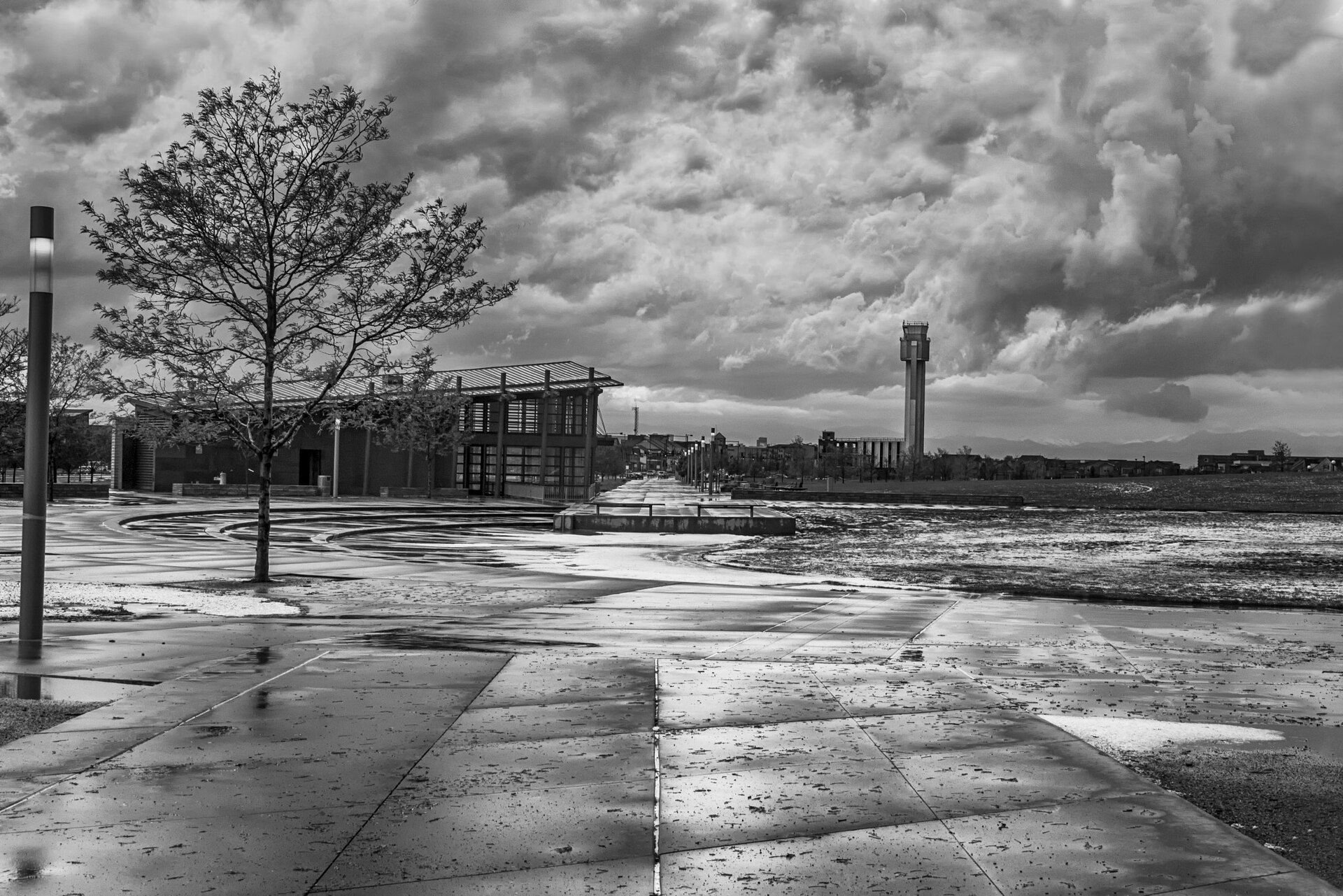
- Central Park in Denver with the former airport's control tower rising behind it: Eric Johnson, CC BY-SA 3.0, via Wikimedia Commons.
Thinking about moving here?
Ask Jimmy anything about the area, the neighborhoods or the move itself. No pressure, just straight answers from a local.


