


Capitol Hill and Uptown
The short answer
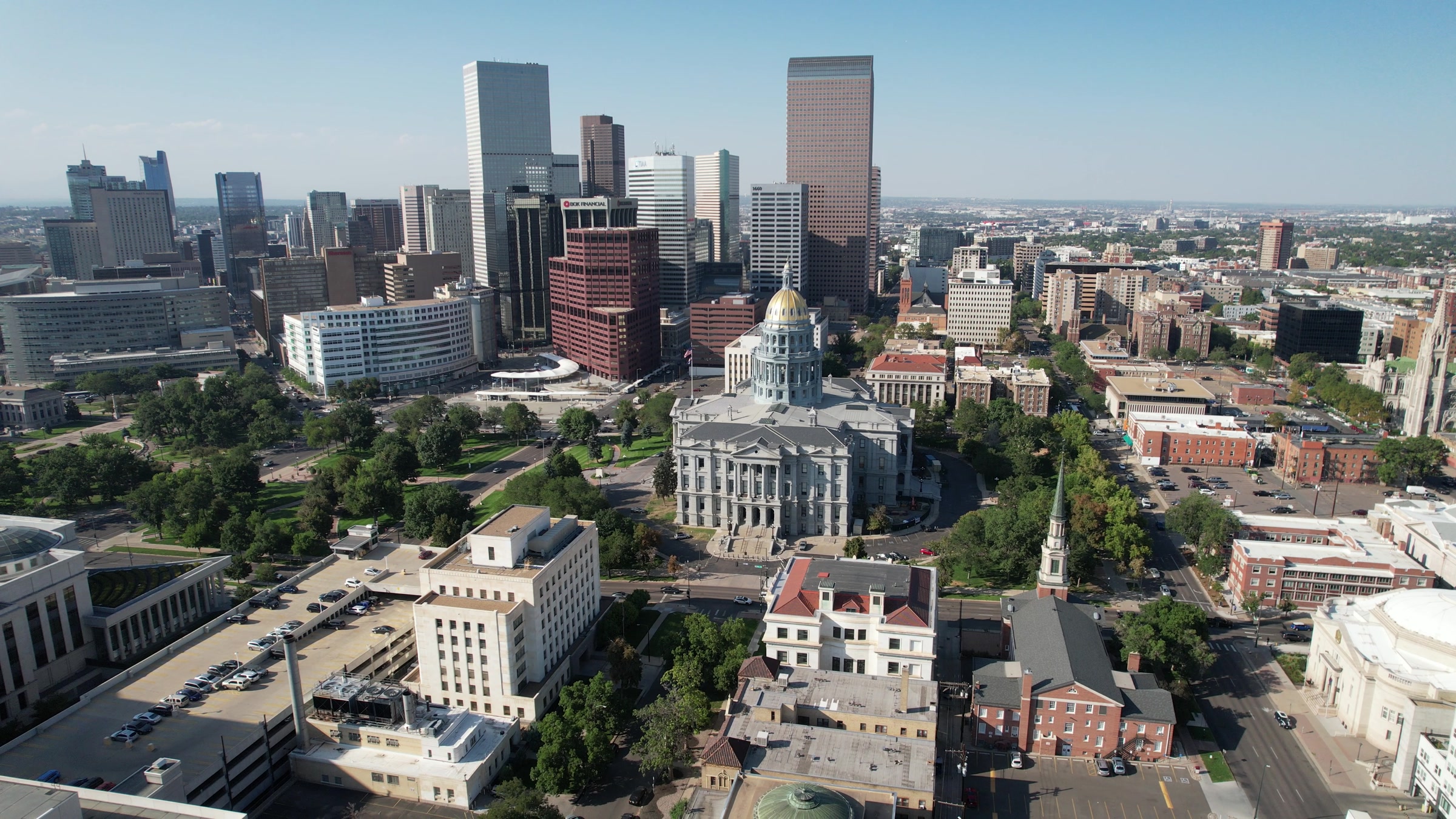
Capitol Hill and Uptown are the blocks just east of downtown Denver, on either side of Colfax Avenue. Capitol Hill is an official Denver neighborhood. Uptown isn't: it's the everyday name for the official North Capitol Hill neighborhood, and it sometimes reaches into City Park West. Housing is mostly multi-unit, from old mansions cut into apartments and condos to walk-ups and taller newer buildings. You can walk into downtown from here, RTD buses run on Colfax, and downtown's rail and bus connections reach the rest of the metro.
Watch: Jimmy's video on this area
What is living in Capitol Hill and Uptown like?
Capitol Hill is, to me, the quintessential walking neighborhood of Denver. It sits next to the Capitol, and Uptown is just north, split by Colfax. You can walk a couple of blocks and you're in the skyscrapers. You can also walk to Cheesman Park, Denver Botanic Gardens and Civic Center, and you're close to Broadway. Colfax, 17th and 19th are filled with restaurants and places to visit, and Colfax has the concert halls. The area is known for music venues, coffee shops, nightlife and quirky bars. It's always buzzing. I know a ton of people who live in those communities and enjoy it.
Start with the names. Capitol Hill is one of Denver's statistical neighborhoods, the official map the city uses for data and records. Uptown isn't on that map. This guide covers Capitol Hill and North Capitol Hill and shows where "Uptown" gets fuzzy. If you're still choosing a part of the metro, start with the Denver relocation guide.
What draws people here
- Downtown on foot. Broadway is the western edge of both neighborhoods, and the Central Business District starts across from North Capitol Hill.
- Parks close by. Cheesman Park and Civic Center Park are both close to Capitol Hill, and both have hosted community festivals.
- Music along Colfax. The area's concert venues include the Fillmore Auditorium and the Ogden Theatre, and the Ogden is a designated Denver landmark.
- Buildings with a record. Several historic districts sit in and around Cap Hill, and apartment buildings such as the Aromor at 1309 Grant St. are individually designated landmarks.
- A way to buy in. It's one of the more affordable ways to buy into the city.
What gives people pause
- Parking. Much of the older housing here lacks off-street parking, so spaces are scarce.
- Building age. Much of the housing here is old, so plan inspections and budget around that.
- Association costs. A condo's dues and any special assessments are yours to pay, and a small converted building has few owners to share a big repair.
- Historic rules. Denver's landmark design guidelines apply to designated landmarks and historic districts, which can shape exterior work.
- Colfax is changing. Under RTD's plan as of June 2026 for the stretch from Broadway to Colorado Boulevard, cars stay in the outer lanes and left turns are limited to signalized intersections.
- Noise near Colfax. The street is known for its nightlife, so expect sound from venues, bars and traffic on the blocks closest to it.
Where are Capitol Hill and Uptown, and how do you get around?
Both neighborhoods sit just east of downtown, with Broadway on the west side and Colfax Avenue running between them. Neither has an RTD rail station, and the closest stop, 20th & Welton, is just past North Capitol Hill's north edge. As of fall 2026, light rail there is suspended during RTD's Downtown Rail Reconstruction Project, and other rail service has changed too, so confirm your trip with RTD before you count on it.
- Into downtown: You can walk. Once you're there, the 16th Street FreeRide runs every few minutes, seven days a week.
- Into the Tech Center: I-25 is the driving route. By rail, trains run from Union Station and follow I-25 south to Belleview and Orchard stations, so expect to start downtown.
- Transit: Routes 15 and 15L are the Colfax buses. They moved into center bus-only lanes between Broadway and Colorado Boulevard on Sept. 27, 2026, in the first phase of the project. Full bus rapid transit, running from Broadway to I-225 in Aurora, is planned for late 2027 or early 2028.
- The airport: RTD's commuter rail runs from Union Station to Denver Airport Station. By car, take I-70 east to Peña Boulevard.
- The mountains: I-70 is the way west, up Clear Creek and through the Eisenhower Tunnel. It meets I-25 at the interchange known as the Mousetrap.
Where do Capitol Hill and Uptown start and stop?
The official lines come from Denver's statistical neighborhoods. Denver has 78 official neighborhoods, and most boundaries go back to the groups of census tracts city planners set in 1970. The city has no formal process for designating a neighborhood, so an everyday name doesn't change the map.
Capitol Hill
Capitol Hill runs from Colfax Avenue south to Seventh Avenue, and from Broadway east to Downing Street. Capitol Hill United Neighborhoods, the neighborhood group, uses a much larger area, from First to 22nd avenues and from Broadway to Colorado Boulevard.
North Capitol Hill
This is the official neighborhood north of Colfax. Its edges are Colfax Avenue on the south, Broadway on the west, Downing Street on the east and 20th Avenue on the north, with Park Avenue along the northeast side.
Uptown
Uptown isn't an official name. It's commonly used for North Capitol Hill, which it roughly matches. City Park West, the neighborhood east of Downing Street, is sometimes thought of as part of Uptown too. No official line exists, so two listings that both say Uptown can be in different neighborhoods.
Nearby areas often confused with it
Many people count Cheesman Park as part of Capitol Hill, but the city defines it as a separate neighborhood east of Downing Street. The State Capitol marks the beginning of the Capitol Hill district, yet it's also part of the Civic Center area and its historic district. Congress Park is close by, but it doesn't touch either neighborhood on the city's map. Cheesman Park sits between them. When the name matters, check the address against the city's map.
What does it cost to own a home in Capitol Hill and Uptown?
Prices and tax amounts change, so this guide points you to where to check them.
- Property tax: Denver's property search shows assessment and tax data by address, parcel ID or schedule number. During December and early January, other charges, such as maintenance district and business improvement fees, may not always appear, so ask about them for the specific property.
- Condo or HOA dues: If a home has an association, ask what the dues cover, what's in reserve and whether any special assessment is planned. In a converted mansion, find out who pays for the roof, the boiler and the masonry.
- Sidewalk fee: All Denver property owners pay this fee. As of its 2025 rollout, it appears on the municipal stormwater bill in two payments a year. If an HOA handles that bill, the HOA handles the fee. Owners still have to clear their sidewalks.
- Landmark rules: Denver's landmark design guidelines apply to individually designated landmarks and historic districts. Districts in and around Cap Hill include Sherman–Grant, Quality Hill, Pennsylvania Street and Wyman. Check the specific address before you plan exterior work.
- Older-building systems: Denver Water's address lookup shows a property's risk of lead in drinking water, and its Lead Reduction Program replaces lead service lines with copper. Radon can enter a home from the soil beneath it, so test for it. On a house, get a sewer scope. In a condo, ask who owns the lines.
- Parking: Parts of Capitol Hill have a city curbside plan. As of September 2025, these plans usually let residents buy a permit that exempts them from curb time limits, renewed every year. If a unit has no off-street space, add a permit or a rented spot to your monthly numbers.
What kinds of homes are in Capitol Hill and Uptown?
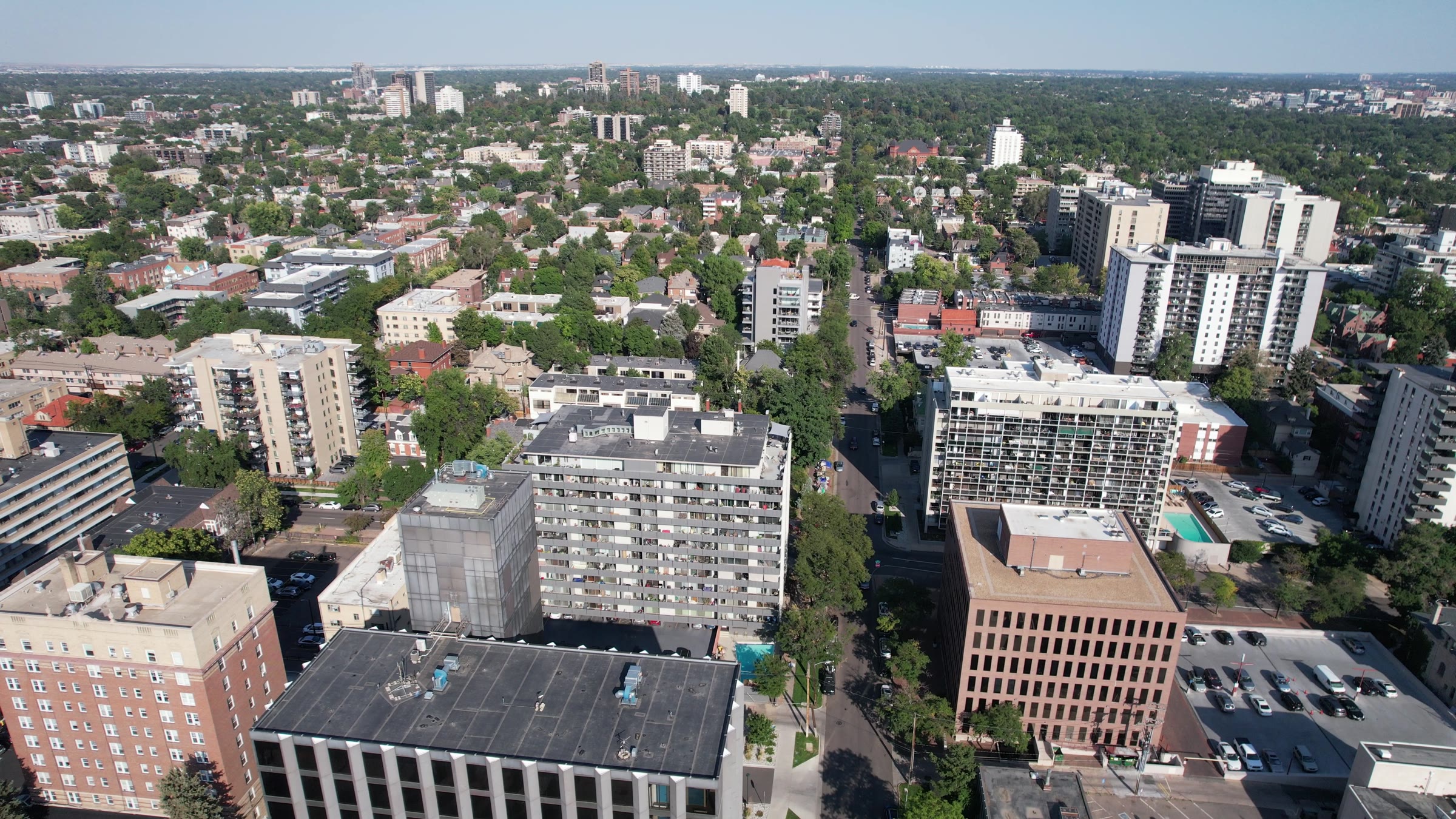
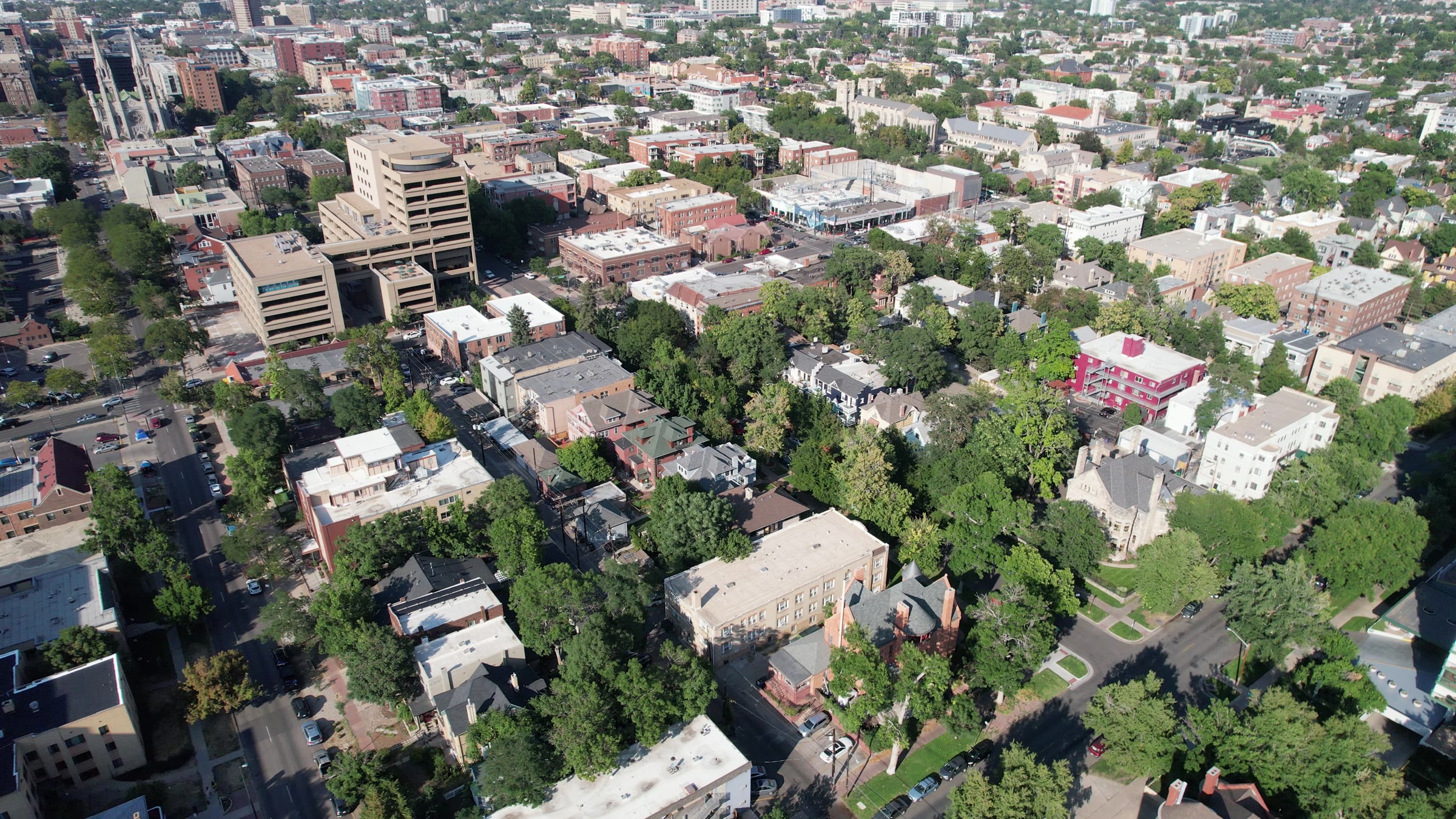
Expect multi-unit housing. Cap Hill has old Victorian mansions, many cut into apartments and condos, and Uptown has tall newer apartment and condo buildings. You'll also find walk-up apartments and historic brownstones, plus Queen Anne houses and brick row houses in North Capitol Hill. Some of Denver's oldest single-family homes are in Capitol Hill.
The history explains that mix. Mansions went up as downtown commerce pushed east and wealthy Denver residents left 14th Street for new houses on the hill, and by the 1880s and 1890s the big addresses included Lincoln, Grant, Sherman, Logan and Pennsylvania. The depression that followed the Silver Crash of 1893 brought construction to a virtual standstill, and building then shifted toward apartments. In the 1920s, Colfax was zoned commercial, and over time old mansions were converted to offices and apartments or torn down for larger buildings. Preservation groups such as Historic Denver emerged in the 1970s.
Older apartment buildings are part of the historic record here. The Aromor at 1309 Grant St. and the Helene Apartments at 1062 Pearl St. are individually designated landmarks. On the 1000 block of Sherman Street, the stretch known as Poet's Row has buildings from 1929 to 1956 named for writers such as Robert Frost and Emily Dickinson.
How do schools work in Capitol Hill and Uptown?
Capitol Hill and North Capitol Hill are in Denver Public Schools. In parts of Denver, DPS uses enrollment zones in place of a single assigned school: living in a zone guarantees a seat at one of several schools, not at one specific school. Your answer depends on the exact address, so run each home you're considering through DPS's School Finder. The SchoolChoice hotline takes questions about schools in a zone, and DPS posts separate zone guides for elementary, middle and high school.
What is there to do in Capitol Hill and Uptown?
Parks, trails and open space
The big green spaces sit just outside these neighborhoods. Cheesman Park is right there, east of Downing Street, and its Cheesman Memorial Pavilion was completed in 1910. Civic Center Park is on the west side. Denver Botanic Gardens is within walking distance too.
Events
Civic Center Park and Cheesman Park have both hosted community festivals, so check current event listings for what's on.
Food and shops
Colfax is the main strip, with restaurants, bars and concert halls. Inside Capitol Hill, the other commercial streets include East Eighth, East 13th and East 14th avenues, Lincoln Street and Broadway. North of Colfax, 17th and 19th avenues add more restaurants.
Three places to start
- Molly Brown House Museum — 1340 Pennsylvania St. Built in 1889 and designed by William Lang, it's the only one of the four houses built on the block before the 1893 crash that remains. The Browns moved in during April 1894.
- Ogden Theatre — 935 E. Colfax Ave. A designated Denver landmark and one of the concert halls on Colfax.
- Colorado State Capitol — 200 E. Colfax Ave. The state began building it in 1886, and it opened for use in November 1894. The dome's real gold leaf was first added in 1908, and steps outside the west entrance carry mile-high markers.
Who are the big employers in and near Capitol Hill and Uptown?
The main job centers sit at the edges. Downtown's Central Business District starts across Broadway from North Capitol Hill. State government is close by, with the State Capitol on East Colfax and the Colorado State Judiciary building next to the History Colorado Center. Inside Capitol Hill, office development is concentrated in the northwest, and many mansions have been converted to offices. East of Downing Street in City Park West, the center of the neighborhood holds the medical facilities of Presbyterian/St. Luke's and Saint Joseph hospitals, plus other medical offices. Employers come and go, so use this as a map of where jobs cluster, not a ranking.
How do Capitol Hill and Uptown compare with nearby areas?
- Capitol Hill vs. Cheesman Park — Downing Street is the line. Capitol Hill lies west of it. Cheesman Park is a separate neighborhood to the east, and the park itself sits inside that neighborhood.
- Capitol Hill and Uptown vs. Civic Center — Civic Center lies west of Capitol Hill, and the State Capitol is listed as part of its historic district. Capitol Hill's housing is mostly multi-family, with offices concentrated in the northwest.
- North Capitol Hill vs. City Park West — Downing Street divides them. City Park West runs from Colfax to 23rd Avenue and east to York Street, with mostly single-family homes and small apartment buildings around a large hospital complex. It's sometimes thought of as part of Uptown too.
- Capitol Hill and Uptown vs. Congress Park — These areas don't share a border. Cheesman Park sits between Capitol Hill and Congress Park.
Buying in Capitol Hill and Uptown: what to do first
- Get pre-approved before you tour. Walk-ups, converted mansions and newer towers are different purchases, and dues change your monthly number.
- Confirm the neighborhood. Check the address against Denver's map, since "Uptown" can mean North Capitol Hill or part of City Park West.
- Pull the records. Use Denver's property search for assessment and tax data, ask about fees that may not show there, and look up landmark and historic district status.
- Read the association's papers. Go through the budget, reserves, dues history and any planned assessments, and find out who handles the stormwater bill.
- Inspect for the building's age and walk the block. Get a general inspection, a sewer scope and a radon test, and run the address through Denver Water's lead lookup. Then check the parking signs, your distance from Colfax and DPS's School Finder.
- Veterans: If you're buying a condo here with a VA loan, check the building first. VA-backed purchase loans cover a condo in a VA-approved project, so confirm the project's status before you write an offer. If you'd like a read on current pricing for the blocks you're considering, reach out and I'll walk you through it.
In pictures

Watch the videos
Help shape what Jimmy films next
Which town should Jimmy cover next, and what do you still want to know? Tell us, and we'll email you when the guide and video are out.
Thank you — this genuinely helps. We'll let you know when it's ready.
Frequently asked questions
Is Uptown an official Denver neighborhood?
No. Uptown is an everyday name, not one of Denver's statistical neighborhoods. The official neighborhood is North Capitol Hill, and City Park West, east of Downing Street, is sometimes thought of as part of Uptown too.
Where do Capitol Hill and North Capitol Hill start and stop?
Capitol Hill runs from Colfax Avenue south to Seventh Avenue, between Broadway and Downing Street. North Capitol Hill runs from Colfax north to 20th Avenue, between Broadway and Downing Street, with Park Avenue along the northeast side.
Is Cheesman Park part of Capitol Hill?
No. Many people think of it that way, but the city defines Cheesman Park as a separate neighborhood. The park sits inside that neighborhood, east of Capitol Hill.
How does transit work in Capitol Hill and Uptown?
Neither neighborhood has an RTD rail station, and light rail at the closest stop, 20th & Welton, just past North Capitol Hill's north edge, is suspended during RTD's rail project as of fall 2026. Routes 15 and 15L run on Colfax, in center bus-only lanes since Sept. 27, 2026, with full bus rapid transit planned for late 2027 or early 2028.
What school district are Capitol Hill and Uptown in?
Both are in Denver Public Schools. DPS uses enrollment zones in parts of the city, so enter the specific address in its School Finder.
Is Capitol Hill a historic district?
Not as a whole, as of fall 2026. Several Denver historic districts sit in and around Cap Hill, including Sherman–Grant, Quality Hill and Pennsylvania Street, and there are many individual landmarks. Check the specific address.
What should I check before buying a condo in an older building?
Read the association's budget, reserves and dues history, and ask about planned assessments. Get a general inspection and a radon test, run the address through Denver Water's lead lookup, and find out where you'll park.
Take this guide with you
Get the printable PDF version to read offline, share with your family or mark up on your scouting trip. Enter your name and email and it's yours.
Thanks! Your guide is ready.
Download the PDFNo spam. Jimmy may follow up personally to see if you have questions about the move.
Sources
Guide reviewed November 3, 2026, and reviewed again twice a year.
- Wikipedia: List of neighborhoods in Denver (78 official neighborhoods, 1970 statistical neighborhoods, Uptown roughly North Capitol Hill; the boundary source for this guide)
- FOX31 via Yahoo: Why RiNo and LoDo aren't listed in Denver's neighborhoods (how Denver's statistical neighborhoods work, Uptown as a local name)
- Wikipedia: Capitol Hill, Denver (boundaries, Cheesman Park treated separately, housing, parking, commercial streets, Colfax venues, parks, offices, Judiciary building)
- Wikipedia: North Capitol Hill, Denver (boundaries, Uptown name)
- Wikipedia: City Park West, Denver (boundaries, hospitals, housing)
- Wikipedia: Cheesman Park, Denver (neighborhood and park limits)
- Wikipedia: Saint Joseph Hospital, Denver (name, City Park West location)
- Denverite: City Park West neighborhood guide (boundaries, sometimes thought of as part of Uptown)
- 5280: North Capitol Hill (official name, Uptown, housing types)
- Visit Denver: Uptown (North Capitol Hill, Restaurant Row on 17th Avenue)
- Denver Public Library: Capitol Hill neighborhood history (development, 1893 slump, 1920s zoning, preservation, Sherman Historic District, Capitol, neighborhood group's area)
- Wikipedia: List of Denver landmarks (historic districts, individual landmarks and addresses)
- Historic Denver: Denver's Historic Neighborhoods, 2016 (historic districts in Cap Hill, architectural styles)
- Capitol Hill United Neighborhoods: Preserving (Wyman Historic District borders)
- City and County of Denver: Landmark Preservation Design Guidelines (when they apply)
- History Colorado: The Molly Brown House at 1340 Pennsylvania Street (1889, William Lang, the block's four houses)
- Wikipedia: Colorado State Capitol (address, opening, gold leaf, mile-high markers, Civic Center area)
- RTD: East Colfax Avenue BRT investment update, Sept. 8, 2026 (Sept. 27 bus-only lane plan, Routes 15 and 15L, seven stations, Broadway to I-225, full BRT timing)
- RTD: Colfax reopens from Broadway to Colorado Boulevard this fall, June 15, 2026 (outer lanes for cars, left turns at signals)
- Denver Gazette: What's up with Colfax's new bus lanes? Oct. 2, 2026 (lanes opened Sept. 27, Routes 15 and 15L)
- Denverite: Colfax bus construction ending, September 2026 (Sept. 27 center bus lanes, Broadway to Colorado Boulevard)
- RTD: Rail Project FAQs (service changes effective June 7, 2026, light rail suspension, 16th Street FreeRide)
- Wikipedia: 20th & Welton station (location, line)
- Wikipedia: A Line (RTD) (Union Station to Denver Airport Station)
- Wikipedia: E Line (RTD) (route along I-25 and station order)
- Wikipedia: Interstate 70 in Colorado (Mousetrap, Peña Boulevard exit, route west)
- Denver Public Schools: Enrollment Zones (zones, School Finder, hotline)
- City and County of Denver: Property Search (assessment and tax data, charges that may not appear)
- Denverite: Denver sidewalk fee FAQ (who pays, billing, HOAs, snow removal)
- Denverite: Denver's permitted parking neighborhoods, Sept. 29, 2025 (curbside plans, permits, Capitol Hill)
- Denver Water: Lead Reduction Program (address lookup, line replacement)
- Colorado Department of Public Health and Environment: Radon
- VA.gov: VA-backed purchase loan (condos in VA-approved projects)
- Destination Denver Colorado: Touring the Best Denver Neighborhoods (Jan. 2025), Jimmy's own observations
- Destination Denver Colorado: Denver Neighborhoods That Deliver vs. The Hype (Oct. 2025), Jimmy's own observations
- Destination Denver Colorado: Moving to Denver or to Fort Collins (2025), Jimmy's own observations
Photo credits
- Photos: Jimmy Everetts / Destination Denver Colorado.
Thinking about moving here?
Ask Jimmy anything about the area, the neighborhoods or the move itself. No pressure, just straight answers from a local.


