


Baker
The short answer
Baker is an official Denver neighborhood south of downtown, running from Broadway west to the South Platte River. Homes range from 19th-century brick houses, many of them Queen Anne, to townhomes, new builds and apartment buildings near the rail station. The Baker Historic District and the South Side-Baker National Register listing cover only its northeast corner. RTD light rail serves it at Alameda Station and I-25 & Broadway Station, and I-25 and Sixth Avenue connect it to the rest of the metro.
Watch: Jimmy's video on this area
What is living in Baker like?
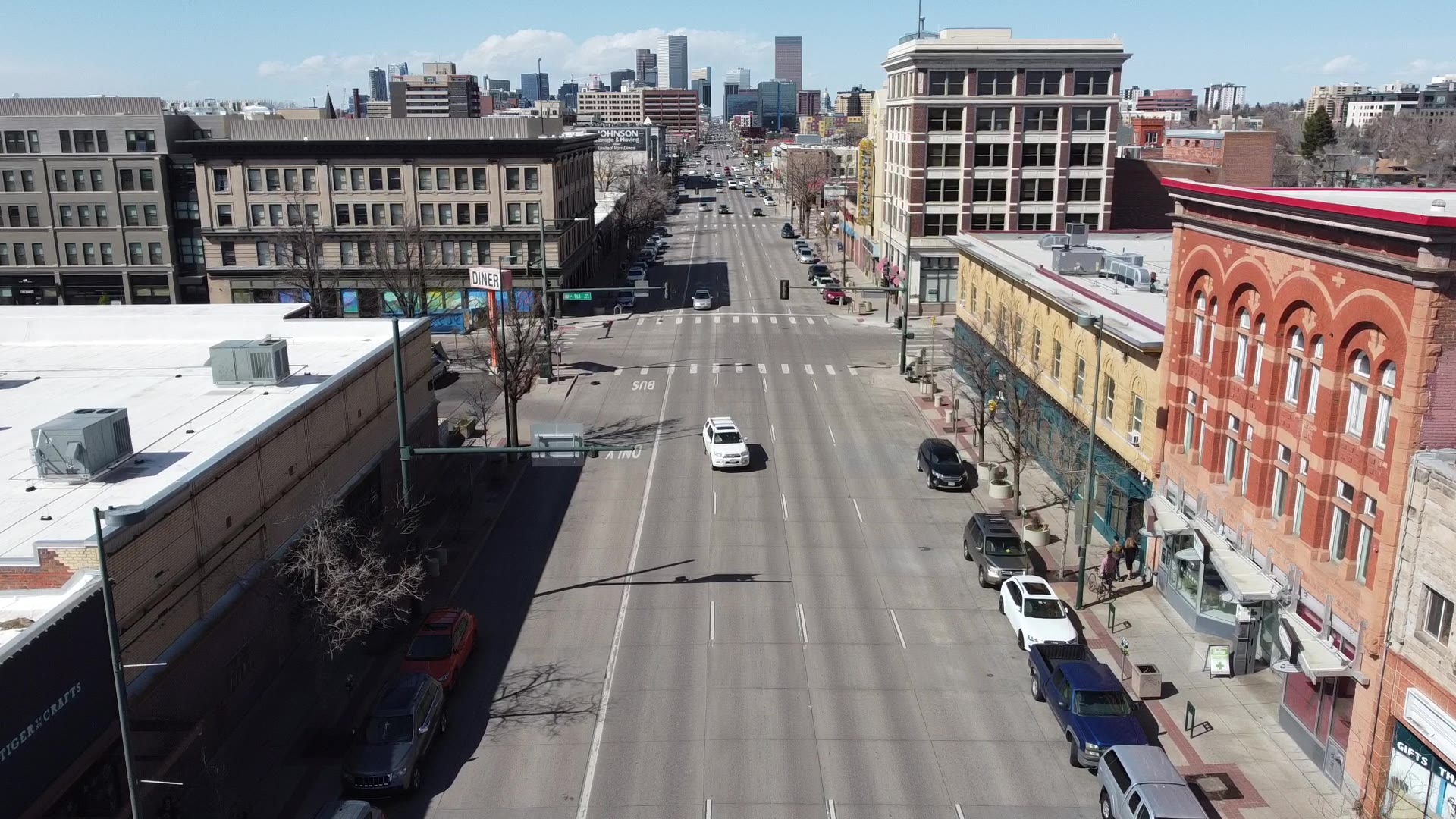
Baker runs south of downtown along Broadway. Parts of it are an older industrial area where places have been turned into townhomes, with some modern buildings, and walkability is good along parts of Broadway. You'll see older homes from the early 1900s, plus scrapes and new builds.
Three names get blurred here. Baker is the official statistical neighborhood. The Baker Historic District and the South Side-Baker National Register listing cover only its northeast corner, so a Baker address isn't automatically a historic one. South Broadway is the commercial street on the east edge. The area went by South Side or South Broadway before it took the Baker name in the 1970s, from a junior high school. If you're still choosing a part of the metro, start with the Denver relocation guide.
What draws people here
- Broadway within a walk. From the historic district's side streets, you can walk to the shops and restaurants on Broadway.
- The Mayan Theatre. An Art Deco movie house from 1930 at 110 Broadway, just across the line in Speer, and a Denver landmark.
- Rail in the neighborhood. Alameda Station is three blocks west of South Broadway, and I-25 & Broadway Station serves the south end.
- 19th-century houses. The neighborhood has hundreds of brick houses from the 1800s, and the historic district holds a wide variety of Queen Anne designs.
What gives people pause
- Design review. Inside the Denver district, most exterior work needs approval before you can get a building permit.
- Home age. A house from the 1880s or 1890s can come with old sewer lines, old water lines and an old foundation. Plan your inspections around that.
- Parking. Home tour organizers have warned that neighborhood parking is restricted and steered visitors to a school and a church. Read the posted signs on any block you're considering.
- The highway side. I-25 runs through Baker beside the South Platte River, and that corridor has an industrial character.
- Big projects nearby. As of fall 2026, Denver Summit FC has broken ground on a stadium at Santa Fe Yards, near I-25 and Broadway, set to open in 2028. The Broncos' stadium at Burnham Yard, two blocks north of Baker, was still a proposal as of October 2026, and related changes would reach south of Sixth Avenue. Check the latest plans before you buy.
- Flood maps. The South Platte River forms the western line, so check FEMA's map for any address close to it.
Where is Baker, and how do you get around?
As of fall 2026, RTD's Downtown Rail Reconstruction Project has changed light rail service, so confirm your trip with RTD before you count on it.
- Into downtown: Light rail from Alameda Station runs to Denver Union Station, and RTD's Route 0 bus runs on Broadway.
- Into the Tech Center: Take I-25 south to the Denver Technological Center. Light rail from I-25 & Broadway Station runs south to Belleview Station.
- Transit: Alameda Station, at 425 S. Cherokee St., lost its parking lot to redevelopment, so plan to walk, bike or bus there. I-25 & Broadway Station, at 901 S. Broadway, has parking lots. Which rail lines stop at each station is changing during the project, so check RTD's current map.
- The airport: RTD's airport rail line runs between Union Station and Denver Airport. By car, take I-25 north to I-70 and go east.
- The mountains: Take I-25 north to the Mousetrap interchange and follow I-70 west. Sixth Avenue (US 6) also heads west from I-25 toward Lakewood.
Where does Baker start and stop?
The official lines come from Denver's statistical neighborhoods. City planners set them up in 1970 by grouping census tracts, and most of those boundaries have stayed the same. Denver now counts 78 official neighborhoods for planning and administration. Baker runs from West 6th Avenue on the north to West Mississippi Avenue on the south, and from Broadway on the east to the South Platte River on the west.
Baker Historic District
This is Denver's own historic district, designated in 2000, with a period of significance from 1873 to 1937. It covers about 30 blocks in the northeast corner, roughly West 5th Avenue to West Alameda Avenue and Broadway to Fox Street. On the south and east, the line runs within a half block of Alameda and Broadway. The neighborhood association's historic page links to a city map where you can enter any address.
South Side-Baker National Register listing
This is the federal listing, added Oct. 3, 1985, and it covers nearly the same ground as the Denver district. Its register entry bounds it by West 5th Avenue, Broadway, West Alameda Avenue and Fox Street, and describes development from the 1870s to the 1920s, peaking in the late 1880s and early 1890s.
South Broadway
Baker is often confused with the adjoining South Broadway area. South Broadway runs from Baker into Englewood, and Antique Row is along it to the south, though descriptions of where the row starts range from Alameda Avenue to the 1100 block. Broadway is the boundary, so the far side of the street is a different neighborhood.
Alameda Station and South Cherokee Street
Large apartment complexes stand along South Cherokee Street near the station. As of 2025, a big-box retail center south of Alameda was being redeveloped as Broadway Park, with three apartment projects built.
I-25, the river and the south end
I-25 runs beside the river, technically inside Baker. Santa Fe Drive, where the first subdivision was platted in 1872, has its own I-25 exit. At the south end, the former Gates Rubber site around I-25 & Broadway Station is the planned home of the Denver Summit FC stadium.
Nearby areas often confused with it
Speer and Washington Park West sit across Broadway. Lincoln Park starts north of West 6th Avenue, and Overland starts south of West Mississippi Avenue. Valverde and Athmar Park are across the river. If the name matters to you, go by Denver's map, not the name on a sign.
What does it cost to own a home in Baker?
Prices and tax amounts change, so this guide points you to where to check them.
- Property tax: Denver's property search shows assessment and tax data by address, parcel ID or schedule number. During December and early January, maintenance district, service lien and business improvement fees may not appear there, so ask about them.
- Historic district rules: Inside the Baker Historic District, new construction, additions and exterior alterations go through the city's design review, and so does demolition. An approved project gets a Certificate of Appropriateness, which you submit with your permit application. On new builds, new accessory dwelling units and major additions, a neighborhood committee gives an advisory opinion first, and the city decides. Plan for that time and for any design work it adds.
- National Register listing: The South Side-Baker listing adds no rules of its own. National and State Register listing puts no restrictions on what owners do with a property, and alteration or demolition answers only to local regulations. On most of these blocks, those are the Denver district's rules.
- Preservation tax credits: Historic tax credits, including a state credit, exist for preservation work on designated structures. Find out whether your project qualifies before you start.
- Sidewalk fee: All Denver property owners pay this fee. As of its 2025 rollout, it appears on the municipal stormwater bill in two payments a year, and properties with a long street frontage pay an added amount. Owners still have to keep sidewalks clear of snow, ice and debris.
- Trash and recycling: As of early 2025, Denver bases the charge on your trash cart size, with weekly trash and compost pickup and recycling every other week. Confirm the current setup for the home you're buying.
- Older-home systems: Denver Water's address lookup shows a property's risk of lead in drinking water, and its Lead Reduction Program replaces lead service lines with copper at no direct cost to customers. Radon can enter a home from the soil beneath it, so test for it. Get a sewer scope and a close look at the foundation.
- HOA or condo dues: If a townhome or condo has an association, find out what the dues cover. When an HOA handles the stormwater bill, it pays the sidewalk fee.
- Flood insurance: FEMA's Flood Map Service Center is the official public source, and you can search it by address. Do that for any home near the river, and ask your insurance agent what it means.
What kinds of homes are in Baker?
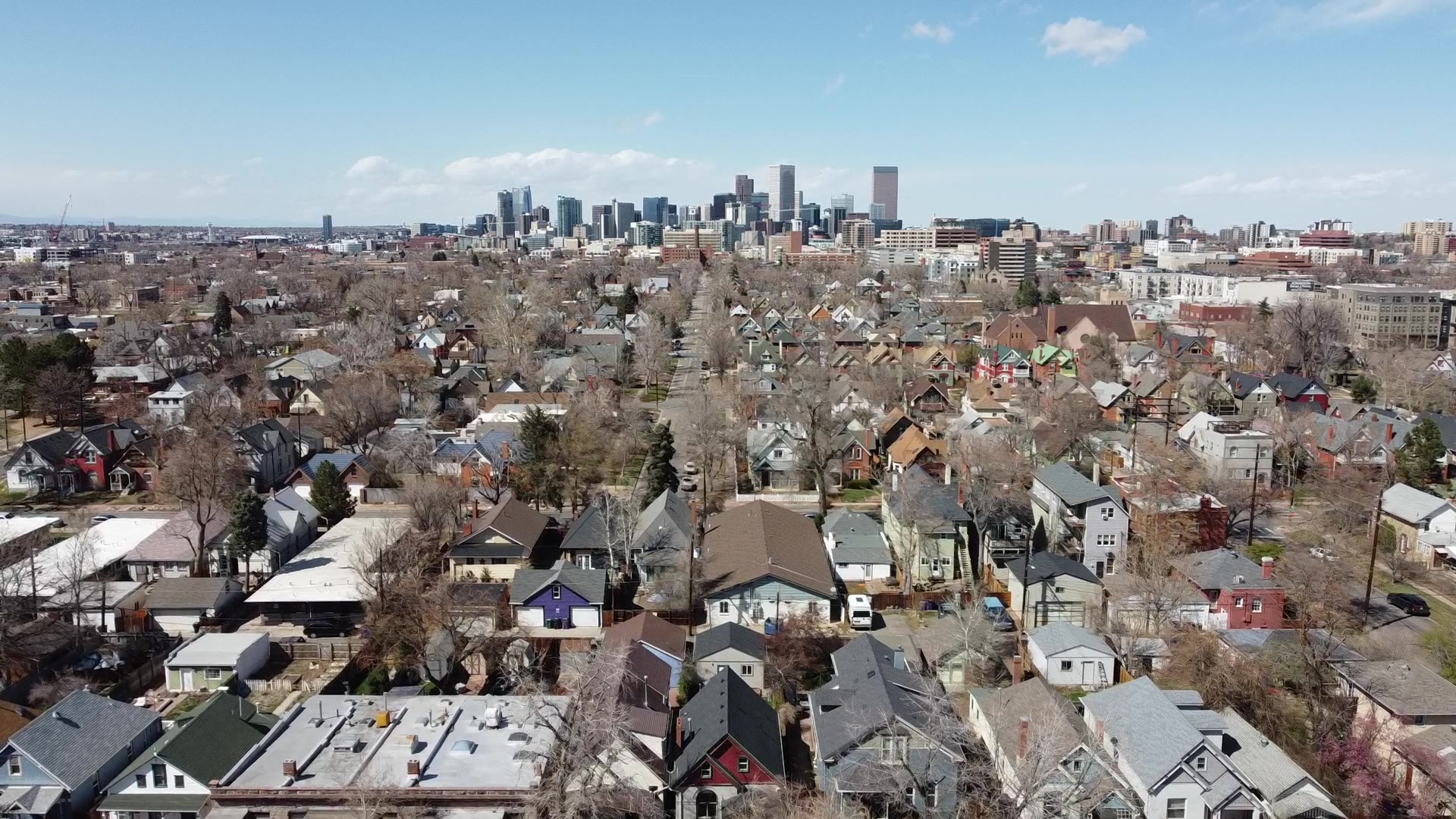
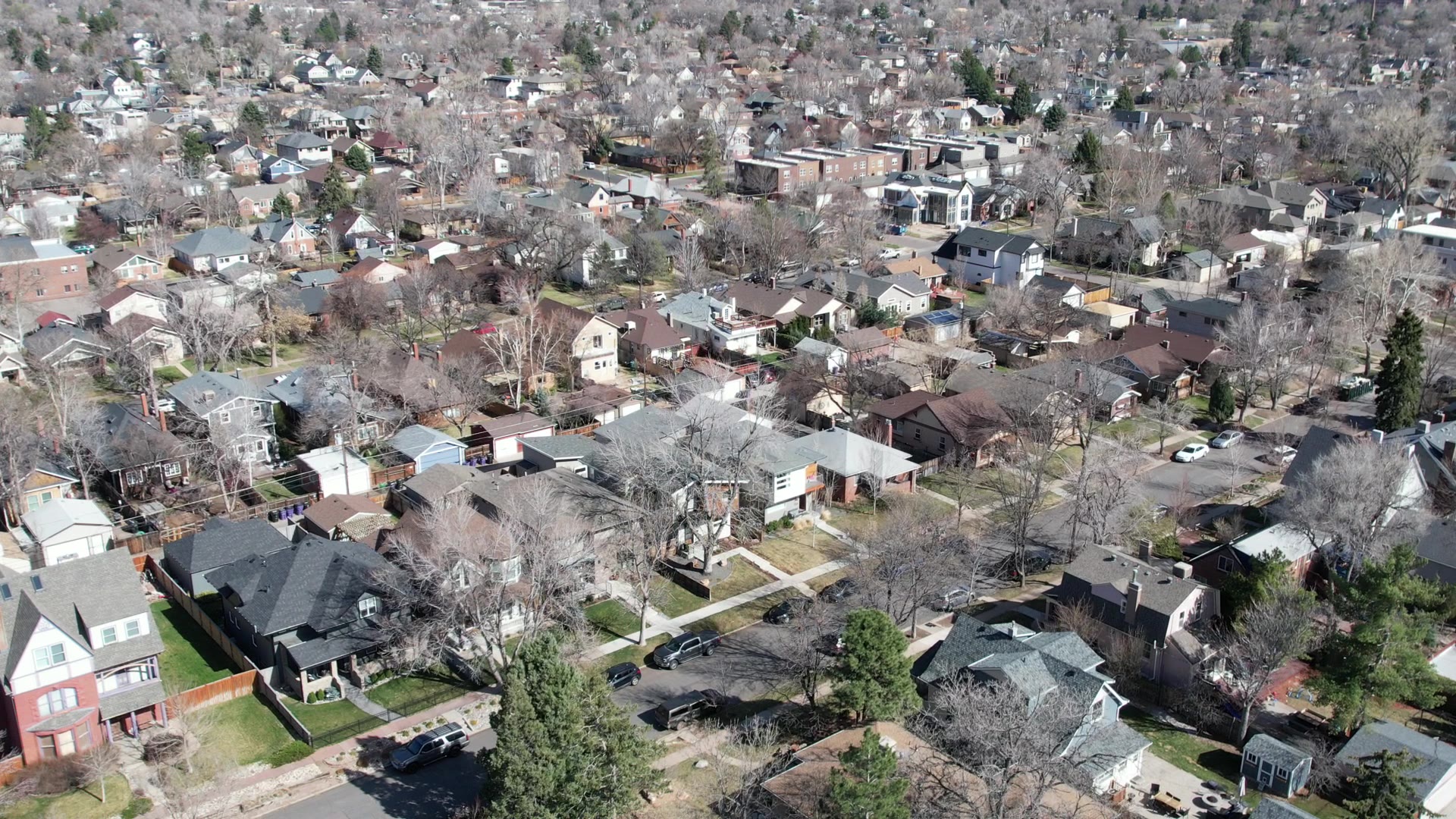
The older housing leans to brick. Queen Anne is the style you'll see most in the historic district, alongside Bungalow/Craftsman and Terrace Style buildings. Houses closer to Broadway tend to be larger, and those farther west tend to be smaller. William Lang, the architect of the Molly Brown House, designed homes here. Streetcar service spurred growth in the late 1880s until the Silver Crash of 1893, and most of the neighborhood was built out by 1900.
The newer housing is mixed. Older industrial places have been turned into townhomes, and modern buildings, scrapes and new builds sit alongside homes from the early 1900s. Most of the units added between 2010 and 2020 were apartments.
How do schools work in Baker?
Baker is in Denver Public Schools. DPS uses single-school boundaries in some areas and enrollment zones in others. A zone guarantees a seat at one of several schools, not one specific school. What applies depends on the address, so enter each home you're considering into DPS's School Finder. DPS also has a SchoolChoice hotline and zone guides for each grade level.
What is there to do in Baker?
Parks, trails and open space
Baker's parks are small. Dailey Park is at West Ellsworth Avenue and South Cherokee Street, and Hector M. Flores Park is at West 4th Avenue and Galapago Street. Phil Milstein Park, in the northwest corner, can only be reached from outside the neighborhood.
Events
The home tour is the Baker Historic Neighborhood Association's flagship community event. The self-paced tour has included an Art Deco fire station, a Collegiate Gothic school and a rare Second Empire home. There's also a Halloween parade down Broadway, where the association has a float. Historic Denver offers a guided Baker tour about once a month in good weather. Check with each group for dates.
Food and shops
Broadway is mostly commercial retail and offices. Toward the north end, you'll find the Hi-Dive music venue at 7 S. Broadway, Sputnik at 3 S. Broadway and Sweet Action ice cream at 52 Broadway. Farther south are Bardo Coffee House at 238 S. Broadway, Blue Bonnet at 457 S. Broadway and BurnDown at 476 S. Broadway. Those names are as of 2026, and because Broadway is the boundary, some sit on the far side of the street from Baker. I have a favorite spot on Broadway with great green chili.
Farther south on Broadway is Antique Row. South Broadway's mix includes antique stores, vintage clothing, bookstores and art galleries.
Three places to start
- Mayan Theatre — Opened Nov. 20, 1930, at 110 Broadway, just across the line in Speer. It faced demolition in the 1980s before landmark designation and restoration. It's now a three-screen Landmark Theatres location with a full bar.
- Fire Station No. 11 — An Art Deco station at 40 W. 2nd Ave., built in 1936–37 as a WPA project and now a Denver landmark.
- Blue Bonnet — A restaurant that moved to 457 S. Broadway in the 1990s.
Who are the big employers in and near Baker?
Downtown to the north and the Denver Technological Center on I-25 to the south are the job centers to look at. Inside Baker, Broadway is mostly retail and offices, and the I-25 corridor has an industrial character. Employer rosters change, so treat these as places to look rather than a ranked list.
How does Baker compare with nearby areas?
- Baker vs. Speer and Washington Park West — Broadway is the line. The historic district and Alameda Station are on Baker's side, and the two other neighborhoods pick up across the street.
- Baker vs. Lincoln Park — West 6th Avenue is the line. The Broncos' proposed stadium at Burnham Yard is in Lincoln Park.
- Baker vs. Valverde — The South Platte River is the line, and I-25 runs on Baker's side of it. Valverde is mostly industrial near the river, with some 1930s and 1940s homes farther west.
- Baker vs. Overland — West Mississippi Avenue is the line. South Broadway keeps going past it on its way into Englewood.
Buying in Baker: what to do first
- Get pre-approved before you tour. A Queen Anne in the district and a newer townhome are different purchases, and your numbers tell you which to look at.
- Confirm the neighborhood and the district. Check the address on the city's landmark map.
- Plan any work before you offer. If the home is in the district, talk with Landmark Preservation staff about exterior changes first, since the type of work determines the review.
- Pull the records. Use Denver's property search, and ask about any fees that may not show up there.
- Inspect for the home's age. Get a general inspection, a sewer scope and a radon test, and run the address through Denver Water's lead lookup. Then check FEMA's flood map, the block's parking signs and DPS's School Finder.
- Veterans: If you're buying with your VA loan, plan ahead for the appraisal on a house this old. VA must make sure a home it finances is suitable for dwelling purposes, and its minimum property requirements can expose defects or maintenance issues. If you'd like a read on current pricing for the blocks you're considering, reach out and I'll walk you through it.
In pictures


Watch the videos
Help shape what Jimmy films next
Which town should Jimmy cover next, and what do you still want to know? Tell us, and we'll email you when the guide and video are out.
Thank you — this genuinely helps. We'll let you know when it's ready.
Frequently asked questions
What's the difference between Baker and South Broadway?
Baker is an official Denver neighborhood. South Broadway is the commercial street on its eastern line, and it runs from Baker into Englewood, so not everything called South Broadway is in Baker.
Where does Baker start and stop?
Baker runs from West 6th Avenue south to West Mississippi Avenue, and from Broadway west to the South Platte River. Those lines come from Denver's statistical neighborhoods.
Is all of Baker a historic district?
No. The Denver historic district and the South Side-Baker National Register listing cover about 30 blocks in the northeast corner. Check any address on the city's landmark map.
Can I change the outside of a house in the Baker Historic District?
Yes, with review. New construction, additions and exterior alterations go through Denver's design review, and most exterior work needs approval before you can get a building permit. National Register listing adds no restrictions of its own.
Is there light rail in Baker?
Yes. Alameda Station is in Baker at 425 S. Cherokee St., and I-25 & Broadway Station, at 901 S. Broadway, serves the south end. Service is changing during RTD's rail project as of fall 2026, so confirm with RTD.
What school district is Baker in?
Baker is in Denver Public Schools. DPS uses boundaries in some areas and enrollment zones in others, so enter the specific address in its School Finder.
What should I check before buying an older home in Baker?
Start with whether the address is in the historic district. Then get a general inspection, a sewer scope and a radon test, run Denver Water's lead lookup, and check Denver's property search and FEMA's flood map.
Take this guide with you
Get the printable PDF version to read offline, share with your family or mark up on your scouting trip. Enter your name and email and it's yours.
Thanks! Your guide is ready.
Download the PDFNo spam. Jimmy may follow up personally to see if you have questions about the move.
Sources
Guide reviewed November 3, 2026, and reviewed again twice a year.
- Wikipedia: List of neighborhoods in Denver (78 official neighborhoods, 1970 statistical neighborhoods; the boundary source for this guide)
- Denver Public Library: Baker Neighborhood History (boundaries, name, South Broadway confusion, Mayan Theatre and its Speer location, Fire Station No. 11, Blue Bonnet)
- Wikipedia: Baker, Denver (boundaries, district size and edges, register and district dates, housing, Broadway, parks, stadium plans, light rail)
- History Colorado: Baker Historic District / South Side Historic District, National Register entry (bounds, Queen Anne houses, development period)
- History Colorado: Commonly Asked Questions about the National and State Registers (no restrictions on owners, local regulations)
- City and County of Denver: Landmark Preservation Design Review (work reviewed, Certificate of Appropriateness)
- Baker Historic Neighborhood Association: Historic Designation (who reviews, Landmark Committee, historic and state tax credits, address map)
- Wikipedia: List of Denver landmarks (district designation and dates, Mayan Theater, Fire Station No. 11)
- Denver Gazette: Baker neighborhood association walking tour, July 27, 2026 (home tour, parade, parking, Queen Anne share, streetcars, house sizes, Lang, Historic Denver tours)
- Visit Denver: South Broadway (Antique Row starting south of Alameda, shop types)
- Denver Center for the Performing Arts: From Antique to Vintage, Aug. 6, 2025 (Antique Row at the 1100 to 1800 blocks)
- Dining Out: Denver's South Broadway neighborhood, updated June 22, 2026 (street extent, named businesses and addresses)
- Landmark Theatres: Mayan Theatre (address, screens, bar)
- Denver7: Denver Summit FC breaks ground at Santa Fe Yards, Oct. 1, 2026 (stadium status, location, 2028 opening)
- Denver7: Baker residents picture the future, March 29, 2026 (stadium near I-25 and Broadway)
- Denver7: Denver unveils 20-year vision around Burnham Yard, Oct. 14, 2026 (Broncos stadium status)
- Wikipedia: New Broncos Stadium (Burnham Yard location)
- Wikipedia: Alameda station (RTD) (address, bus routes, parking, nearby apartments)
- Wikipedia: I-25 & Broadway station (address, bus routes, parking, Gates site)
- Wikipedia: Interstate 25 in Colorado (exits, Denver Technological Center, Mousetrap, I-70)
- Wikipedia: Valverde, Denver (boundaries, I-25 in Baker, river, housing)
- RTD: Rail Project FAQs (lines during construction, effective June 7, 2026)
- RTD: Final September 2026 Service Changes (Route 0, airport line)
- Denver Public Schools: Enrollment Zones (zones, School Finder, hotline)
- City and County of Denver: Property Search (assessment and tax data, fees that may not appear)
- Denverite: Denver sidewalk fee FAQ, December 2024 (who pays, billing, street frontage, snow removal)
- Denverite: Denver recycling and composting changes, Nov. 7, 2024 (recycling every two weeks, weekly trash and compost)
- Westword: Denver residents question recycling cutback, early 2025 (schedule change week of Jan. 6, fees by trash cart size)
- Denver Water: Lead Reduction Program (address lookup, line replacement, cost)
- Colorado Department of Public Health and Environment: Radon
- FEMA Flood Map Service Center (flood map search by address)
- Federal Register: VA Minimum Property Requirements notice, Dec. 11, 2023 (purpose of the requirements)
- Destination Denver Colorado: Touring the Best Denver Neighborhoods (Jan. 2025), Jimmy's own observations
Photo credits
- Photos: Jimmy Everetts / Destination Denver Colorado.
- A historic residential block in the Baker neighborhood of Denver: Craig Talbert, CC BY 2.0, via Wikimedia Commons.
Thinking about moving here?
Ask Jimmy anything about the area, the neighborhoods or the move itself. No pressure, just straight answers from a local.


